Key facts: Water Damage From Firefighting
- EPA advises drying wet materials and belongings within 24 to 48 hours to prevent mold growth [1].
- The ANSI/IICRC S500 standard sets out procedures for water damage restoration, including drying and moisture measurement [2].
- Illinois insurance guidance says to remove water, ventilate, and dry furniture, bedding and carpet as soon as possible after a loss [3].
- Firefighting water is often contaminated with soot and debris, so wet porous materials are judged more strictly than after a clean-water leak.
- Electrical equipment exposed to water should be checked by a professional before use [3].
How it works
Why a fire leaves a house so wet
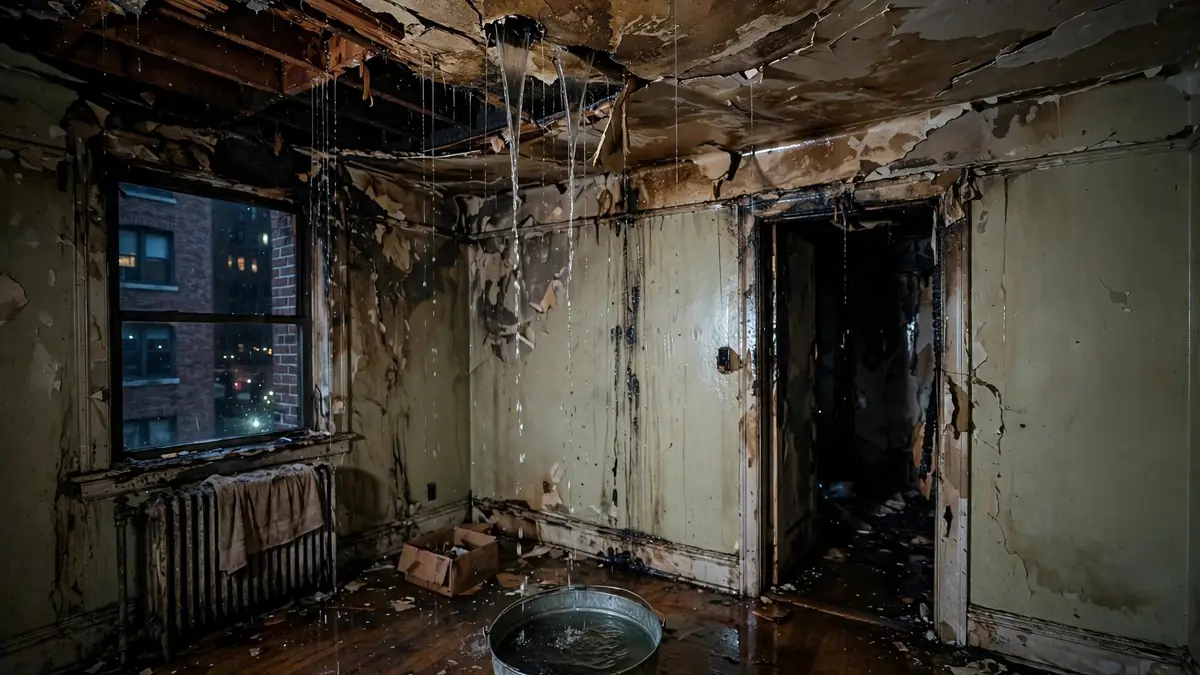
Firefighters use water to cool burning material and stop the fire from spreading. Hose streams soak the fire room, the rooms around it and often the attic or roof space, and they may open walls and ceilings to reach hidden fire. If the building has sprinklers, they add their own water. The fire is out quickly, but the water keeps moving for hours.
Water follows gravity. It soaks into flooring, runs along joists and pipes, comes through light fixtures and ceilings below, and pools in the basement. In a two-flat or three-flat, the unit below the fire is often wetter than the unit that burned. In high-rises, water from a fire several floors up can reach units far below.
Unlike a broken pipe, firefighting water is not clean. It picks up soot, ash and debris and carries them into the materials it soaks. That changes how restoration contractors decide what can be dried and kept, and why carpet pad, insulation and soaked drywall in the fire area are usually removed rather than dried in place.
Professional drying follows the ANSI/IICRC S500 standard for water damage restoration, which covers inspection, extraction, drying, monitoring and documentation [2]. Combined with the S700 fire standard, it guides how a contractor handles a home that is both burned and wet.
Signs
Signs that firefighting water went further than you think
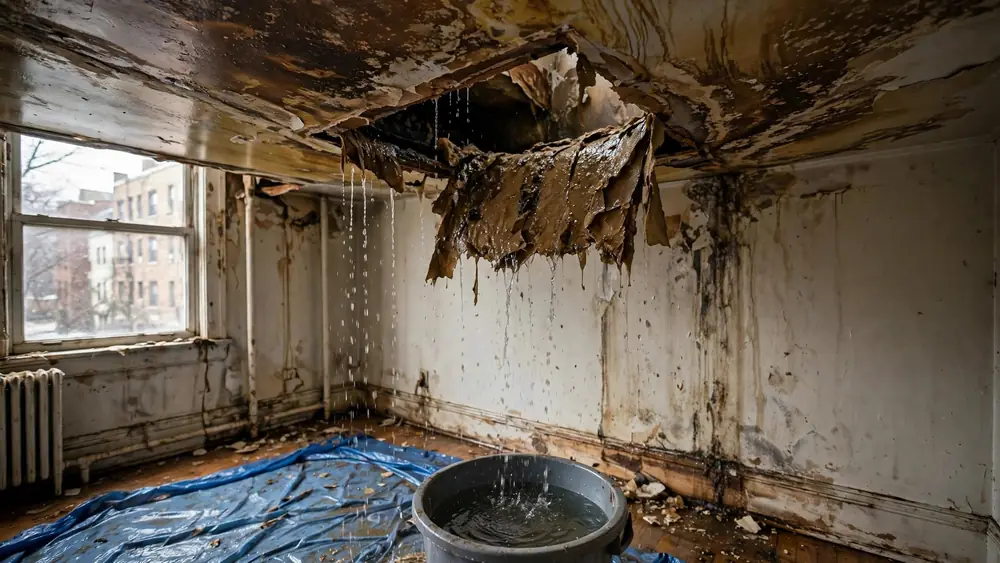
Sagging or stained ceilings below
A bulging or brown-stained ceiling means water is sitting on top of it. Stay out from underneath.
Cupped or crowned wood floors
Boards that curl up at the edges or hump in the middle have absorbed water from below or above.
Bubbling paint and loose plaster
Paint blisters and plaster that sounds hollow when tapped show water inside the wall.
Wet basement walls and floor
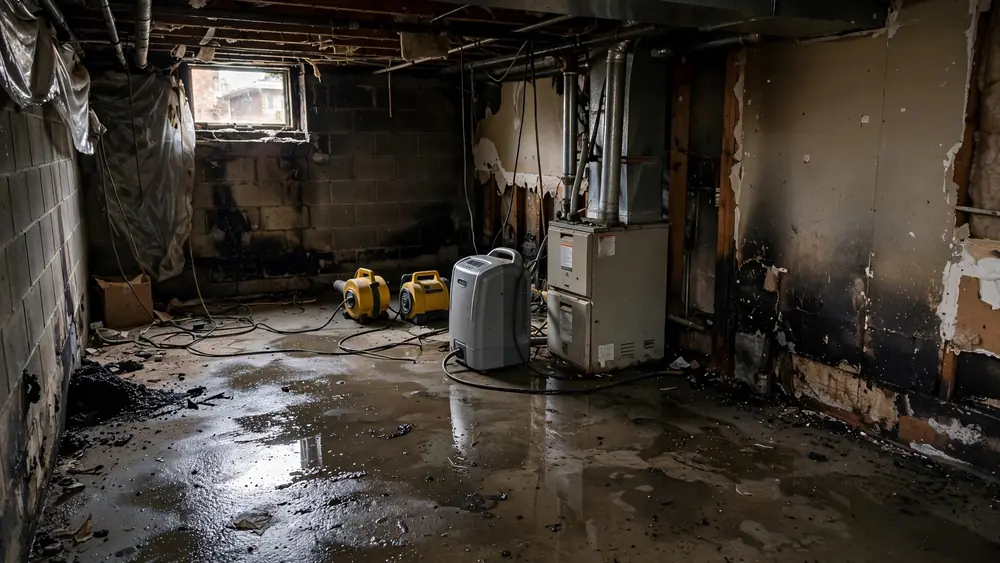
Water from upper floors collects in the basement, often soaking stored belongings and the furnace area.
Musty smell after a few days
A damp, earthy smell under the smoke odor is an early sign of microbial growth.
Swollen doors and trim
Doors that stick and baseboards that separate from the wall show water in the framing.
Water in light fixtures
Water inside a ceiling fixture is an electrical hazard; keep that circuit off until checked.
Damage in the unit below
In multi-unit buildings, the neighbor below may have ceiling, wall and contents damage even if the fire never reached them.
The drying
How firefighting water damage is dried, step by step
- 1
Confirm the building is safe
The fire department clears the building and the electricity in wet areas is shut off or checked by a qualified electrician.
- 2
Document the water
Photos of standing water, wet ceilings and soaked contents support the insurance claim [3].
- 3
Extract standing water
Truck-mounted or portable extractors pull water from floors, carpets and basements.
- 4
Remove what cannot be dried
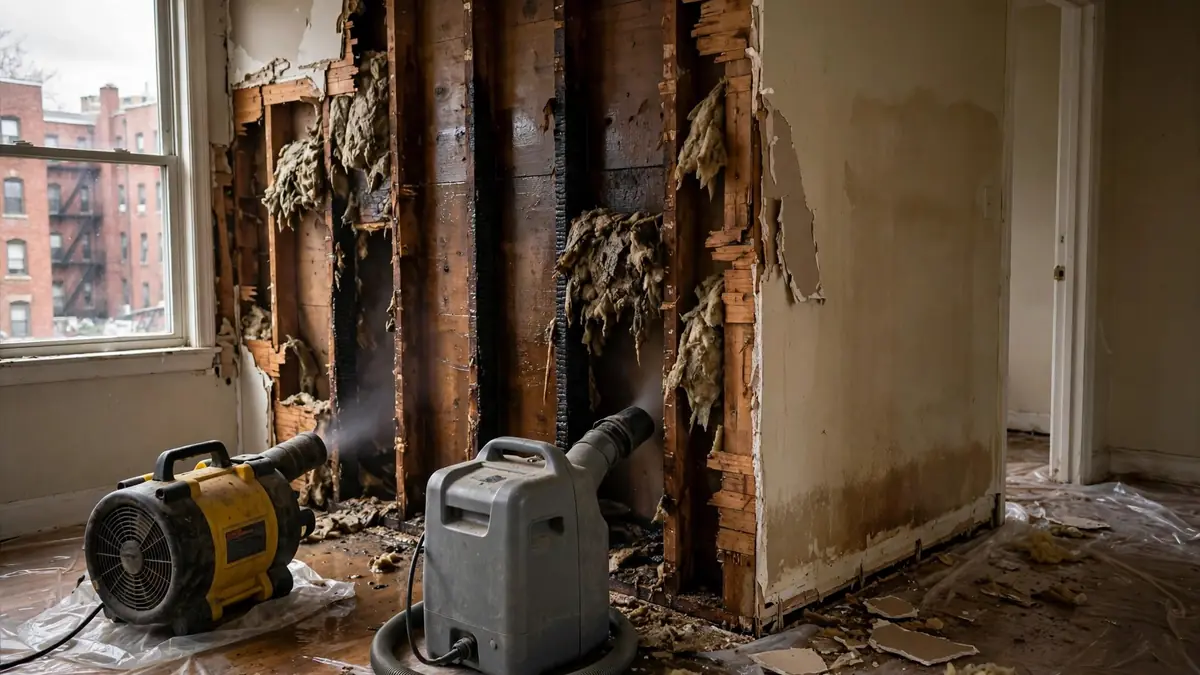
Soaked carpet pad, wet insulation and drywall contaminated by sooty water are cut out, usually to a set height above the wet line.
- 5
Map the moisture
Moisture meters and thermal cameras locate wet areas inside walls, floors and ceilings and record starting readings.
- 6
Set up drying equipment
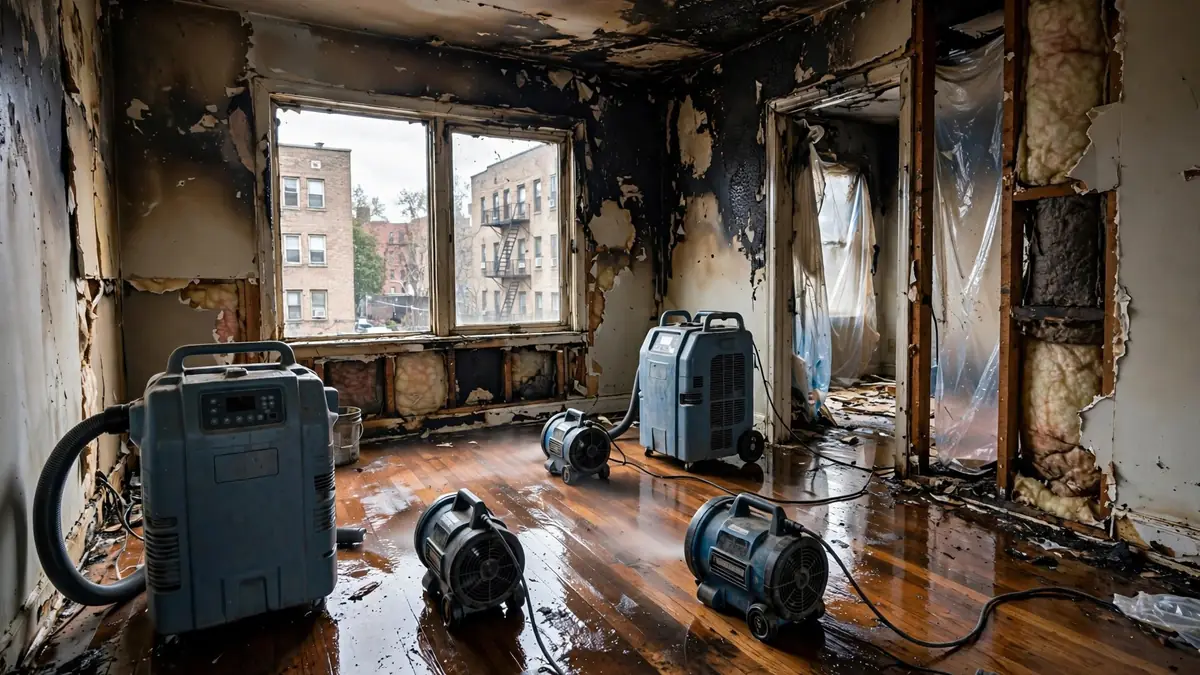
Dehumidifiers and air movers are placed to dry the structure; wall cavities and floors may get specialized drying systems.
- 7
Monitor every day
Readings are taken daily and equipment is moved as areas dry, following the S500 approach [2].
- 8
Confirm dry before rebuilding
Materials are dried to normal levels for that material before anything is closed up, so mold is not sealed into the walls.
Materials
Wet materials and what usually happens to them
How long a material was wet and whether the water carried soot decide whether it can be dried in place.
| Material | Usually dried in place? | Notes |
|---|---|---|
| Plaster on lath or masonry | Often | Dries slowly; check for loose keys and hollow spots |
| Drywall | Sometimes | Removed if sooty water soaked it or it sagged |
| Hardwood flooring | Often | Dried with floor drying systems; may need sanding and refinishing |
| Carpet | Sometimes | Carpet can be cleaned; pad soaked with sooty water is usually replaced |
| Fiberglass or cellulose insulation | Rarely | Holds water and residue; normally removed |
| Framing and joists | Yes | Dried with air movers and dehumidifiers; cleaned and sealed if sooty |
| Particleboard cabinets and subfloor | Rarely | Swells and loses strength when wet |
| Concrete basement floor | Yes | Dries well; contents stored on it often do not |
What you can do yourself
Things you can do while waiting for the drying crew
After the fire department has cleared the building and with power off in wet areas.
- Stay out from under sagging ceilingsA waterlogged ceiling can come down without warning.
- Move dry belongings up and outLift items off wet floors, especially in the basement, and move them to a dry space.
- Prop open furniture and drawersWet furniture dries better with drawers and doors open; put foil or wood blocks under legs on wet carpet.
- Dry and oil metal itemsIllinois guidance suggests drying metal objects and rubbing them with oil to slow rust [3].
- Keep receiptsFans, dehumidifiers or anything you buy to limit damage should be documented for the claim [3].
- Do not use a household vacuum on waterHousehold vacuums are not built for it, and wet outlets are an electrical hazard.
Local specifics
Wet basements, plaster and multi-unit buildings in Chicago
Chicago's housing has features that make firefighting water harder to manage. Most bungalows sit over a full basement [4], and many two-flats and greystones have a garden unit or basement apartment below the main floors. Water from upper floors drains down into those spaces, where it soaks stored belongings, reaches the furnace and water heater, and can find its way into finished basement walls.
Plaster is common in vintage homes. It is heavy and absorbs water slowly, but it also dries slowly and can lose its grip on the lath when soaked. A ceiling that held during the fire can come down days later. Contractors check plaster ceilings carefully and may open sections to let water out rather than leave a heavy wet ceiling overhead.
Older hardwood floors, often installed over plank subfloors, can usually be dried, but they cup as they take on water and may need weeks of controlled drying before refinishing. Rushing that process, or leaving floors wet too long, both cause problems.
In multi-unit buildings, the unit below the fire often has the worst water damage. Each unit owner, tenant and the building may have separate insurance. Documentation from the first day helps sort out who handles what. Chicago's cold months add a twist: if heat to the building is off after a fire, pipes in a wet, unheated building can freeze, so restoring heat or winterizing the plumbing is part of the plan in winter.
Diagnosis
Measuring moisture instead of guessing
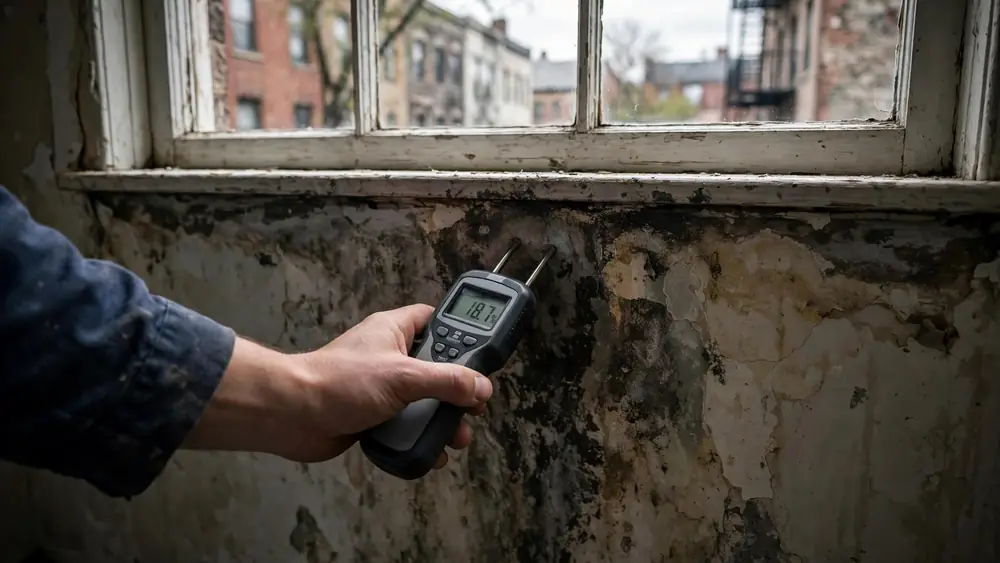
A surface can feel dry while the material behind it is still wet. That is why moisture measurement is the backbone of professional drying. Contractors use pin and pinless moisture meters on walls, floors and framing, and thermal cameras to spot cooler, damp areas in ceilings and walls.
They take readings in unaffected parts of the house to learn what normal looks like for each material, then dry the wet areas until they match. Those readings are recorded each day. The log shows your adjuster that the house was dried properly and tells everyone when it is safe to rebuild.
If a contractor cannot show you moisture readings, ask why. Closing up walls that are still wet is one of the most common causes of mold problems after a fire.
Quick reference
Water damage signs after a fire and the right first step
| What you find | Risk | First step |
|---|---|---|
| Bulging ceiling | Collapse | Keep everyone out from below; contractor drains it in a controlled way |
| Water in fixtures or outlets | Shock, fire | Leave power off to that area until an electrician checks it |
| Standing water in basement | Contamination, damage to furnace and water heater | Extraction, then have mechanical equipment inspected |
| Wet carpet and pad | Mold, odor | Extract; remove pad soaked with sooty water |
| Cupped hardwood | Permanent warping | Controlled floor drying, not heat guns or space heaters |
| Wet stored boxes and papers | Mold, loss of documents | Move to a dry space; freeze important wet papers if they cannot be dried quickly |
Mold
Preventing mold after the fire trucks leave
Mold needs moisture, a food source and time. After a fire, there is plenty of all three. EPA's guidance is to dry wet materials and belongings within 24 to 48 hours to prevent mold growth, and to fix the moisture source before cleaning any mold that does appear [1].
If drying starts late or materials stay wet too long, visible growth can appear on drywall, wood and contents. Small areas on hard surfaces can be cleaned, but EPA recommends professional help for larger areas and when water was contaminated [5]. A contractor who dries the structure promptly and documents it is the best defense.
Utilities
Power, gas and plumbing after a wet fire
Water and electricity are a dangerous combination. After a fire, the fire department or the utility may have shut off power or gas. Do not turn them back on yourself. Ready.gov advises having the fire department confirm utilities are safe before use [6], and the Illinois Department of Insurance advises having electrical equipment checked by a professional before use [3].
If you smell gas at any point, leave the building and call Peoples Gas and 911 from outside [7]. Furnaces, water heaters and boilers that sat in water need inspection before they run again, and appliances that were submerged are usually replaced.
In winter, the loss of heat in a wet building is a real risk. Ask the contractor and your plumber how the pipes will be protected if heat cannot be restored right away.
DIY or professional
Wet cleanup you can manage and what needs equipment
Homeowner task
Moving belongings, mopping small amounts of water on hard floors, opening drawers, keeping receipts.
Needs equipment
Extracting carpet and basement water, drying walls and floors, moisture mapping.
Needs a specialist
Electrical checks, gas appliance inspection, sagging ceilings, any work in pre-1978 homes that disturbs paint [8].
The visit
What to ask the drying contractor
Ask how they will measure moisture and how often, what they plan to remove and why, how long they expect drying to take and how they will protect the units below or beside yours. Ask how they will coordinate with the fire cleanup so drying does not spread soot through the house.
Ask for the daily moisture log and photographs, which your insurer may request. The Illinois Department of Insurance advises getting your adjuster's agreement before you contract for repairs, and keeping all bills and receipts [3]. Rebuilding after drying, such as replacing drywall, flooring or electrical work, may require a Chicago building permit [9].
Prevention
Limiting water damage the next time
You cannot stop firefighters from using water, but you can make things easier. Keep valuables and documents off basement floors and in waterproof containers. Know where your main water shutoff is. In multi-unit buildings, make sure every unit has working smoke alarms so a fire is caught early, when less water is needed [10].
Dry or replace
Deciding what to dry and what to replace
The decision depends on what the material is, how long it was wet and how dirty the water was. Solid wood, plaster, concrete and framing usually dry well. Carpet pad, insulation, particleboard and drywall that soaked up sooty water usually come out.
Wood floors are a judgment call: many can be dried and refinished, but floors that stayed wet too long or were already worn may be better replaced. A good contractor explains each call with moisture readings and photos, and your adjuster should see damaged items before they are thrown away [3].
Related problems
Other work that usually follows the drying
Structural drying
Detailed drying of framing, subfloors and wall cavities.
Read moreBoard-up and tarping
Keeping rain and snow out of an opened roof or windows.
Read moreSmoke cleanup after drying
Cleaning residue once surfaces are dry enough.
Read moreWet belongings
Cleaning, drying or packing out contents.
Read more
Belongings
Rescuing wet books, papers and photographs
Paper soaks up firefighting water quickly and grows mold within days. Important documents and photographs are worth acting on early. Separate wet photographs and let them air-dry face up on a clean surface, out of direct sun. Do not stack wet papers.
If there are too many wet papers to dry within a day or two, a common conservation approach is to place them in sealed bags and freeze them, which stops mold growth and buys time for professional drying later. Valuable books, family records and artwork are worth a conversation with a document restoration specialist.
Make a list of what was damaged even if you cannot save it. The Illinois Department of Insurance suggests picturing every room and listing what was in it if you do not have an inventory, including seasonal and stored items that are easy to forget [3].
Neighbors
When the water reaches a neighbor's home
In Chicago's two-flats, three-flats, courtyard buildings and high-rises, water from a fire in one unit almost always reaches another. The unit below may have wet ceilings, damaged floors and soaked belongings even though the fire never touched it.
Each household usually deals with its own insurer for its own belongings, while the building owner or condominium association handles the structure and common areas. Share photos and contact details with neighbors early, and let your insurer know other units were affected. A drying contractor working for the building can often dry several units at once, which is faster and more effective than separate crews working unit by unit.
Timeline
How long drying usually takes after a fire
Most structures dry in several days to a couple of weeks once professional equipment is running, but the range is wide. A wet carpet over a concrete slab dries quickly. Thick plaster walls, old hardwood over plank subfloors, and masonry that soaked up water from a long firefight take much longer. Cold weather slows drying, because cold air holds less moisture and dehumidifiers work less efficiently in unheated rooms.
The daily moisture log is the best guide. When readings in the wet areas match the readings taken in dry parts of the home, drying is complete. If readings stop improving, the crew should look for trapped water in a cavity, a wet layer under flooring or a plumbing leak caused by the fire.
Drying and smoke cleanup overlap. Cleaning crews usually wait until surfaces are dry enough to clean properly, but air filtration often runs alongside the drying equipment so that moving air does not spread residue.
Checklist
Firefighting water checklist for the first two days
- Fire department has cleared the building for entry
- Power off to wet areas until an electrician checks them
- Photos and video of all water damage, room by room
- Insurer notified, including damage to units below
- Standing water extracted and wet pad and insulation removed
- Dehumidifiers and air movers running with daily moisture readings
- Wet belongings moved to a dry space or packed out
- Heat or plumbing protection arranged in cold weather
FAQ
Firefighting water damage questions
How fast does water damage need to be dried after a fire?
As soon as the building is safe to enter. EPA advises drying wet areas within 24 to 48 hours to prevent mold. Drying equipment should be running as early as possible.
Is firefighting water damage covered by homeowners insurance?
Water used to put out a covered fire is generally treated as part of the fire loss, but every policy differs. Ask your insurer and document the water damage alongside the fire damage.
Why is the apartment below mine wetter than mine?
Water runs down through floors and ceilings. In two-flats, three-flats and high-rises, the units below the fire often take most of the water.
Can wet plaster ceilings be saved?
Often, if they are drained and dried properly and the plaster is still keyed to the lath. A sagging or detached plaster ceiling is a collapse hazard and may need to come down.
Will my hardwood floors recover?
Many do with controlled drying over days to weeks. They may need sanding and refinishing afterward. Floors that stay wet too long or are badly cupped may need replacement.
Can I use fans and a space heater to dry the house myself?
Fans help a little, but without dehumidifiers the moisture just moves into the air and other rooms. Space heaters can crack wood and plaster. Professional drying uses measured, controlled equipment.
When can walls be closed up after drying?
Only when moisture readings show the framing and remaining materials are back to normal levels. Closing up wet walls is a common cause of mold.
Does firefighting water cause mold?
It can if materials stay wet. EPA advises drying wet materials and belongings within 24 to 48 hours to prevent mold. Prompt extraction and drying is the best prevention.
Is it safe to turn the power back on after the fire hoses soaked the house?
Not until the utility or a licensed electrician says so. Water in outlets, fixtures and panels creates a shock and fire risk.
Sources and citations
- [1]U.S. EPA — A brief guide to mold, moisture and your home
- [2]IICRC — ANSI/IICRC S500 Standard for Professional Water Damage Restoration
- [3]Illinois Department of Insurance — What to do after an insured homeowners loss
- [4]Wikipedia — Chicago bungalow
- [5]U.S. EPA — Mold cleanup in your home
- [6]Ready.gov — Home fires
- [7]Peoples Gas — Natural gas safety
- [8]U.S. EPA — Lead Renovation, Repair and Painting Program
- [9]City of Chicago — Department of Buildings permits
- [10]NFPA — Smoke alarms