Key facts: Portage Park and Jefferson Park
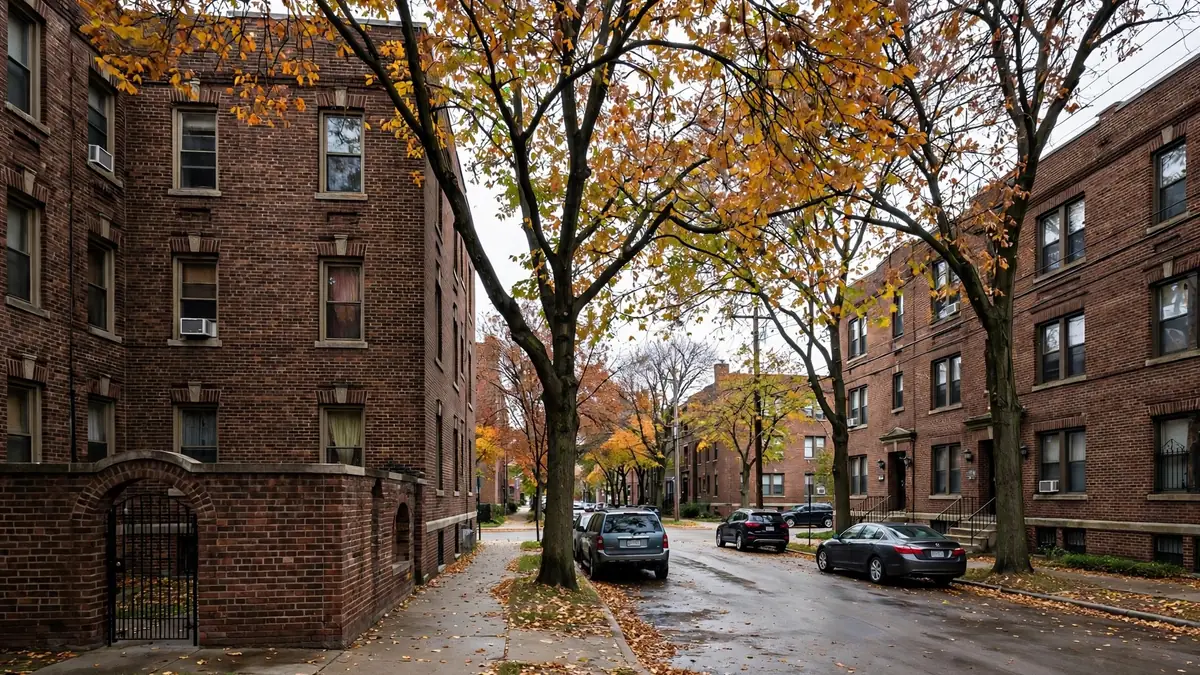
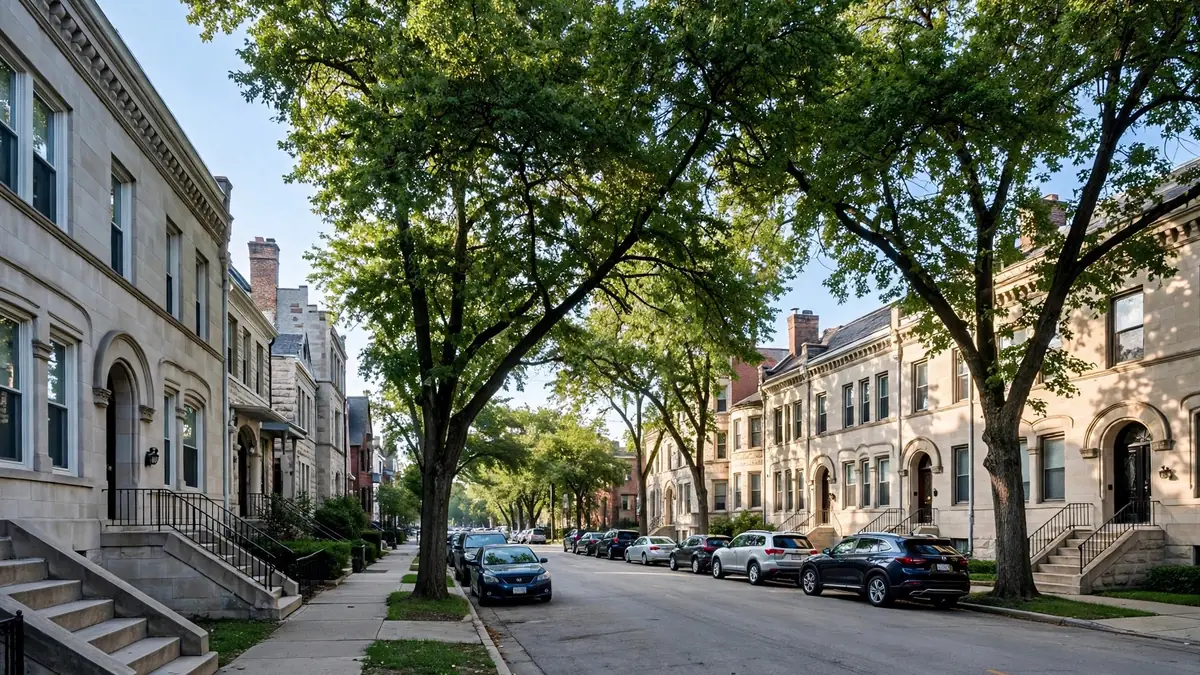
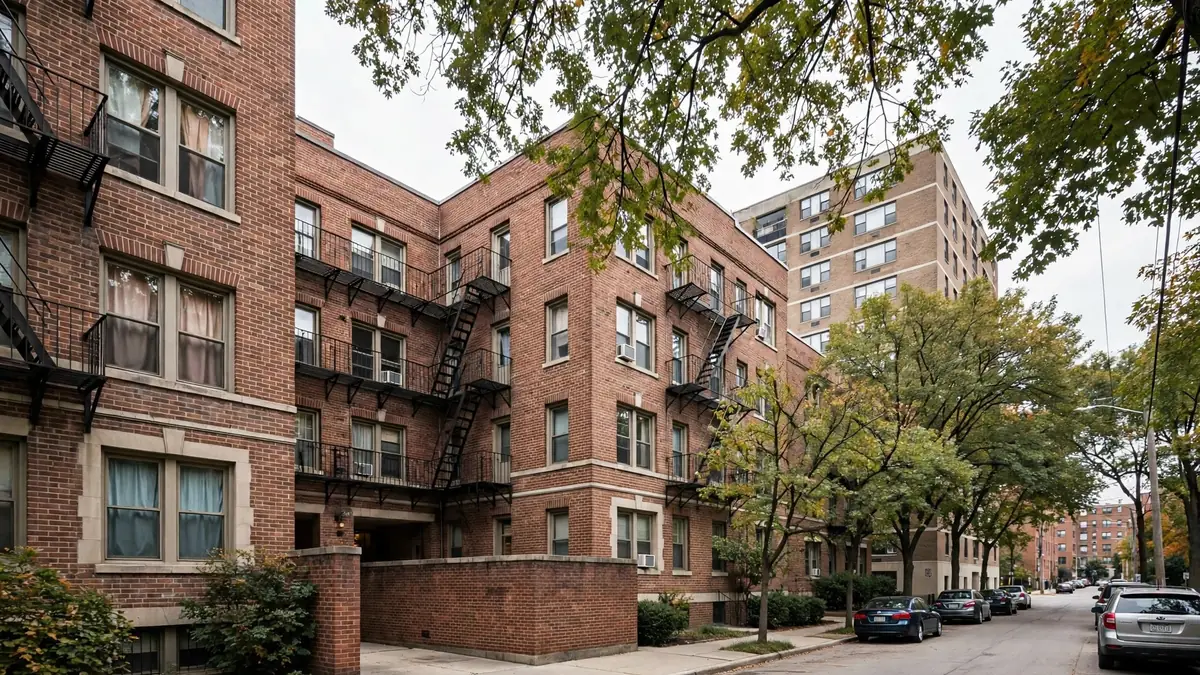
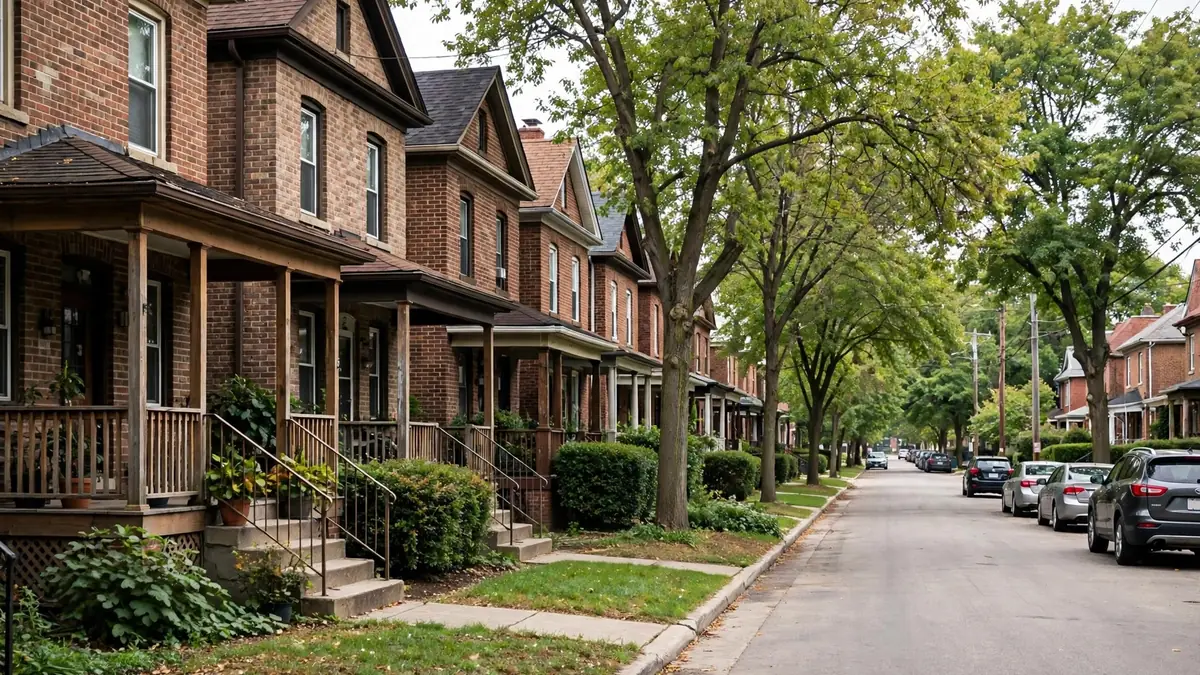
- Portage Park (Community Area 15) is mainly residential, with building stock made up largely of bungalows and two-flats, part of Chicago's bungalow belt [1].
- Chicago has more than 80,000 bungalows, mostly built between 1910 and 1940, typically one and a half stories of brick over a full basement [2].
- Jefferson Park (Community Area 11) includes Gladstone Park, nicknamed Little Rotterdam for its Dutch Colonial homes [3].
- Both areas were part of Jefferson Township, annexed to Chicago in 1889 [1][3].
- Painted surfaces in pre-1978 homes may contain lead, so sanding or demolition after a fire requires lead-safe practices [4].
Covered here
Northwest Side neighborhoods covered on this page
These neighborhoods in ZIP codes 60641 and 60630 are covered by the contractors you reach through this site.
- Portage ParkBungalows and two-flats around Six Corners and the park itself.
- Six CornersThe shopping district at Irving Park, Cicero and Milwaukee, with flats above storefronts.
- Jefferson ParkBungalows, two-flats and small apartment buildings around the transit center.
- Gladstone ParkDutch Colonial houses and bungalows in the northern part of Jefferson Park.
- The Belmont and Central areaResidential blocks around Portage Park's second business district.
Bungalow belt
Why the bungalow belt has its own fire damage patterns
Portage Park and Jefferson Park grew from farmland subdivided into city lots in the early twentieth century, when streetcar lines made the Northwest Side reachable for families leaving crowded neighborhoods closer in [1]. Developers filled those lots with bungalows and two-flats, and the result is a large part of what Chicagoans call the bungalow belt [1].
The Chicago bungalow is a specific type. Most were built between about 1910 and 1940, typically one and a half stories of brick over a full basement, about twenty feet wide on a twenty-four or twenty-five foot lot, with gables running parallel to the street [2]. More than 80,000 were built, nearly a third of the city's single-family homes [2].
Because so many homes share that layout, fire damage in them follows familiar paths. Smoke from a basement fire climbs the stair and the ducts into every room. Smoke from a kitchen fire fills the main floor and rises into the half-story bedrooms. Firefighting water from the main floor drains into the basement. Knowing those patterns helps a contractor find damage that is easy to miss.
Common calls
Fire damage Northwest Side homeowners call about
Basement fires
Fires from furnaces, dryers, water heaters, workshops or stored items in the full basement.
Kitchen fires on the main floor
Stovetop fires that spread smoke through the living areas and up the stair to the half-story.
Attic and half-story fires
Electrical fires or space heater fires in converted attic bedrooms with knee walls and low ceilings.
Garage fires along the alley
Detached garages behind bungalows, where fires can spread to the house or neighboring garages.
Porch fires
Fires on the front sunporch or enclosed veranda common on bungalows.
Two-flat fires
A fire in one unit of a two-flat sending smoke up or down the shared stair.
Basements
Basement fires and water in Portage Park bungalows
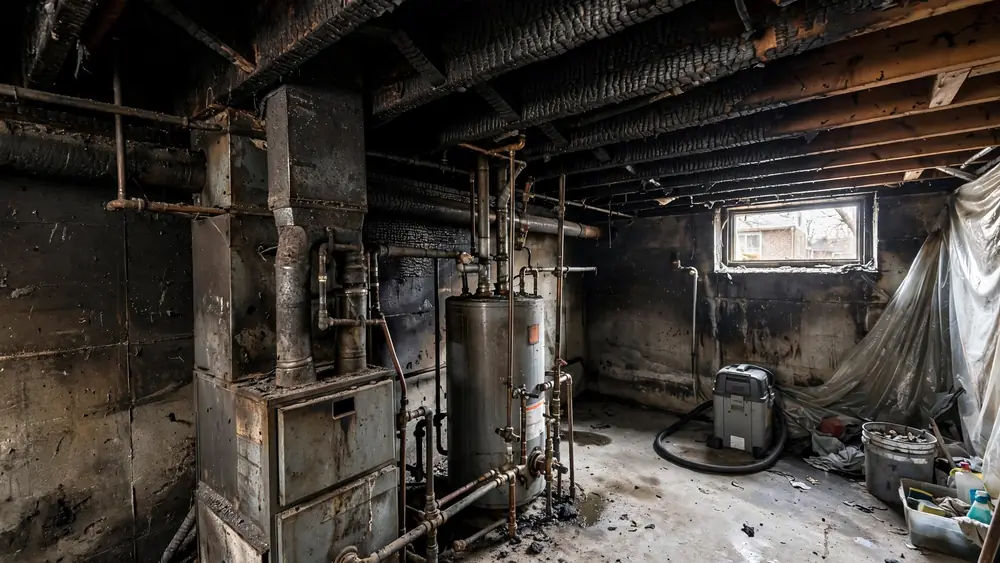
The full basement under a Chicago bungalow [2] holds most of the house's equipment: the furnace or boiler, the water heater, the electrical panel, often a laundry area and, in many homes, a finished recreation room or extra bedroom. It is a common place for fires to start and a common place for water to end up.
When a fire starts in the basement, soot coats the open joists and the underside of the main floor, and smoke moves up the stair and through the forced-air ducts into every room. Thorough cleaning of the joists and subfloor overhead, plus full HVAC cleaning, is usually needed. When a fire starts upstairs, the basement collects the firefighting water, soaking finished walls, carpet and anything stored on the floor.
Finished basements in bungalows often have paneling, drywall or carpet over the masonry walls and concrete floor. After soaking, those finishes usually have to come out so the foundation can dry. Equipment that sat in water, such as the furnace and water heater, should be inspected before use.
Half-story
Smoke in the half-story and knee walls
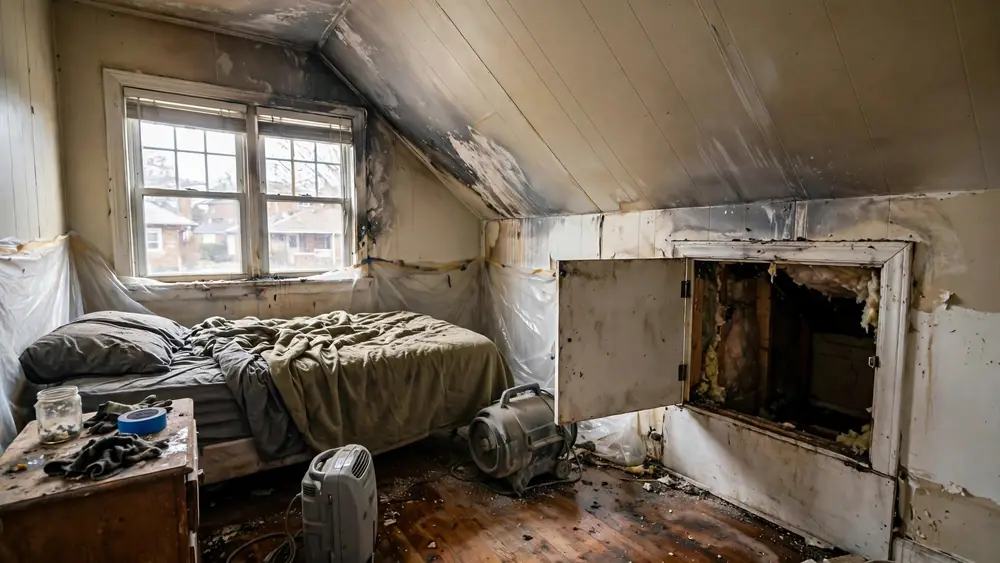
Many bungalow owners finished the half-story under the roof into bedrooms. These rooms have sloped ceilings and short knee walls, with unconditioned storage space and the roof framing behind them. Hot smoke rises into these rooms quickly and then spreads into the knee-wall spaces and the attic above the bedroom ceilings.
Those hidden spaces are a common source of lingering odor. The insulation there absorbs smoke residue, and the framing collects soot. A thorough restoration includes opening the knee-wall access panels, checking the attic and removing smoke-soaked insulation. Simply cleaning the visible walls of the bedrooms often leaves the smell behind.
Older wiring in the half-story, sometimes added when the attic was converted, is also worth checking. Fires in these rooms often start electrically, and any wiring exposed to fire should be inspected by a licensed electrician.
Gladstone Park
Dutch Colonial houses in Gladstone Park
Gladstone Park, in the northern part of Jefferson Park, has so many Dutch Colonial homes that it earned the nickname Little Rotterdam [3]. These houses have a distinctive gambrel roof, which creates a full upper floor of bedrooms under a steep roof with limited attic space above.
In a Dutch Colonial, smoke from a fire on the main floor rises through the central stair into the upper bedrooms and the narrow attic spaces at the top and sides of the gambrel. Roof openings made by firefighters on the steep gambrel slopes are harder to tarp securely than on a low bungalow roof, so this work should be done by a crew with the right equipment.
Many of these homes are wood-framed with siding rather than brick, which affects how a fire spreads to the exterior and how the outside of the house is cleaned and repaired.
By building type
Northwest Side home types and where fire damage hides
| Home type | Where damage hides | What to check |
|---|---|---|
| Brick bungalow | Basement joists, ducts, half-story knee walls, attic | HVAC cleaning; insulation behind knee walls |
| Two-flat | Shared stair, the other unit, basement | Both units and the stair; rear porch |
| Dutch Colonial (Gladstone Park) | Upper floor under gambrel roof, narrow attic | Roof openings, attic insulation |
| Raised ranch or later infill | Garage under the house, ducts | Fire separation between garage and living space |
| Flats above Six Corners storefronts | Floors above the business | Grease and odor if a restaurant burned |
Two-flats
Two-flats in Portage Park and Jefferson Park
Two-flats are the other half of Portage Park's building stock [1]. A typical Northwest Side two-flat has one unit on each floor, a shared front entry and stair, a rear stair or porch and a full basement used by both units. Many are owner-occupied, with the owner living in one unit and renting the other.
A fire in either unit affects the other. Smoke rises up the shared stair into the upper unit; water from firefighting on the upper floor drains into the lower unit and the basement. The rear porch, usually wood, is a common place for fire to spread and is the second way out for the upper unit.
For an owner who lives in one unit and rents the other, the restoration involves both units, the shared spaces and the tenant's belongings, which are covered by the tenant's own renter's insurance, not the building policy [5].
Heating
Forced-air furnaces and the spread of smoke
Many bungalows in this area have gas forced-air furnaces in the basement, often replacing original boilers. A forced-air system pulls air from the whole house through its returns and pushes it back through supply ducts to every room. If it ran during the fire, it carried smoke everywhere; even if it was off, residue can settle in the ducts.
Duct cleaning is therefore a routine part of fire restoration in bungalows. The ducts in these homes are usually bare sheet metal, which cleans well, though some runs use panned joist spaces as returns, which are harder to clean. Keep the system off until it has been inspected, and have the furnace checked by a heating professional before it runs again.
Homes that kept their boilers and radiators need the radiators cleaned instead, since residue baked onto them releases odor whenever the heat comes on.
Garages
Detached garages along Northwest Side alleys
Most bungalows and two-flats in Portage Park and Jefferson Park have a detached garage at the back of the lot, opening onto the alley. Garages store fuel, tools, paint and vehicles, and fires there can spread to neighboring garages along the alley or toward the house.
A garage fire may leave the house itself with only smoke damage, but the yard, fence and alley may hold debris, and a neighbor's garage may be affected too. The insurance claim may involve both the garage, as an outbuilding, and the house. Photograph everything, including the alley side [5].
Rebuilding a garage in Chicago is permitted work through the Department of Buildings [6], and the contractor should handle the application.
The visit
A typical restoration visit on the Northwest Side
- 1
Clearance from the fire department
Wait for the Chicago Fire Department to release the home and confirm utilities [7].
- 2
Basement to attic walk-through
The contractor checks the basement, main floor, half-story, knee walls, attic and garage.
- 3
Secure the house
Windows, doors and roof openings are boarded or tarped.
- 4
Extract and dry the basement
Water is removed from the basement and drying starts there.
- 5
Clean top to bottom
Soot and smoke cleaning starts in the half-story and works down; HVAC cleaning follows the heavy work.
- 6
Scope to your insurer
A written scope with photos goes to you and your adjuster before major repairs [5].
Older materials
Lead, asbestos and plaster in bungalow-era homes
Bungalows and two-flats built before 1978, which is nearly all of them in this area, may have lead in older paint layers. EPA's renovation rule requires certified firms and lead-safe practices when work disturbs painted surfaces in those homes [4]. Sanding smoke-stained trim or demolishing plaster walls without precautions creates a new hazard.
Asbestos may be found in old furnace and pipe insulation in the basement, in some floor tiles and in certain plaster or ceiling materials. If fire or firefighting damaged these materials, they should be assessed before cleanup continues [8].
Original plaster walls and oak trim are common in bungalows and worth keeping where possible. They usually clean well and can be dried in place.
Symptoms
Bungalow belt symptoms after a fire and what they mean
| Symptom | Likely cause | Typical action |
|---|---|---|
| Smell upstairs when the furnace runs | Smoke residue in the ducts | Full HVAC cleaning |
| Odor in half-story bedrooms after cleaning | Insulation behind knee walls | Open access panels, remove insulation |
| Wet basement after an upstairs fire | Firefighting water draining down | Extraction, remove wet finishes, dry |
| Soot on basement joists | Basement fire or puff-back | HEPA vacuum, clean and seal joists |
| Scorched siding on the house next door | Garage or house fire nearby | Neighbor documents and claims damage |
Transit and access
Access around Six Corners and the Jefferson Park Transit Center
Most homes here have rear alleys, which makes access for restoration trucks and dumpsters easier than in denser neighborhoods. Around Six Corners, where Irving Park, Cicero and Milwaukee meet [1], traffic and parking are heavier, and flats above storefronts may need deliveries scheduled outside business hours.
Jefferson Park is a transit hub, with the Blue Line in the Kennedy Expressway median at Milwaukee and Gale and Metra's Union Pacific Northwest Line nearby [3]. Streets around the transit center are busy; crews may prefer alley access for homes close to it.
Families
Where to stay while a bungalow is restored
Many Northwest Side homeowners have lived in their bungalows for decades and have family nearby. If the house is not livable, staying with relatives is common. The Illinois Department of Insurance explains that additional living expense coverage covers the increase in your living expenses over what you normally spend, and notes that if you stay with relatives, the insurer may need proof of payments to them [5].
Keep receipts for meals, lodging, extra commuting and other expenses caused by the fire. Ask your insurer early what they will need and whether there are limits.
Prevention
Fire prevention in an older bungalow
Bungalows are durable homes, but their age brings risks. Old wiring, especially in converted half-stories and basements, deserves an inspection. Furnaces, water heaters and dryers in the basement should be serviced and kept clear of stored items. Dryer vents should be cleaned regularly.
Working smoke alarms on every level, including the basement and the half-story, matter most. Ready.gov advises testing alarms and replacing units every ten years [7]. A fire extinguisher in the kitchen and another in the basement near the furnace are sensible additions.
Before the call
Information that helps on a Northwest Side call
- Address and home type: bungalow, two-flat, Dutch Colonial or other
- Where the fire started: basement, kitchen, half-story, garage or porch
- Whether the basement has water in it
- Whether the furnace was running during the fire
- Whether any windows or the roof are open
- Whether there is a tenant in a second unit
- Your insurer and claim number, if you have one
Coverage
Northwest Side ZIP codes covered
This page covers ZIP codes 60641 (Portage Park and part of Irving Park) and 60630 (Jefferson Park and Gladstone Park). Nearby Northwest Side ZIP codes 60634, 60646, 60631 and 60656 are also covered by the contractors you reach through this site, which includes much of Dunning, Belmont Cragin's northern blocks, Sauganash, Forest Glen, Edison Park and Norwood Park.
Northwest Side coverage follows the contractors who accept calls there and is reviewed as that changes; the call itself confirms whether your block is included.
Porches
Front sunporches and enclosed verandas
Many Chicago bungalows have a front porch or veranda, open or partly enclosed [2], and over the decades a lot of them have been glassed in and turned into sunrooms. These porches often hold space heaters, extension cords, stored furniture and holiday decorations, and they are a common place for small fires to start.
A porch fire can break the large front windows, scorch the brick and send smoke into the living room through the front door. Because the porch structure is often lighter than the rest of the house, it can be badly damaged even when the main house is not. Repairs to the porch, especially if it has to be rebuilt, may need a Chicago building permit [6].
When the porch is the source, check the living room ceiling and the half-story above it for smoke, since the front of the house sits directly over and behind the porch roof.
Six Corners
Apartments above Six Corners and Milwaukee Avenue storefronts
The Six Corners shopping district and the stretches of Milwaukee Avenue and Irving Park Road around it include older commercial buildings with apartments above [1]. A fire in a ground-floor business, such as a restaurant kitchen or a shop with stored stock, sends smoke and soot into the apartments overhead through stairs, chases and floors.
Residents of those apartments are usually tenants, so their belongings fall under their own renter's insurance, while the building owner handles the structure. The business owner has a separate commercial policy. Each household should document its own damage and keep receipts [5].
Restaurant fires in particular leave heavy grease residue that needs degreasing throughout the apartments above, along with the stairwells and any shared ventilation.
FAQ
Questions from Portage Park and Jefferson Park homeowners
Why does my bungalow still smell of smoke upstairs after cleaning?
The most common reason is residue in the insulation and framing behind the half-story knee walls and in the attic above. Those spaces need to be opened, the insulation removed and the framing cleaned or sealed.
Do I need duct cleaning after a kitchen fire in my bungalow?
If you have forced air and the system ran during or after the fire, or the house smells when the blower runs, yes. Smoke in the ducts will keep coming back into clean rooms.
My basement flooded from the fire hoses. Can the finished walls be saved?
Paneling and drywall that soaked up firefighting water usually need to come out so the masonry and framing can dry. Concrete floors and foundation walls usually dry well.
Is my Gladstone Park Dutch Colonial harder to tarp than a bungalow?
Often, yes. The steep gambrel roof makes tarping more difficult and more dangerous, so it should be done by a crew with the right equipment.
My detached garage burned. Does it affect the house claim?
Garages are usually covered as outbuildings under the same policy, with their own limits. Document the garage, the house and the alley side, and ask your insurer how they handle it.
Can the oak trim in my bungalow be cleaned after smoke?
Usually. Original oak trim with a sound finish often cleans well. If heat or residue damaged the finish, refinishing may be better than repeated scrubbing.
Who pays for my tenant's belongings in my two-flat?
The tenant's own renter's insurance, if they have it. The building policy covers the structure and your own belongings, not the tenant's.
My bungalow’s front sunporch caught fire. What else should be checked?
Check the living room behind it, the front windows, the brick around the porch and the half-story above the front of the house, since smoke from the porch usually enters through the front door and rises from there.
Are the Northwest Side ZIP codes around Jefferson Park also covered?
Yes. Besides 60641 and 60630, nearby ZIP codes 60634, 60646, 60631 and 60656 are covered by contractors who take calls through this site. Coverage can change, so confirm when you call.
Sources and citations
- [1]Wikipedia — Portage Park, Chicago
- [2]Wikipedia — Chicago bungalow
- [3]Wikipedia — Jefferson Park, Chicago
- [4]U.S. EPA — Lead Renovation, Repair and Painting Program
- [5]Illinois Department of Insurance — What to do after an insured homeowners loss
- [6]City of Chicago — Department of Buildings permits
- [7]Ready.gov — Home fires
- [8]U.S. EPA — Protect your family from exposures to asbestos