
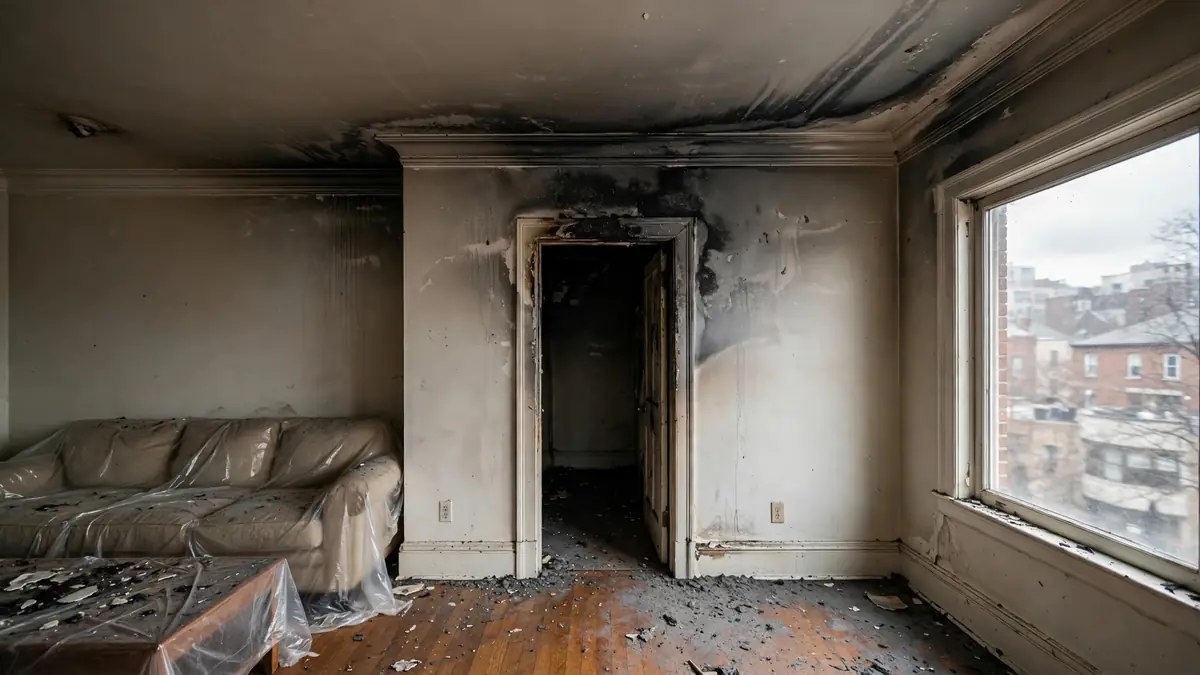
Key facts: Soot on walls and ceilings
- Soot is fine carbon particulate from incomplete combustion, often coated with oils and acids from whatever burned [1].
- Dry soot is removed with HEPA vacuuming and dry chemical sponges before any wet cleaning.
- EPA notes fine particles can get deep into the lungs and aggravate asthma and heart conditions [2].
- In homes built before 1978, sanding or scraping sooty painted surfaces falls under EPA's lead-safe renovation rule [3].
- Illinois insurance guidance says to photograph damage before cleaning begins [4].
Short answer
What soot on your walls means
Soot forms when something burns without enough oxygen and leaves tiny carbon particles coated with oils and acids [1]. Those particles float on hot smoke, rise to the ceiling and settle on cooler surfaces. A dark band along the ceiling, shadows over the framing and outlines around outlets all show where smoke traveled and cooled.
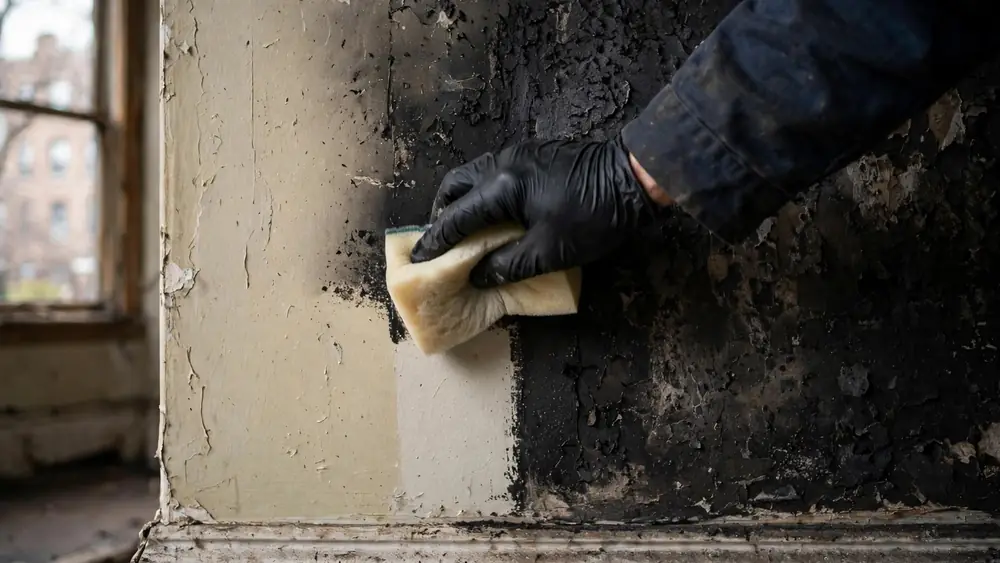
The right cleanup order is dry first, then wet. Loose soot is vacuumed with a HEPA vacuum using a soft brush, then lifted with dry chemical sponges. Only after that does wet cleaning, with a cleaner suited to the residue, remove the rest. Surfaces that stay stained are sealed and repainted.
Read the pattern
Soot patterns on walls and ceilings and what they mean
| Pattern | Likely cause | What it means for cleanup |
|---|---|---|
| Dark band where walls meet the ceiling | Hot smoke layer spread across the room | Ceilings throughout the floor need cleaning |
| Lines tracing the ceiling joists or studs | Cooler surface over the framing | Dry sponging, then often sealing |
| Gray outlines around outlets and switches | Air moving through wall cavities | Cavities may hold residue |
| Streaks above heating registers | Soot blown through ducts | Duct cleaning needed |
| Even oily film everywhere, no burned area | Furnace puff-back | Whole-house and HVAC cleaning |
| Black smudges above candles or a fireplace | Ongoing small sources | Fix the source; light cleaning |
Before you touch it
Do this before cleaning any soot
- Photograph the walls and ceilingsYour insurer may need to see the soot pattern before it is cleaned [4].
- Wear protectionAn N95 or better respirator, gloves and eye protection; soot particles reach deep into the lungs [2].
- Turn off the HVACMoving air spreads soot while you work.
- Cover floors and furnitureDrop cloths catch soot that falls during cleaning.
- Check the home's ageIf it was built before 1978, avoid sanding or scraping painted surfaces; lead-safe rules apply [3].
How to clean
The right order for cleaning light soot
- 1
HEPA vacuum
Hold the brush just above the surface and let the vacuum pull the loose soot off; do not press or scrub.
- 2
Dry chemical sponge
Wipe in one direction with a dry soot sponge, turning it to a clean face often. Do not wet it.
- 3
Test a wet cleaner
On a hidden spot, test a mild cleaner suited to the residue and check that the paint survives.
- 4
Wash from the top down
Clean ceilings first, then walls from top to bottom, rinsing the sponge often so you do not spread dirty water.
- 5
Rinse and dry
Wipe with clean water and let the surface dry fully.
- 6
Seal if staining remains
An odor- and stain-blocking primer goes on before the finish paint.
When to stop
When soot cleanup is a job for professionals
Light soot in a small area, far from the fire, on glossy paint, is a reasonable do-it-yourself job if you follow the dry-then-wet order. Beyond that, a restoration crew usually does better: whole ceilings, oily soot from burned plastics or a puff-back, flat paint that absorbs residue, wallpaper, textured ceilings, and any room close to the fire.
Professionals bring HEPA air scrubbers to capture particles stirred up during cleaning, containment to protect clean rooms and experience matching cleaners to residue types. They also check whether soot went into the ducts and wall cavities, which wall cleaning alone will not fix [5]. See soot removal and duct cleaning after a fire.
In older homes, textured ceilings and some plaster may contain asbestos, and older paint may contain lead. If either might be present, have the material assessed before anyone scrapes or sands it [3][6].
Chicago homes
Soot on plaster, brick and old woodwork
Many Chicago homes have plaster walls and ceilings, original wood trim and exposed brick in older buildings and lofts. Plaster usually cleans well with the dry-then-wet method, but cracks in old plaster trap soot, and water can soak in through them. Old woodwork with shellac or varnish finishes may not tolerate strong cleaners, so test first. Exposed brick holds soot in its texture and should be vacuumed and cleaned with masonry-safe methods rather than scrubbed or pressure washed.
Beyond the walls
Soot you cannot see on the walls
If soot reached your walls and ceilings, it almost certainly reached other places too: the tops of door frames and cabinets, light fixtures, window tracks, radiator fins, the inside of closets and the ductwork. Cleaning only the visible walls leaves residue that keeps releasing odor and can re-soil clean surfaces when the heat or air conditioning runs.
Check those places with a white cloth before you decide the cleanup is finished. If the cloth comes away gray, there is more to clean. Soot inside ducts, wall cavities or attic insulation is beyond what household cleaning can reach and is a sign to bring in a restoration contractor.
FAQ
Soot on walls and ceilings: questions
Can I wash soot off my walls with soap and water?
Not as a first step. Water spreads dry soot and drives it into paint and plaster. Vacuum and dry-sponge first, then wash with a cleaner suited to the residue.
What is a dry chemical sponge?
A soot sponge made of vulcanized rubber that lifts soot from surfaces without water. It is used dry and discarded or washed when loaded.
Why are there black lines on my ceiling?
Lines that follow the ceiling joists form because the surface over the framing is a slightly different temperature, so soot settles there more. They usually need cleaning and a stain-blocking primer.
Do I need to repaint after cleaning soot?
Often. Even after cleaning, some staining and odor may remain in the paint. A stain- and odor-blocking primer followed by finish paint gives the best result.
Is soot on walls dangerous?
Soot is fine particulate that can irritate the lungs and aggravate asthma and heart conditions. Clean it with a respirator and gloves, and keep vulnerable people away.
Can I use a magic eraser on soot?
Melamine sponges are abrasive and used wet, so on soot they tend to smear residue and dull the paint. A dry chemical soot sponge after HEPA vacuuming is the safer first step.
Should textured or popcorn ceilings with soot be scraped?
Not before testing. Older textured ceilings can contain asbestos, and scraping releases dust. Have the material assessed, and leave cleaning or removal to trained professionals.
Sources and citations
- [1]Wikipedia — Soot
- [2]U.S. EPA — Particulate matter basics
- [3]U.S. EPA — Lead Renovation, Repair and Painting Program
- [4]Illinois Department of Insurance — What to do after an insured homeowners loss
- [5]IICRC — ANSI/IICRC S700 Standard for Fire and Smoke Damage Restoration
- [6]U.S. EPA — Protect your family from exposures to asbestos