Key facts: Smoke Damage Cleanup
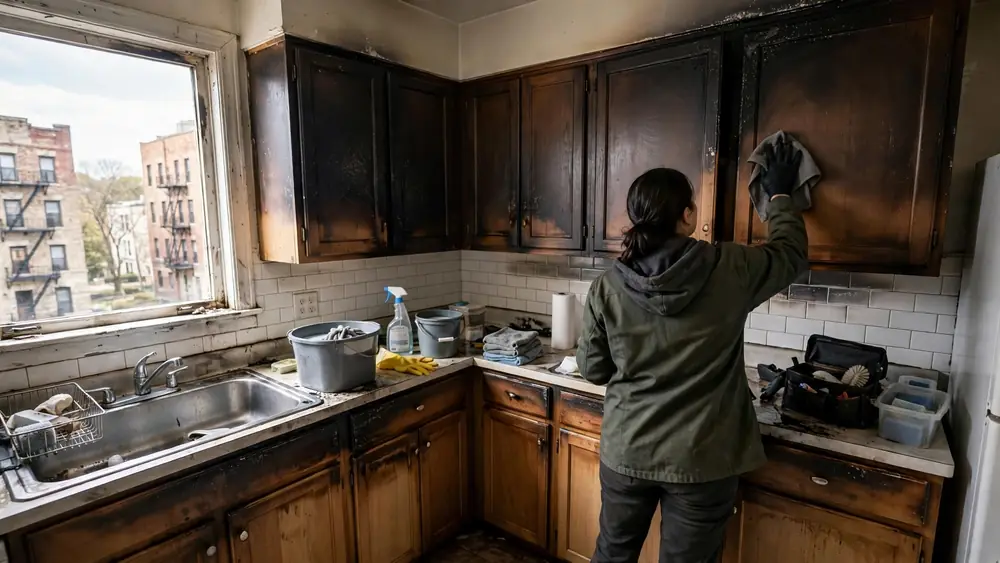
- Smoke residue type depends on the fuel: fast, hot fires leave dry powdery soot, slow smoldering fires leave sticky wet residue, and kitchen fires leave a thin protein film.
- The IICRC S700 standard covers assessing fire residues, source removal, HVAC systems, odor management and contents restoration [1].
- Illinois insurance guidance says to photograph damage before cleaning and keep damaged items until the adjuster has seen them [2].
- EPA warns that ozone used for odor control must only run in unoccupied spaces and can damage rubber, fabrics and artwork [3].
- Homes built before 1978 may have lead paint; disturbing it during cleanup is regulated work under EPA's renovation rule [4].
How it works
What smoke actually leaves behind in a house
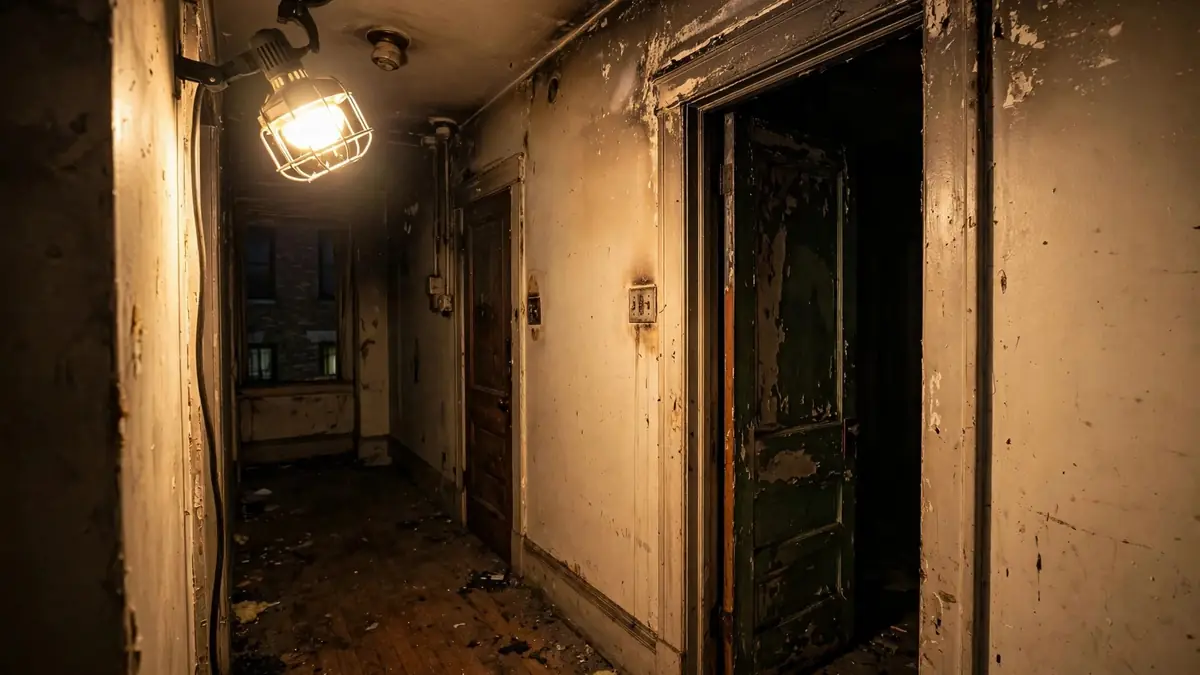
Smoke is a moving mix of tiny unburned particles, gases and droplets. Hot gas rises, presses against the ceiling, then spreads outward and downward until it finds a cooler surface. Wherever it cools, the particles drop out and stick. That is why a fire confined to one kitchen can leave a gray band across every ceiling on the floor, dark outlines around outlets on the far side of the house, and a smell inside dresser drawers that were shut the whole time.
The film is not one substance. A quick, hot fire that burned wood, paper or cardboard leaves a dry, powdery residue that smears if you press on it but lifts with the right dry sponge. A slow, smoldering fire that burned plastics, foam and synthetic fabric leaves a wet, tacky residue with a sharp smell that smears and stains when wiped. A fire that burned food on a stove leaves a nearly invisible protein film, usually yellow to brown, with an odor far stronger than its appearance suggests. Many house fires produce more than one type in different rooms.
Residue also changes with time. Fresh residue sits on the surface. Over days it can bond more tightly, and acidic residues begin etching metal, glass, grout and some finishes. That is why restoration contractors tend to separate the job into fast stabilization in the first days and detailed cleaning afterward, and why the order of operations matters as much as the products used.
Professional work in this field is usually measured against the ANSI/IICRC S700 Standard for Fire and Smoke Damage Restoration, which sets out how to assess residues and odors, decide what can be cleaned, clean building systems including HVAC, and evaluate the result afterward [1]. A contractor who knows the standard can explain why they chose a method rather than simply listing chemicals.
Signs
Signs that smoke reached more than you can see
Some damage is obvious. These are the quieter signs that the film spread well past the fire room.
Gray or brown ceiling bands
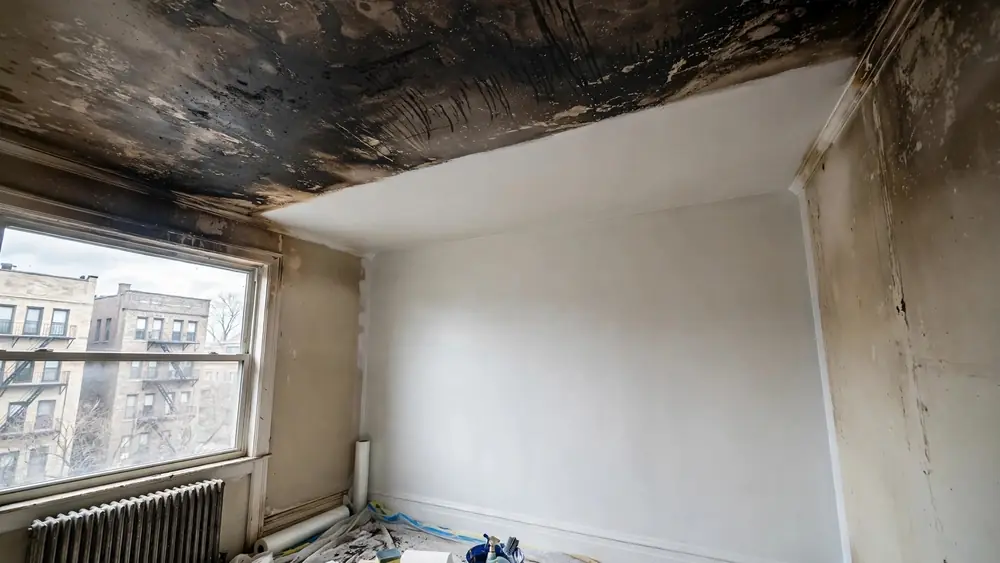
A darker line where the wall meets the ceiling, or a shadow that follows the ceiling joists, shows where hot smoke hung and cooled.
Outlines around outlets and switch plates
Air moving through gaps in the wall carries particles that stain the drywall around cover plates and along baseboards.
Film on windows and mirrors
A haze that streaks when you wipe it means residue settled on glass; left alone, acidic residue can etch it.
Discolored white plastics
Light switches, appliance housings and blinds that turned yellow are reacting to residue, sometimes rooms away from the fire.
Smell inside closed cabinets
If clothing in a closed closet or dishes in a closed cupboard smell of smoke, the air reached inside and so did the particles.
Dark streaks at vents and returns
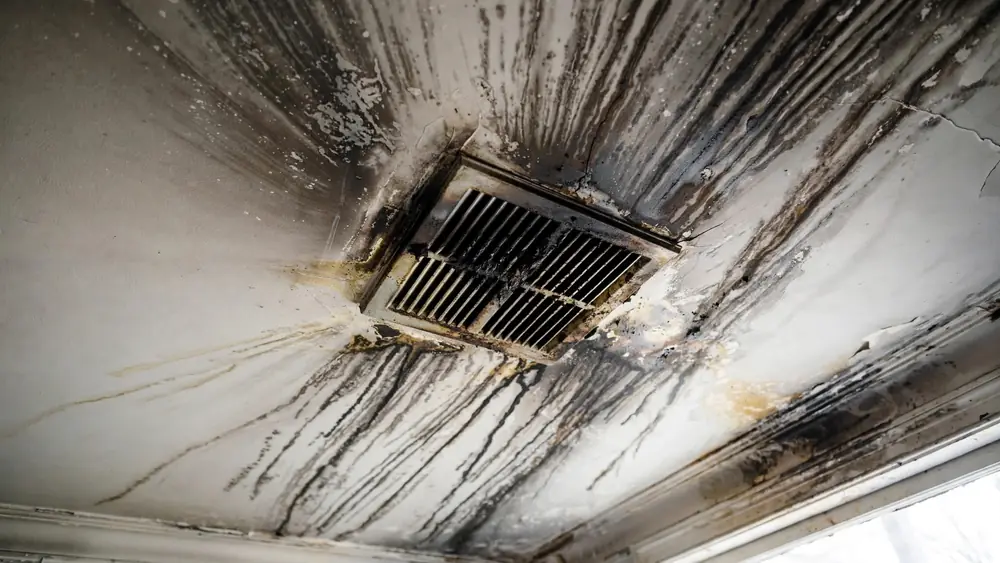
Stains around supply registers and return grilles point to residue that traveled through the duct system.
Residue in the next unit
In two-flats, three-flats and courtyard buildings, smoke often moves through shared stairwells, chases and attic space into neighboring homes.
Odor that returns on humid days
A smell that seems gone and then comes back in warm, damp weather usually means residue is still in porous materials.
Why it spreads
How Chicago buildings move smoke from room to room
The way a building is put together decides where smoke goes. A Chicago bungalow, typically one and a half stories of brick over a full basement [5], has a stair to the half-story above and often a forced-air furnace in the basement. Smoke from a basement fire tends to climb the stair and the duct system into the bedrooms upstairs, while a fire upstairs pushes smoke into the attic space and the knee-wall storage along the eaves.
Greystone two-flats and three-flats, built from the 1890s into the 1930s with limestone fronts [6], usually share a front and a rear stair between units. Rear porches, back stairs and the gangway between buildings act like chimneys. When one unit burns, residue in the stairwell and the other units is common even if the flames never crossed a doorway, and the other owners or tenants may need cleaning as well.
Vintage courtyard buildings and older mid-rises add pipe chases, trash chutes, shared corridors and old ventilation shafts. High-rise towers are compartmentalized more tightly, but smoke still follows elevator shafts, corridors and building ventilation, and the building's management usually controls when and how cleaning can happen. A good scope starts by walking the whole path the smoke could have taken, not just the burned room.
The cleanup
How smoke damage cleanup is carried out, step by step
- 1
Wait for clearance and check utilities
No one should go inside until the fire department says it is safe. Gas and electricity are restored or confirmed safe by the utility or a qualified electrician, never by guesswork [7].
- 2
Document before anything moves
Photos and video of every room, including the ones that look untouched, give the insurer the before picture that Illinois guidance asks for [2].
- 3
Map the residue
The contractor tests surfaces room by room, identifies dry, wet or protein residue, and marks how far it traveled, including closets, attic and ductwork.
- 4
Stabilize the air and the surfaces
Air scrubbers with HEPA filtration capture loose particles, and acidic residue is removed early from metals, glass, grout and finishes that etch.
- 5
Dry cleaning first
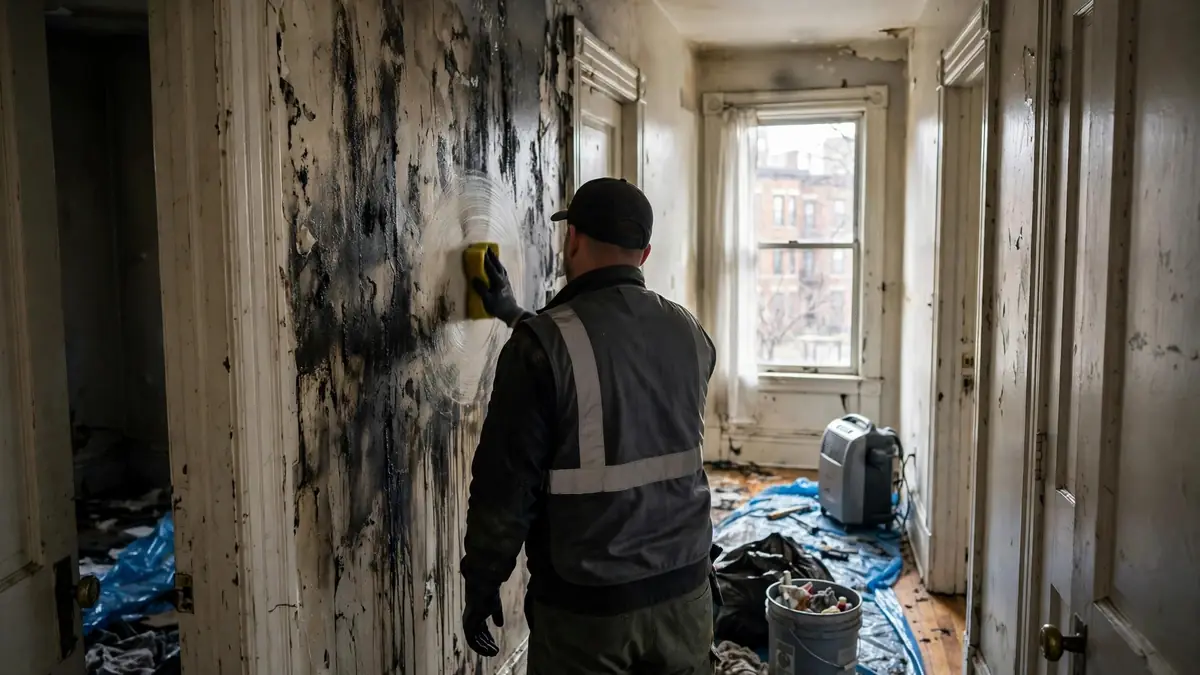
Dry chemical sponges and HEPA vacuuming lift loose residue without driving it into paint or wood grain. Wiping with water too early smears it.
- 6
Wet cleaning matched to the residue
Each surface gets a cleaner chosen for the residue type and the finish underneath, worked top to bottom so dirty runoff does not land on clean areas.
- 7
Remove what cannot be cleaned
Charred drywall, insulation that absorbed smoke and porous materials that keep releasing odor are removed, with lead and asbestos precautions in older homes [4][8].
- 8
Deodorize and seal where needed
Once the residue is gone, remaining odor is treated, and stained surfaces may get an odor-blocking primer before repainting.
- 9
Final walk-through
The space is checked for remaining film, smell and staining before repairs and repainting close it up.
Residue types
The main smoke residues and how they are cleaned
Identifying the residue decides the method. Getting it wrong is the most common reason home cleanup makes stains worse.
| Residue | Typical source | How it looks and feels | Usual cleaning approach |
|---|---|---|---|
| Dry smoke | Fast, hot fires in wood, paper, cardboard | Powdery, gray to black, smears when pressed | HEPA vacuum and dry chemical sponge, then light wet cleaning |
| Wet smoke | Smoldering fires in plastics, foam, rubber, synthetics | Sticky, dark, strong acrid smell | Solvent or degreasing cleaners, often more than one pass; porous items may be removed |
| Protein residue | Food burned on a stove or in an oven | Thin yellow-brown film, very strong odor | Enzyme or degreasing cleaners on every surface in the area, plus thorough deodorization |
| Fuel oil soot | Furnace puff-back from an oil burner | Black, oily, spreads through ducts | Degreasing cleaners, full duct cleaning, contents cleaning |
| Electrical fire residue | Wiring, appliances, electronics | Dark film, acidic, can corrode metal | Early neutralizing clean of metals and electronics; electrical inspection before use |
What you can do yourself
Safe steps before the contractor arrives
These are reasonable once the fire department has cleared the building. Anything beyond them is better left to the crew.
- Photograph everythingEvery room, every wall, inside closets and cabinets. Keep damaged items rather than throwing them out until the adjuster has seen them [2].
- Keep traffic downWalking through residue grinds it into carpet. Lay clean drop cloths on main paths if you must enter.
- Change the HVAC filter and keep the system offRunning the furnace or air conditioning spreads residue through the ducts into clean rooms until the system has been checked.
- Do not wipe walls with waterWater and household cleaners smear dry soot into paint. Leave walls and ceilings to dry-sponge cleaning first; our guide to cleaning soot stains explains the order.
- Remove valuables and medicationTake jewelry, documents and medications to a safe place, as the Illinois Department of Insurance suggests for small valuables [2].
- Throw out exposed foodFood, drinks and medicine exposed to heat, smoke or firefighting water should not be eaten or used.
Local specifics
Smoke cleanup in Chicago's older housing stock
Much of Chicago's housing was built before modern paints and insulation. More than 80,000 bungalows went up between roughly 1910 and 1940 [5], and many greystones date from the 1890s to the 1930s [6]. That age matters during cleanup. Painted plaster and woodwork in pre-1978 homes may contain lead, and EPA's Renovation, Repair and Painting rule requires certified firms and lead-safe practices when work disturbs painted surfaces in those homes [4]. Sanding smoke-stained trim or demolishing plaster without those precautions can create a second hazard on top of the fire.
Older pipe insulation, floor tile, plaster and some textured ceilings can also contain asbestos. EPA advises leaving suspect material alone if it is intact and having it assessed before it is disturbed [8]. Fire and firefighting can damage these materials, so a contractor working in a vintage two-flat should be ready to stop and test before demolition rather than discover the problem afterward.
Chicago's climate also shapes the job. Fires during the heating season often happen with windows shut tight, which concentrates residue indoors, and cold weather limits how much a crew can ventilate by simply opening windows. Summer humidity, on the other hand, can reactivate odors in porous materials. Contractors usually rely on air scrubbers and controlled ventilation rather than open windows alone.
If the home is a condominium or in a multi-unit building, the association or landlord may control the common areas, the roof and the structure. Cleaning inside your unit can still start, but stairwells, hallways and shared ducts may need the building's sign-off.
Diagnosis
Testing surfaces before choosing a cleaning method
A careful contractor tests before cleaning. A dry chemical sponge drawn across an inconspicuous patch shows whether residue lifts dry. A drop of water shows whether the residue smears or the paint underneath is water-sensitive. A small solvent test on a hidden spot of trim tells whether the finish will survive the cleaner needed for wet smoke.
Testing also reveals whether the surface is worth cleaning at all. Flat latex paint, unsealed wood and acoustic ceiling tile absorb residue and often look better primed and repainted than scrubbed. Semi-gloss paint, sealed cabinets, ceramic tile and glass usually clean well if they are reached early.
The results go into the written scope that you and your insurer review. A scope that says only 'clean all walls' without saying which method, which rooms and which surfaces will be removed instead leaves room for disputes later. Ask the contractor to walk you through the test results in plain language.
Quick reference
Common surfaces and what usually happens to them
| Surface | Usually cleanable? | Notes |
|---|---|---|
| Glossy or semi-gloss paint | Often yes | Dry sponge first, then mild wet cleaning; may still be repainted for odor |
| Flat latex paint | Sometimes | Absorbs residue; sealing primer and repaint is common |
| Plaster walls in vintage buildings | Often yes | Test for lead before sanding; cracks can trap residue |
| Sealed hardwood floors | Usually | Clean, then screen and recoat if the finish is stained |
| Carpet and pad | Depends | Light smoke can be cleaned; soaked or charred pad is usually removed |
| Kitchen cabinets | Usually | Inside and outside both need cleaning; protein film hides inside |
| Window glass and mirrors | Yes if early | Acidic residue can etch glass if left for long |
| Insulation in attic or walls | Rarely | Smoke-soaked insulation is normally removed and replaced |
Air and ducts
Why the heating system is part of the cleanup
A forced-air furnace pulls air from the house, runs it through a filter and blows it back out through the ducts. If it ran during or after the fire, it moved residue into every room the ducts reach. Even if it was off, smoke can settle into the return ducts by itself.
Cleaning the rooms without dealing with the ducts often leads to the smell and the gray film coming back. EPA says duct cleaning makes sense when ducts hold excessive debris or particles are blowing out of the registers, and advises choosing providers who follow industry standards and avoid unnecessary chemical treatments [9]. After a fire, the IICRC S700 standard treats HVAC systems as part of the restoration [1]. See duct cleaning after a fire for the details.
Belongings
Clothing, furniture and keepsakes after smoke exposure
Contents often take longer than the structure. Clothing and linens usually clean well with the right process, but they should not be washed at home with regular detergent until the residue type is known, because some residues set in hot water. Upholstered furniture, mattresses and pillows absorb odor deeply and are judged item by item.
Hard goods such as dishes, glassware, metal and sealed wood generally clean well. Electronics need a specialist look because acidic residue can corrode circuit boards over time, even if the device seems to work at first. Photographs, documents and artwork are delicate; air-dry wet paper away from heat and leave restoration to someone experienced with it.
When there is a lot to clean, crews often pack contents out to a facility, clean them there and return them after the house is finished. That is covered on the contents cleaning and pack-out page. Either way, keep a room-by-room list, since the Illinois Department of Insurance notes that your claim will be split between the building and the contents [2].
DIY or professional
Where home cleanup works and where it backfires
Reasonable to do yourself
Very light film in a room far from the fire, hard surfaces like glass and tile, and laundering cottons after the residue type is known.
Better left to the crew
Ceilings and walls with visible staining, any wet smoke, kitchens after a grease or food fire, and anything touched by firefighting water.
Never DIY
Charred materials, possible asbestos or lead paint, electrical components, and running ozone or chemical foggers in an occupied home [3].
Ask before you start
Your insurer may want to see the damage first. Cleaning before documentation can make the claim harder to support [2].
The visit
What happens when a restoration contractor walks the home
Expect the first visit to be an inspection rather than cleaning. The contractor walks every room, the basement, attic and garage, checks how the smoke traveled, tests surfaces and looks at the heating system. They should photograph what they find and explain which areas they think can be cleaned and which should be removed.
Ask who will be doing the work, whether the crew follows the IICRC standards, how they handle lead-safe practices in an older home, and how they communicate with your insurer. A reputable contractor puts the scope in writing and expects your adjuster to review it. Illinois guidance recommends getting your adjuster's agreement before you contract for repairs and being careful about payment terms [2].
In Chicago, building repairs that follow cleanup, such as replacing drywall, framing, wiring or windows, may require a permit from the Department of Buildings [10]. Cleaning itself does not, but the contractor should tell you when the job crosses into permitted work and who will pull the permit.
Prevention
Lowering the chance of a repeat
Once the house is clean, take the chance to fix what helped the fire start or spread. NFPA notes that cooking is the leading cause of home fires, and unattended cooking is a frequent factor [12]. Working smoke alarms on every level, including the basement, give the earliest warning; ready.gov advises testing them and replacing alarms every ten years [7].
Have the furnace, chimney and dryer vent checked before the next heating season, replace damaged extension cords and overloaded power strips, and keep a fire extinguisher in the kitchen. In multi-unit buildings, make sure stairwell doors close fully, since self-closing doors slow smoke movement between units.
Clean or replace
When cleaning stops making sense
The decision to clean or replace is about condition and safety rather than appearance alone. A surface is worth cleaning when the residue lifts, the material underneath is sound, and the smell does not keep returning. It is better replaced when it is charred, warped, soaked with firefighting water, or porous enough that odor keeps coming back after proper cleaning.
Items with sentimental value are often worth more effort than the replacement value suggests, and specialists can do a lot with photographs, documents and heirlooms. Mattresses, pillows, stuffed toys and food that were exposed are usually discarded for health reasons. Your insurer will want to see items before they go, so keep them aside and photographed [2].
Related problems
Problems that often travel with smoke damage
Heavy soot deposits
Black, greasy or powdery buildup that needs its own process.
Read moreLingering odor
Smell that survives surface cleaning and needs source treatment.
Read moreWater from fire hoses
Wet plaster, floors and basements that must dry before mold starts.
Read moreBroken windows and roof openings
Securing the building so weather and intruders stay out.
Read more
FAQ
Smoke damage cleanup questions
How long does smoke damage cleanup take?
It depends on how far the smoke traveled and how many belongings are involved. A single room with light residue can be cleaned in a few days, while a whole house with contents pack-out and repairs can take weeks. The written scope should give an estimated timeline.
Can smoke damage be cleaned, or does everything need replacing?
Much of it can be cleaned. Hard, sealed surfaces and many fabrics clean well when reached early. Charred, warped or water-soaked materials and porous items that keep releasing odor are usually replaced.
Why does my house still smell after the walls were wiped?
Odor lives in porous materials, ductwork, insulation and hidden cavities as well as on surfaces. Wiping walls removes visible film but not residue inside those places. The source has to be found and cleaned or removed.
Is it safe to clean smoke damage myself?
Light residue on hard surfaces far from the fire is reasonable to clean with gloves and a respirator. Heavy staining, wet smoke, kitchen fires and anything in a pre-1978 home where paint may be disturbed should be left to trained crews.
Should I wash smoky clothes at home?
Not until you know what kind of residue is on them. Some residues set in hot water. Many restoration contractors use specialized laundering for smoke-exposed textiles.
Does smoke damage in my apartment mean the neighbors have it too?
Often, yes. Smoke moves through shared stairwells, chases and attic space in two-flats, three-flats and courtyard buildings. The building owner or association usually coordinates cleaning in common areas.
Do I need my insurance adjuster before cleaning starts?
Contact your insurer right away and document everything first. Illinois guidance says to take photos before cleaning and to get your adjuster's agreement before you sign repair contracts.
Will painting over smoke stains fix the problem?
Not by itself. Paint over residue can bleed through and trap odor. Surfaces are cleaned first, then sealed with an odor-blocking primer if needed, and only then repainted.
Sources and citations
- [1]IICRC — ANSI/IICRC S700 Standard for Fire and Smoke Damage Restoration
- [2]Illinois Department of Insurance — What to do after an insured homeowners loss
- [3]U.S. EPA — Ozone generators that are sold as air cleaners
- [4]U.S. EPA — Lead Renovation, Repair and Painting Program
- [5]Wikipedia — Chicago bungalow
- [6]Wikipedia — Greystone (architecture)
- [7]Ready.gov — Home fires
- [8]U.S. EPA — Protect your family from exposures to asbestos
- [9]U.S. EPA — Should you have the air ducts in your home cleaned?
- [10]City of Chicago — Department of Buildings permits
- [11]U.S. EPA — Particulate matter basics
- [12]NFPA — Cooking fire safety