
Key facts: Smoke Damage Cleanup in Portage Park and Jefferson Park
The bungalow path
How smoke travels through a Chicago bungalow
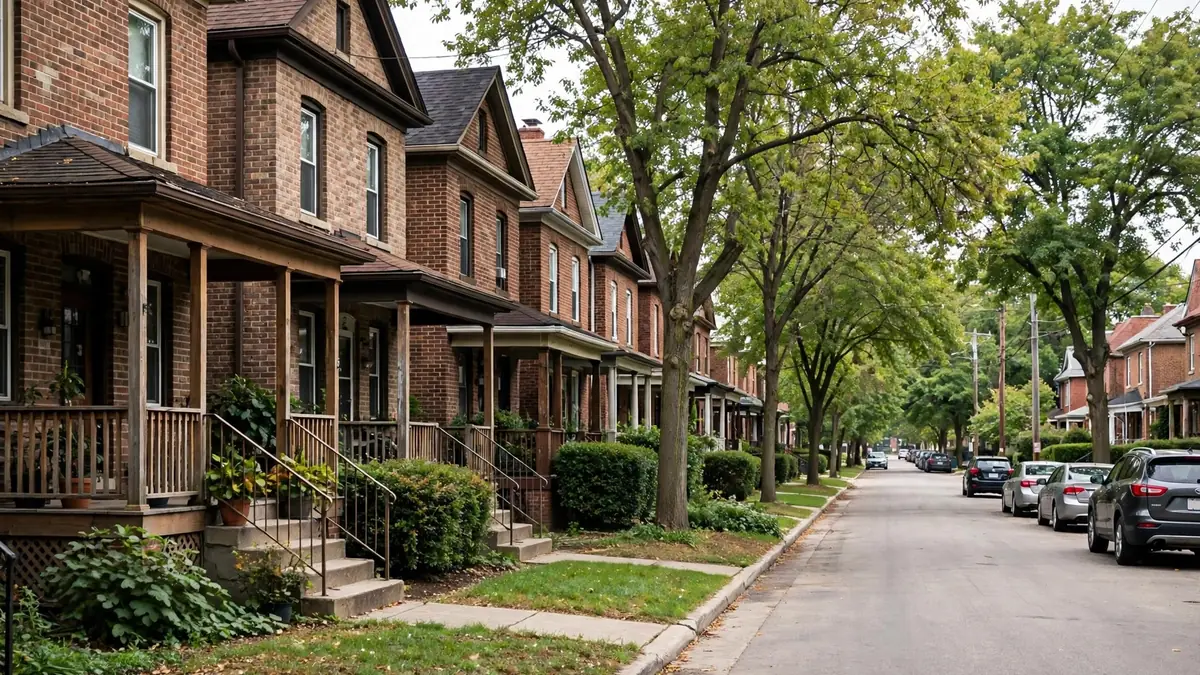
A bungalow is compact: living room, dining room and kitchen on the main floor, bedrooms off a short hall, a stair up to the half-story and another down to the basement [2]. Hot smoke from a kitchen fire fills the main floor ceilings, then rises up the stair into the half-story bedrooms. From a basement fire it climbs both the stair and the heating ducts.
That predictable path is useful. A contractor who knows bungalows checks the half-story ceilings, the knee-wall spaces and the ductwork even when the visible damage is downstairs.
The half-story
Bedrooms under the roof
Many owners finished the half-story into bedrooms with sloped ceilings and short knee walls. Smoke collects at the peak of those ceilings and behind the knee walls, where unconditioned storage space and insulation sit. Cleaning the visible walls does not reach that hidden residue.
Opening the knee-wall access panels and checking the insulation is part of a thorough job. Smoke-soaked insulation is removed rather than deodorized.
Basements
Smoke from the basement up
Basement fires are common in bungalows and two-flats, starting at furnaces, dryers, water heaters, workshops or stored belongings. Soot coats the open joists and the underside of the main floor, and smoke rises into every room above.
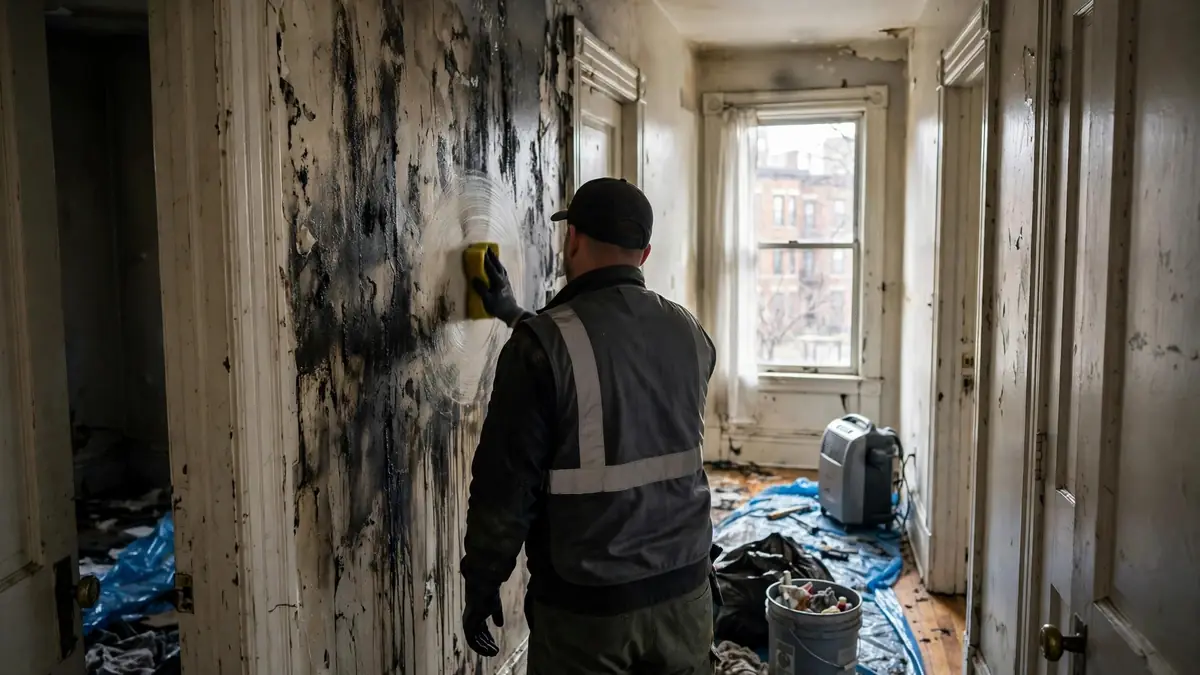
Cleaning starts in the basement, with HEPA vacuuming of the joists and subfloor, then moves upstairs. If the basement is finished, paneling and ceiling tiles that absorbed smoke usually come out.
Before cleaning
What to check in a Northwest Side home after a smoke event
- Half-story ceilings and knee-wall spaces
- Basement joists and subfloor
- Furnace, filter and ducts
- The shared stair and second unit of a two-flat
- Front sunporch and living room ceiling
Ducts
Forced-air systems carry smoke everywhere
Many bungalows have gas forced-air furnaces that replaced original boilers. If the blower ran during the fire, it carried smoke through every duct. Even if it was off, residue settles in the returns. Smoke cleanup in these houses usually needs duct cleaning after a fire to stick.
Two-flats
Smoke between the units of a two-flat
In a Northwest Side two-flat, the shared front entry and stair connect both units, and the basement is shared. A fire in either unit puts smoke into the other, through the stair or up through the floor. Both units and the stair are part of the cleanup.
If the owner lives in one unit and rents the other, the tenant's belongings fall under the tenant's own renter's insurance, not the building policy [4].
Gladstone Park
Dutch Colonials and their upper floors
Gladstone Park's Dutch Colonials have a gambrel roof that gives a full upper floor of bedrooms with steep side walls and a small attic above. Smoke rises through the center stair into those bedrooms and the narrow attic spaces at the top and sides of the gambrel.
Many of these houses are wood framed with siding, so exterior smoke staining on siding and trim is cleaned as well as the interior.
Porches
Front sunporches and enclosed verandas
Many bungalows have an enclosed front porch or sunroom, often holding space heaters, cords and stored furniture. A porch fire sends smoke through the front door into the living room and up into the half-story above the front of the house.
The porch itself is cleaned or rebuilt, and the living room and front half-story rooms get close attention.
Older materials
Plaster, oak and old paint
Bungalows usually have plaster walls and oak trim. Both clean well if smoke is lifted dry first and then washed with tested cleaners. Old paint layers may contain lead, so EPA's renovation rule requires lead-safe practices for sanding or scraping in pre-1978 homes [5].
Documentation
Photographs for the claim
Photograph every room before cleaning, including the half-story, the knee-wall spaces, the basement and the garage. The Illinois Department of Insurance recommends photos before cleanup and keeping damaged items for the adjuster [4].
After
Fire safety in an older bungalow
After cleanup, have the wiring inspected, especially in a converted half-story, and keep working smoke alarms on every level including the basement. Ready.gov advises replacing alarms every ten years [6].
Six Corners
Flats above Six Corners and Milwaukee Avenue storefronts
Around Six Corners, where Irving Park Road, Cicero Avenue and Milwaukee Avenue meet, older commercial buildings have apartments above shops and restaurants. A kitchen fire in a ground-floor restaurant sends greasy protein residue up the stair and through the floor into those flats. The film is pale but strongly scented, and it clings to cabinets, curtains and the inside of closets.
Cleaning those apartments means degreasing every surface the film reached, including the stair. Each tenant documents their own unit; the business and the building owner deal with their own insurers.
FAQ
Portage Park and Jefferson Park smoke questions
Why do my bungalow's upstairs bedrooms smell of smoke when the fire was in the kitchen?
Smoke rises up the stair into the half-story and collects at the ceiling peak and behind the knee walls. Those spaces need cleaning, and insulation there may need replacing.
Do I need duct cleaning after a smoke event in my bungalow?
If you have forced air and the system ran or the house smells when the blower starts, yes. Otherwise residue keeps coming back into clean rooms.
Can the oak trim in my bungalow be cleaned?
Usually. Smoke is lifted dry first, then cleaned with tested products. Refinishing may be better if heat damaged the finish.
Does the other unit of my two-flat need cleaning?
Usually. Smoke moves through the shared stair and basement, so both units and the stair are checked.
Is a Gladstone Park Dutch Colonial cleaned differently?
The process is the same, but smoke collects on the full upper floor and narrow gambrel attic spaces, which need attention.
Should I paint over smoke stains?
Only after cleaning and sealing with a stain-blocking primer. Paint alone lets stains and odor bleed through.
How long does smoke cleanup take in a bungalow?
A single floor with light smoke may take a few days. Smoke that reached the half-story, the basement and the ducts usually takes a week or more before any repairs begin.