
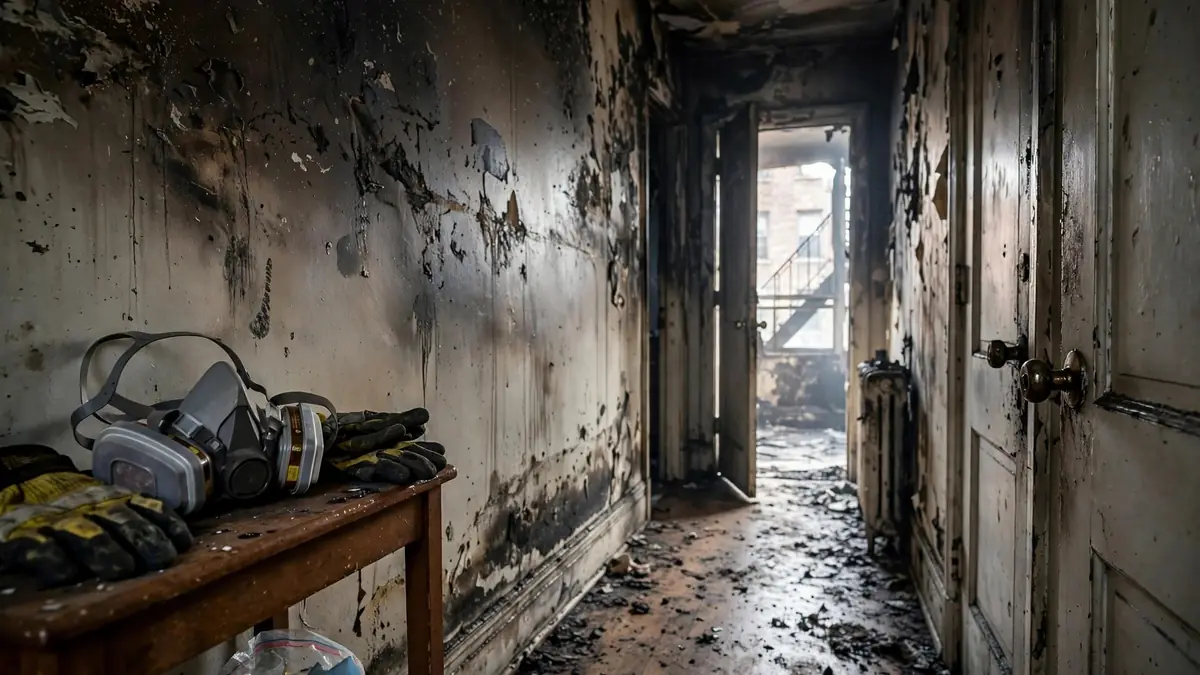
Key facts: Is it safe to stay after a fire
- Ready.gov advises not re-entering until the fire department says it is safe and not reconnecting utilities yourself [1].
- Soot is fine particulate matter that can reach deep into the lungs and aggravate asthma and heart conditions [2].
- EPA advises drying wet areas within 24 to 48 hours to prevent mold [3].
- The Illinois Department of Insurance says to report an unsafe home to your insurer and live elsewhere, and to ask about additional living expenses [4].
- Food, drinks and medicine exposed to heat, smoke, soot or firefighting water should be discarded.
Short answer
When staying home after a fire is and is not reasonable
It may be reasonable to stay if the fire was small and confined, the fire department has released the home, the gas and electricity have been confirmed safe, there is no water damage in the rooms you will use, and smoke residue is limited to a small area that can be closed off. Even then, sensitive family members may be better off elsewhere until cleaning is done.
Plan to stay elsewhere if the fire department has not released the home, utilities are off or unsafe, there is structural damage, heavy smoke or soot reached the bedrooms, ceilings or floors are wet, or the heat is off in cold weather. The Illinois Department of Insurance says that if your home appears unsafe, you should report it to your insurer and live elsewhere [4].
Decide
Stay or go: the main questions
| Question | Usually okay to stay | Usually stay elsewhere |
|---|---|---|
| Has the fire department released the home? | Yes | No, or not yet |
| Are gas and electricity confirmed safe? | Yes, by the utility or an electrician | Off, unknown or wet |
| Any structural damage? | None visible | Sagging ceilings, burned floors or stairs |
| How far did smoke go? | One room that can be sealed off | Bedrooms, the whole floor or the HVAC system |
| Water from firefighting? | None in living areas | Wet ceilings, floors or walls |
| Heat in winter? | Working safely | Off or unsafe |
| Who lives there? | Healthy adults | Infants, older adults, pregnancy, asthma or heart conditions |
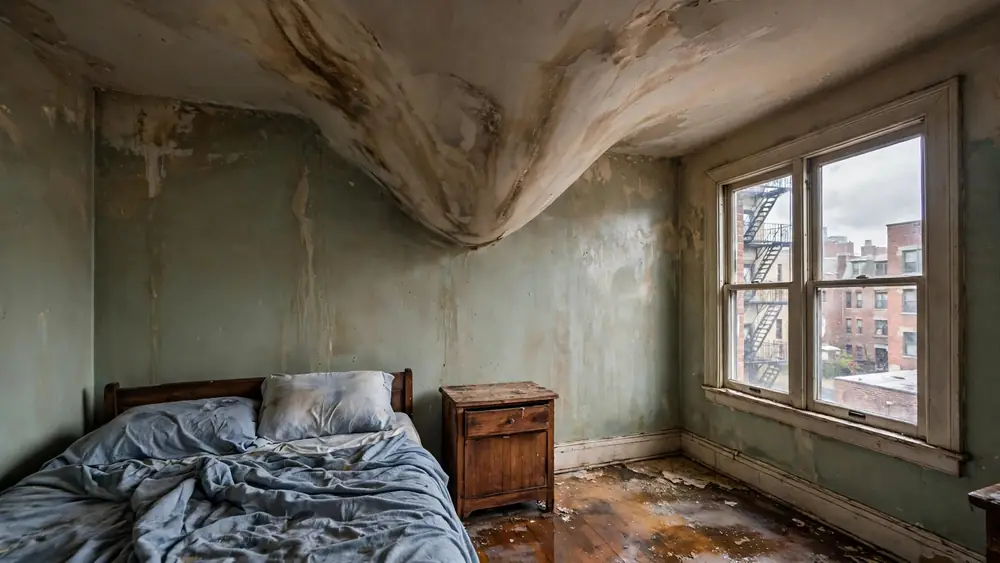
Who is at risk
Family members who should stay away during cleanup
Some people are more vulnerable to smoke residue and the dust stirred up during cleanup. EPA identifies children, older adults and people with heart or lung disease as more sensitive to fine particle pollution [2]. Pregnant people and anyone with asthma or COPD should be especially cautious.
Pets are sensitive too. Birds in particular are vulnerable to airborne irritants. If pets were in the home during the fire, have a veterinarian check them for smoke inhalation.
If anyone in the household falls into these groups, arranging somewhere else to stay until cleaning and drying are finished is the safer choice, even if the damage seems limited.
If you stay
How to stay safely during a limited cleanup
- 1
Get clearance first
Fire department release and utility confirmation come before anything else [1].
- 2
Seal off affected rooms
Close doors and use plastic sheeting so smoke residue and cleanup dust stay out of living areas.
- 3
Keep the HVAC off
Until the system has been checked, running it spreads residue; duct cleaning after a fire explains why.
- 4
Use air filtration
Portable HEPA air cleaners in the rooms you use help capture fine particles.
- 5
Discard exposed food
Throw out food, drinks and medicines that were exposed to heat, smoke or water.
- 6
Test smoke and CO alarms
Make sure working alarms are on every level before anyone sleeps there.
If you leave
Where to stay and how insurance may help
Ask your insurer right away whether your policy includes additional living expenses. The Illinois Department of Insurance explains that this coverage pays the increase in your living expenses over your normal spending while the home is being repaired, and advises asking about any limits on hotel stays [4]. If you stay with family or friends, the insurer may need proof of what you paid them.
Keep every receipt: lodging, meals beyond your normal grocery spending, laundry, extra mileage and storage. Disaster relief organizations can also help with immediate shelter, food and medicine [1].
Chicago specifics
Staying in a multi-unit Chicago building after a fire
In a two-flat, three-flat, courtyard building or high-rise, you may be affected by a fire that was not in your unit. Smoke in the shared stair, water through your ceiling or a building-wide loss of heat can make your home unsafe even if it did not burn. Ask the building owner or management what they know about the building's condition and when shared systems will be restored.
If the rear porch was damaged, your unit may lack a safe second exit until it is shored or rebuilt, which matters for whether it is safe to sleep there. In winter, a building without heat is also at risk of frozen pipes.
FAQ
Questions about staying home after a fire
Can I sleep in my house after a small kitchen fire?
Possibly, if the fire department has released it, the utilities are safe, smoke was limited and the bedrooms are unaffected. Sensitive family members may still be better off elsewhere until cleaning is done.
Is the smoke smell itself dangerous?
The smell signals residue that can include irritants and fine particles. Short exposure for healthy adults is usually more irritating than harmful, but vulnerable people should avoid it.
How long will I need to stay somewhere else?
The time away ranges from a few days for limited cleaning to months for major repairs. Your contractor's scope should include an estimated timeline.
What should I take when I leave the house after a fire?
Medications, identification and important documents, glasses, phone chargers, a few days of clothing, children's school items and anything needed for work.
Can I stay if the power is off?
Generally not for long, especially in cold weather. Without power and heat, the home is uncomfortable and pipes can freeze. Do not restore power yourself.
Sources and citations
- [1]Ready.gov — Home fires
- [2]U.S. EPA — Particulate matter basics
- [3]U.S. EPA — A brief guide to mold, moisture and your home
- [4]Illinois Department of Insurance — What to do after an insured homeowners loss
- [5]Peoples Gas — Natural gas safety
- [6]U.S. EPA — Lead Renovation, Repair and Painting Program
- [7]U.S. EPA — Protect your family from exposures to asbestos