
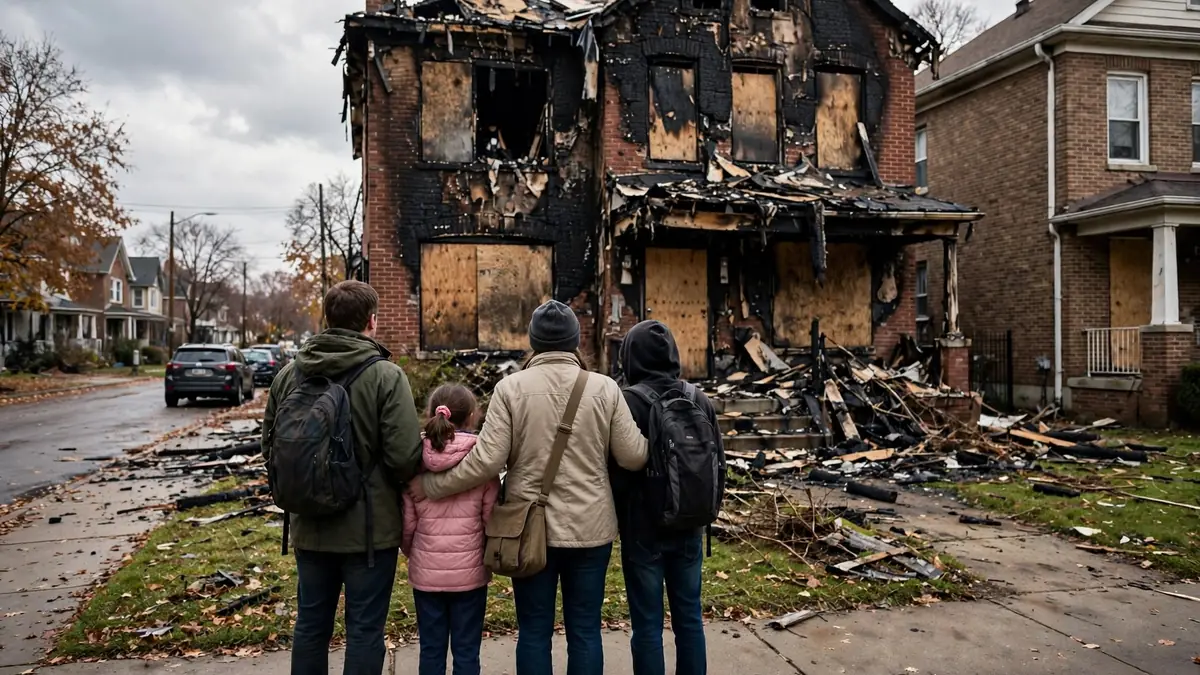
Key facts: What to do after a house fire
- Ready.gov advises waiting until the fire department says it is safe to re-enter and not reconnecting utilities yourself [1].
- Ready.gov also advises inventorying damaged property before discarding anything and keeping receipts for fire-related spending [1].
- The Illinois Department of Insurance says to contact your insurer as soon as possible and make temporary repairs such as boarding up windows [2].
- Illinois guidance says not to throw out damaged items of value until the adjuster has examined them [2].
- If you smell gas, leave the building and call 911 and Peoples Gas from outside [3].
Short answer
The first things to do after a fire, in order
Make sure everyone is safe and accounted for, and get medical help for anyone who breathed smoke or was burned. Stay out of the building until the fire department releases it. Call your insurance company. Arrange somewhere to stay. Then, once you are allowed back, photograph everything, secure the openings, and start drying and cleaning with a contractor, keeping every receipt.
Two things go wrong most often. People throw out damaged belongings before the insurer has seen them, and people start scrubbing smoke and soot before documenting the damage. Both make the claim harder. Slow down for the documentation, then move quickly on protecting the house.
The first hours
The first hours after the fire is out
- 1
Get checked for smoke inhalation
Smoke contains fine particles and toxic gases. Anyone with coughing, shortness of breath, headache or confusion should be seen by a medical professional.
- 2
Stay out until released
Fire-damaged floors, ceilings and stairs can fail. Ready.gov advises waiting until the fire department says it is safe to enter [1].
- 3
Ask the fire department for details
Ask about the condition of the building, whether utilities were shut off and how to get a copy of the fire report for your insurer.
- 4
Find a place to stay
Family, friends or disaster relief organizations can help with immediate shelter, food and medicine [1].
- 5
Call your insurer
Report the fire, get a claim number and ask about additional living expenses and emergency funds for temporary repairs [2].
- 6
Tell your landlord or association
Renters and condo owners should notify the building owner or association right away.
Safety
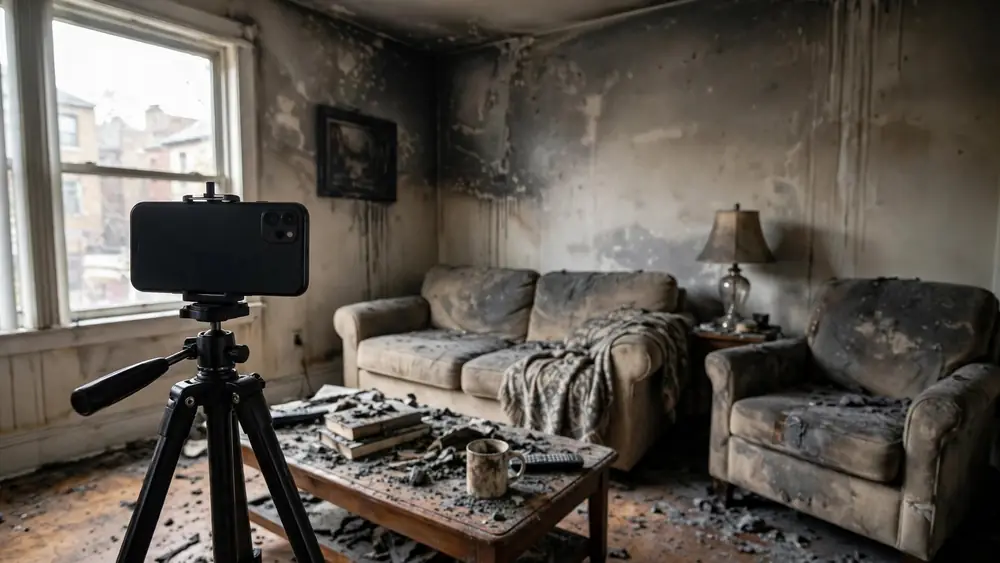
Utilities, gas and electricity after a fire
- Do not turn utilities back on yourselfReady.gov advises having the fire department confirm utilities are safe or shut off before use [1].
- Smell gas? LeaveGet out, then call 911 and Peoples Gas from outside. Do not use light switches or phones inside [3].
- Electricity in wet areasKeep power off to anything that got wet until a licensed electrician checks it; Illinois guidance says to have electrical equipment checked before use [2].
- Heat in winterIf the building has no heat, ask a plumber about protecting the pipes from freezing.
- Do not eat exposed foodDiscard food, drinks and medicine that were near heat, smoke, soot or firefighting water.
The first day back
What to do the first day you are allowed back inside
- 1
Wear protection
Gloves, sturdy shoes and an N95 or better respirator. Soot is fine particulate matter that reaches deep into the lungs [4].
- 2
Photograph and video everything
Every room, every wall and ceiling, inside closets and cabinets, the basement, attic and garage, before anything moves [2].
- 3
Remove valuables and essentials
Documents, medications, jewelry, glasses, chargers and a few days of clothing, as the Illinois guidance suggests for small valuables [2].
- 4
Close up the openings
Board broken windows and doors and tarp roof openings. Illinois guidance treats this as part of preventing further damage [2].
- 5
Start getting water out
Wet areas should be dried within 24 to 48 hours to limit mold [5].
- 6
Keep damaged items
Set aside damaged belongings for the adjuster rather than throwing them away [2].
The first week
The first week: claim, contractor and cleanup plan
In the first week, the focus moves from emergency to planning. An adjuster from your insurer may visit and prepare a damage estimate; get their name and contact details and ask for a copy of the estimate [2]. You can also choose to hire a licensed public adjuster to represent you, though it is not required; Illinois requires public adjusters to be licensed by the Department of Insurance [2].
Choose a restoration contractor to assess the home and put a written scope in front of you and the adjuster. Illinois guidance recommends getting your adjuster's agreement before contracting for repairs, being careful about payment terms and dealing with reputable local contractors [2]. A good scope covers board-up, water extraction and drying, smoke and soot cleaning, odor treatment, contents, HVAC and the repairs that follow.
Start a list of damaged belongings room by room. If you do not have an inventory, picture each room and list what was there, including items in storage and seasonal decorations [2]. Bank and card statements and online order histories help.
Keep a folder, paper or digital, for everything: the claim number, the adjuster's details, photos, the contractor's scope, receipts for meals, lodging and supplies, and notes of every phone call.
Quick reference
After a fire: who to contact and why
| Contact | Why | When |
|---|---|---|
| Medical care | Smoke inhalation and burns | Immediately |
| Your insurance company | Start the claim, ask about living expenses | Same day |
| Landlord or condo association | Building repairs and common areas | Same day |
| Peoples Gas and ComEd, if needed | Gas and electric service | Before restoring any utility |
| Your mortgage company | Ready.gov advises notifying them about the fire [1] | First week |
| A restoration contractor | Board-up, drying, cleaning and repairs | As soon as the building is released |
| Employer and children's schools | Time off and changes of address | First few days |
Chicago specifics
What is different after a fire in a Chicago home
In a two-flat, three-flat, courtyard building or high-rise, a fire in one home almost always affects others. Smoke rises through shared stairs and water runs down into units below. Talk to your neighbors and the building owner or association early, share photos and agree on who is coordinating cleanup of shared spaces.
Chicago winters add urgency. A building without heat can freeze its pipes within a day or two in severe cold, adding a second water problem. Ask about heat or pipe protection as soon as you are allowed back.
Older Chicago homes, which is most of them, may contain lead paint and asbestos in older materials. Make sure anyone opening walls or sanding surfaces follows lead-safe practices [6]. And repairs that go beyond cleaning, such as new drywall, wiring, porches or roofing, may need a Chicago building permit [7].
Avoid these
Common mistakes in the days after a fire
- Throwing out damaged belongings before the adjuster has seen them
- Scrubbing soot with water before it has been vacuumed and dry-sponged
- Running the furnace or air conditioner before the system is checked
- Signing a contract for major repairs before the adjuster agrees to the scope
- Paying in full up front; Illinois guidance says reputable contractors are unlikely to ask for that [2]
- Losing track of receipts for meals, lodging and supplies
- Going inside without a respirator or before the fire department releases the building
FAQ
Questions about the days after a house fire
How soon can I go back into my house after a fire?
Only when the fire department says it is safe. Fire weakens floors, stairs and ceilings, and utilities may be unsafe. Even then, wear a respirator, gloves and sturdy shoes.
Should I throw away things damaged by the fire?
Not yet. Illinois guidance says to keep damaged items of value until the adjuster has examined them. Photograph and list everything first.
Who pays for a hotel after a house fire?
Many homeowners and renters policies include additional living expense coverage, which covers the increase in your living expenses while the home is unlivable. Ask your insurer and keep every receipt.
Do I need a fire report for my insurance claim?
Insurers often ask for one. Ask the fire department at the scene how to request a copy.
Can I start cleaning right away?
Document everything first. After that, cleaning should start promptly, but soot should be vacuumed and dry-sponged before any wet cleaning, which is usually best left to a restoration crew.
What if the fire was in my neighbor's unit?
Document smoke and water damage in your home, tell your insurer and the building owner or association, and keep receipts. Your own policy usually covers your belongings.
Sources and citations
- [1]Ready.gov — Home fires
- [2]Illinois Department of Insurance — What to do after an insured homeowners loss
- [3]Peoples Gas — Natural gas safety
- [4]U.S. EPA — Particulate matter basics
- [5]U.S. EPA — A brief guide to mold, moisture and your home
- [6]U.S. EPA — Lead Renovation, Repair and Painting Program
- [7]City of Chicago — Department of Buildings permits