Key facts: River North and Streeterville
- The Near North Side is Chicago Community Area 8, north and east of the Chicago River, with North Avenue as its northern edge [1].
- It had an estimated 107,331 residents in 2024 and became Chicago's most populous community area in 2020 [1].
- Its sub-neighborhoods include the Gold Coast, Old Town south of North Avenue, Goose Island, River North and Streeterville [1].
- It has the second most skyscrapers of any Chicago community area, after the Loop [1].
- Luxury towers and stone mansions make up most of the Gold Coast [1].
Covered here
Near North Side neighborhoods covered
These parts of the Near North Side, in ZIP codes 60610, 60611 and 60654, are covered by the contractors you reach through this site.
- StreetervilleResidential towers east of Michigan Avenue around the Magnificent Mile.
- River NorthLoft buildings, new high-rises and mid-rises west of Michigan Avenue to the river.
- Gold CoastHigh-rise towers, stone mansions and vintage walk-ups along the lakefront.
- Old Town south of North AvenueRow houses, walk-ups and newer buildings in the southern part of Old Town.
- Kingsbury Park and the river corridorNewer residential high-rises along the North Branch.
The Near North Side
Chicago's densest neighborhood and its building mix
The Near North Side covers about 2.7 square miles north and east of the Chicago River, up to North Avenue [1]. With an estimated 107,331 residents in 2024, it is the most populous community area in Chicago and the most densely populated, and it has more skyscrapers than any area except the Loop [1].
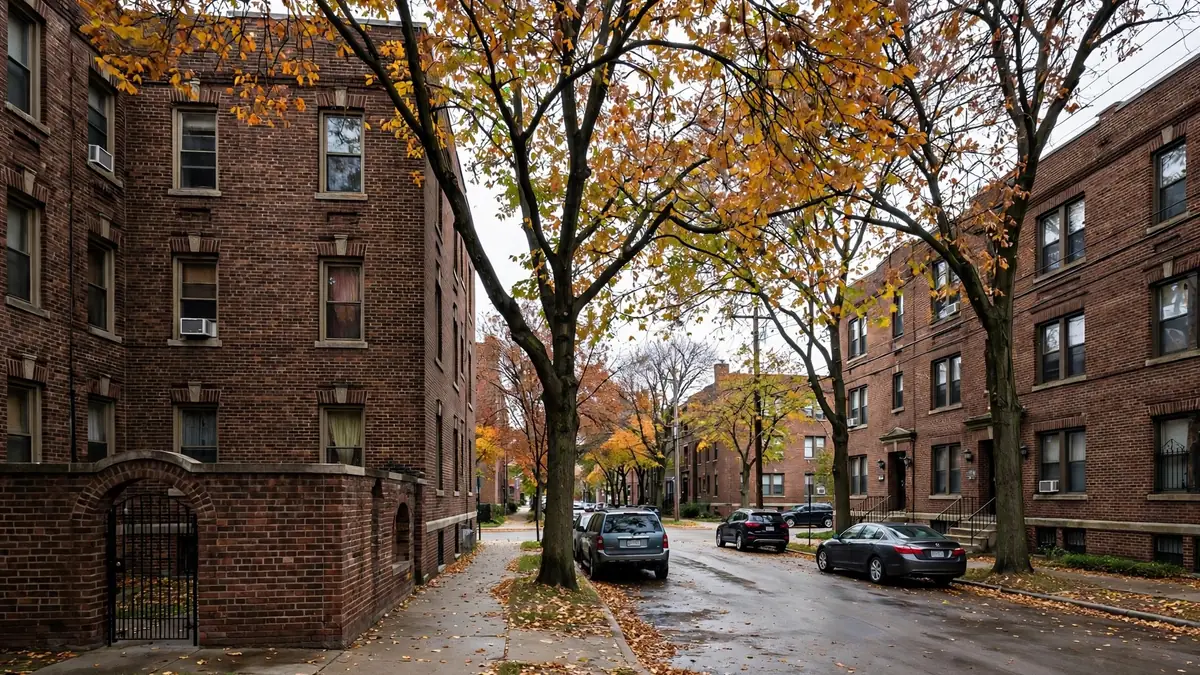
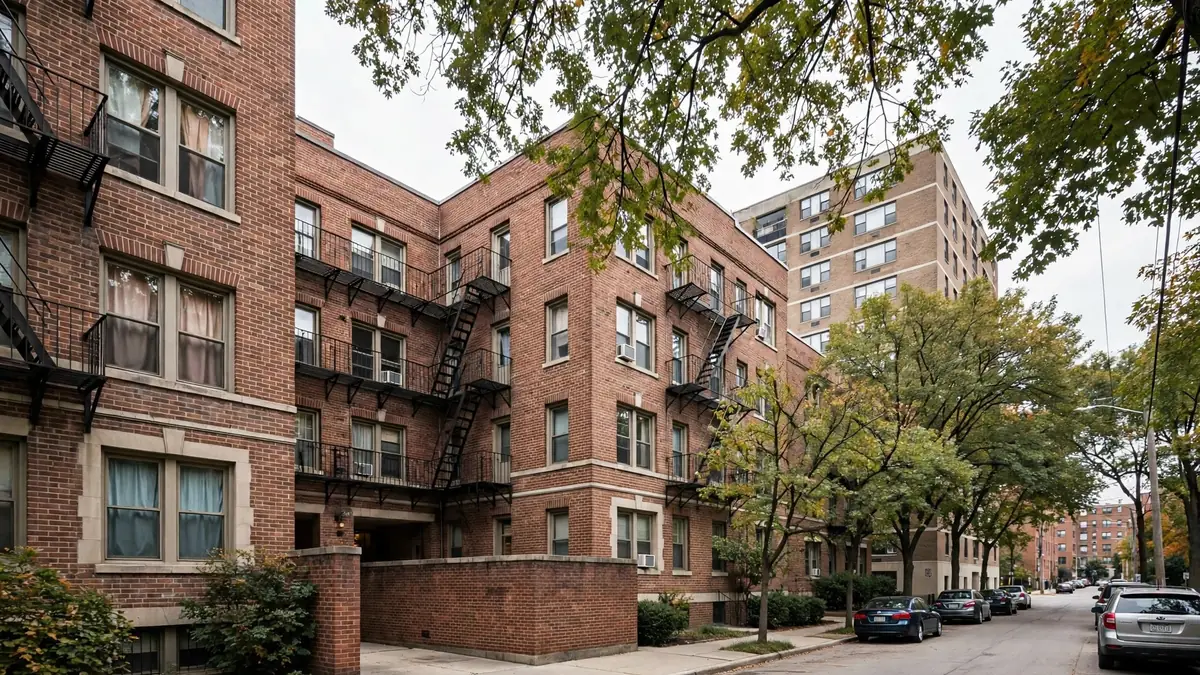
That density shapes fire restoration. Most residents live in high-rise and mid-rise buildings in Streeterville, River North and the Gold Coast, where a fire in one unit can affect many others. But the area also includes Gold Coast stone mansions and older walk-ups, River North's converted warehouse and loft buildings, and Old Town row houses south of North Avenue [1], each with its own restoration needs.
This page focuses on what is different about the Near North Side: tower logistics, sprinkler water, historic houses with fine finishes, and loft buildings with exposed masonry and timber.
Common calls
Fire damage calls from the Near North Side
Sprinkler activation in a tower unit
A small kitchen fire triggers a sprinkler that soaks the unit and those below.
Smoke through tower corridors
Smoke from one unit spreading along the corridor into neighboring units.
Fireplace and chimney fires
Fires in wood-burning fireplaces in Gold Coast houses and older walk-ups.
Loft fires in River North
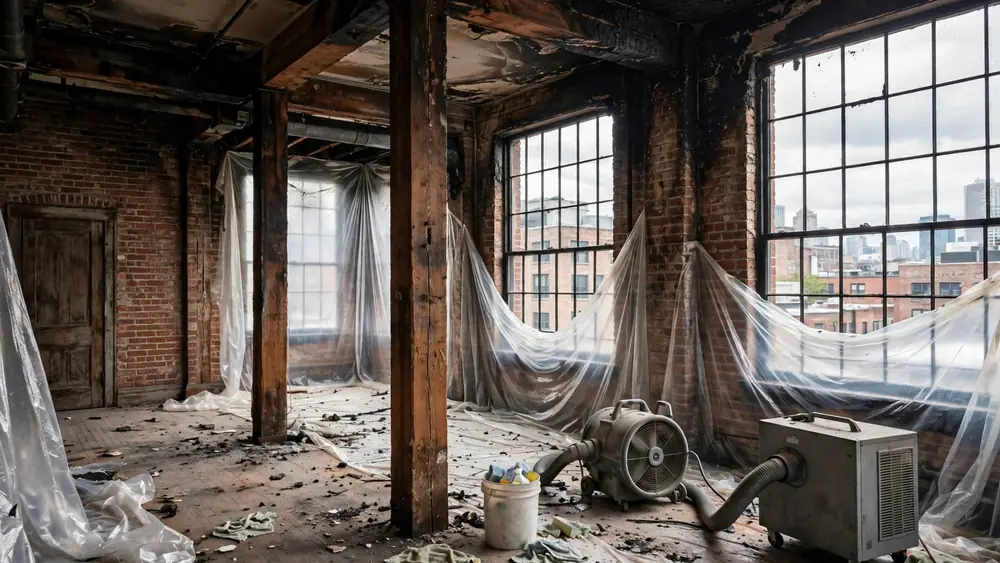
Fires in open-plan lofts with exposed brick and timber that hold soot.
Restaurant fires below apartments
Kitchen fires in River North and Old Town restaurants affecting apartments above.
Row house fires in Old Town
Fires in attached houses that spread smoke to neighbors through shared walls.
Streeterville towers
Fire restoration in Streeterville and Gold Coast towers
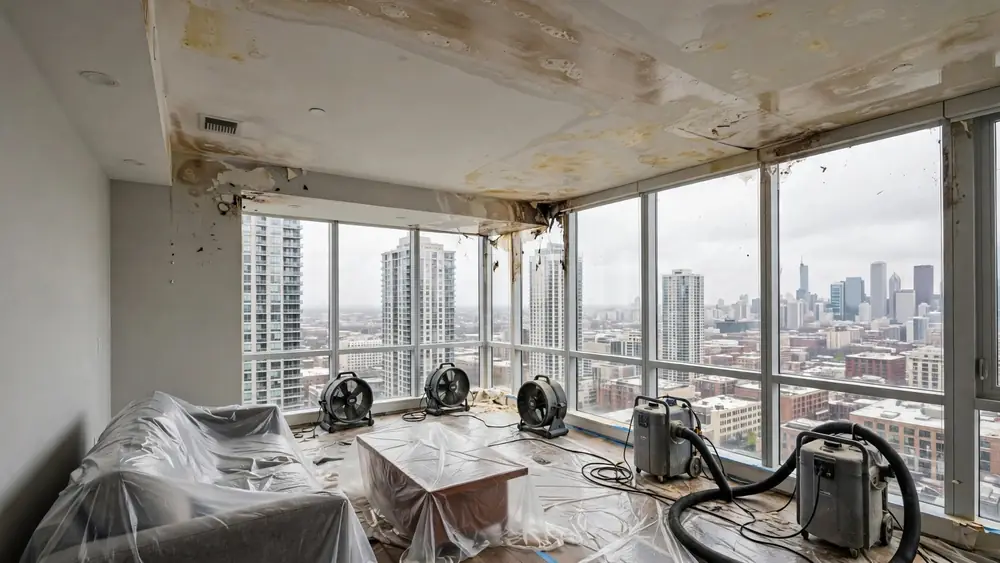
Streeterville and the Gold Coast are dominated by residential towers [1]. In these buildings, a unit fire usually stays within the unit or floor, but smoke can enter the corridor and other units through doors and shafts, and water from sprinklers or hose lines can run down through several floors.
Every step depends on the building. Management controls the freight elevators and loading docks, sets contractor requirements such as proof of insurance, and handles common areas and building systems. Unit owners handle their interiors and contents; the association handles the structure and common elements under its declaration. In rental towers, the owner handles the building and the unit, and tenants handle their belongings.
Smoke and water may reach units whose owners are away; many Streeterville and Gold Coast units are second homes or pied-à-terres. Management may need to grant access so drying can start in those units promptly.
River North lofts
Converted lofts and warehouse buildings in River North
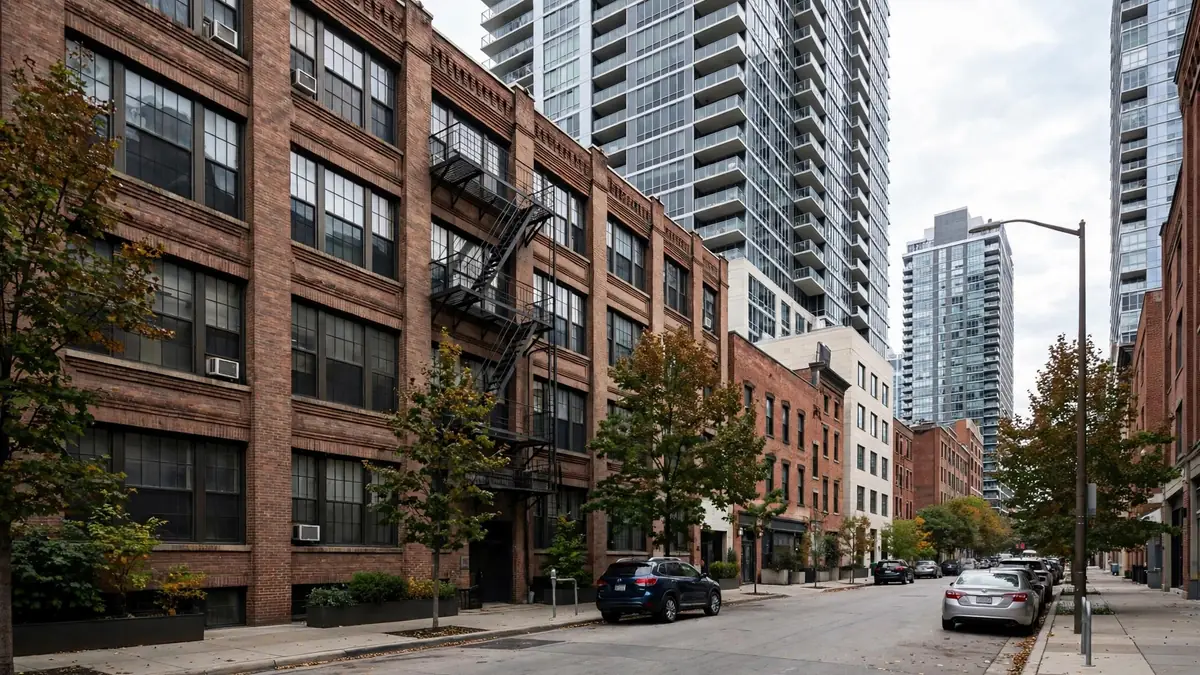
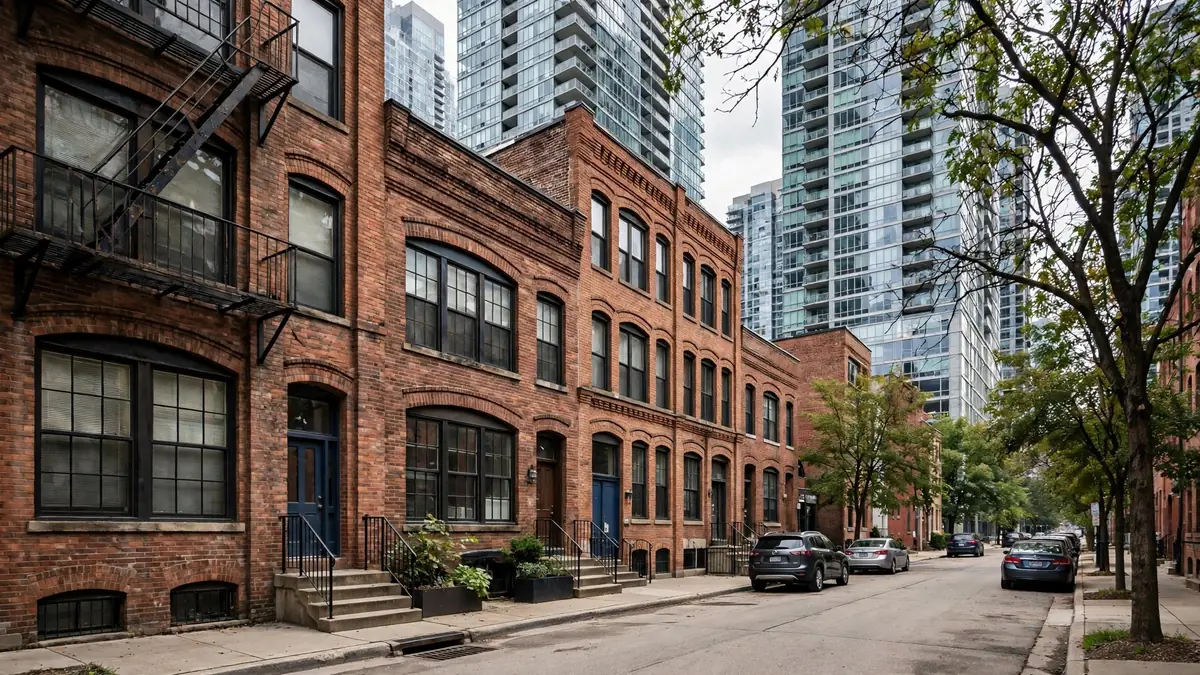
River North grew from an industrial and warehouse district into one of the city's busiest residential and nightlife areas, and many of its older brick buildings have been converted to lofts, alongside new high-rises such as those in Kingsbury Park [1].
Loft units have open plans, high ceilings, exposed brick walls, timber beams and columns, and large windows. Smoke fills an open plan quickly, and soot settles into the rough texture of old brick and timber, which is harder to clean than painted drywall. Exposed brick should be cleaned with methods that will not erode old masonry; timber that is charred on the surface may need assessment by a qualified professional.
Loft buildings often share older mechanical systems, freight elevators and stairs. Smoke can travel through those shared spaces into other units, so the assessment should include them.
Gold Coast houses
Stone mansions and walk-ups in the Gold Coast
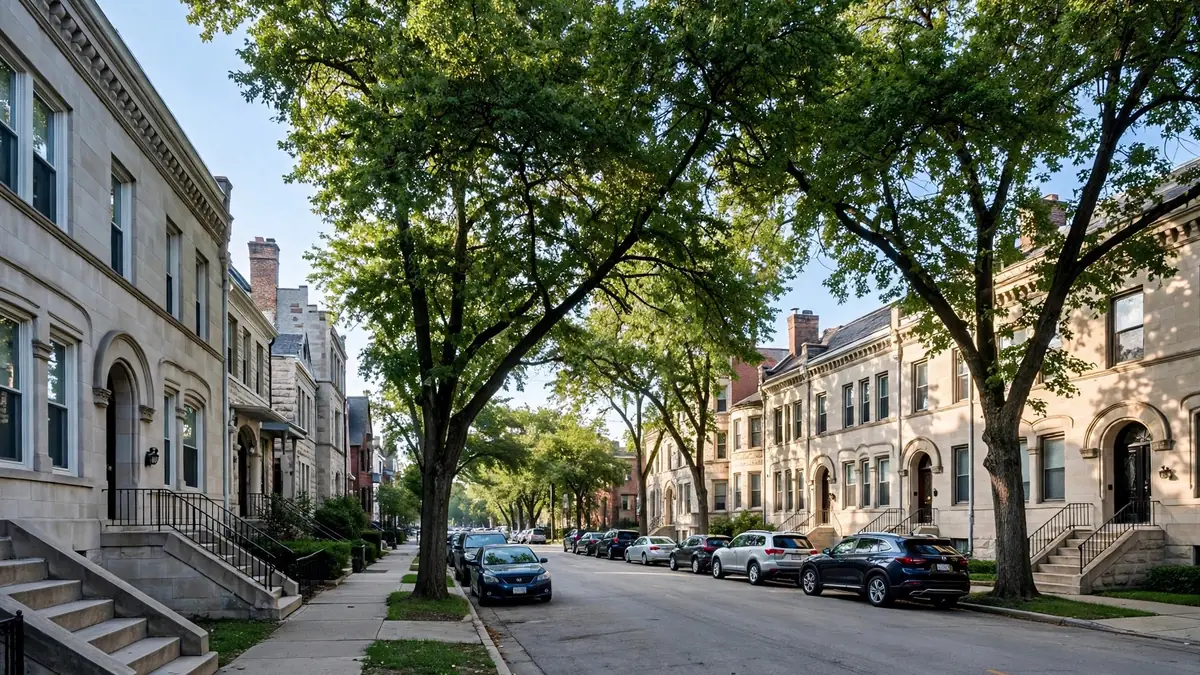
Alongside its towers, the Gold Coast has stone mansions [1] and older walk-ups and row houses on its side streets. Many are in historic districts. These buildings have plaster walls and ceilings, carved woodwork, decorative plaster, leaded and stained glass, fireplaces and large attics.
Fires in houses like these call for a patient, preservation-minded approach. Plaster and woodwork can usually be cleaned and restored; leaded glass and decorative plaster need specialists. Wood-burning fireplaces are a common source of fire and smoke problems, and a chimney should be inspected before a fireplace is used again after any incident.
If the house is a designated Chicago landmark or in a Chicago landmark district, exterior repairs that need a permit, such as masonry, windows or roof work visible from the street, may require review by the Commission on Chicago Landmarks [2]. Temporary protection such as board-up should go ahead promptly regardless.
By building type
Near North Side building types after a fire
| Building type | Typical fire damage | Restoration focus |
|---|---|---|
| Streeterville or Gold Coast tower | Sprinkler water in units below; corridor smoke | Multi-unit drying; management coordination |
| River North loft | Soot on exposed brick and timber; open plan | Masonry-safe cleaning; timber assessment |
| New high-rise along the river | Water through drywall and engineered floors | Prompt drying; replacement of soaked drywall |
| Gold Coast mansion or walk-up | Smoke through grand stairs; fine finishes | Preservation cleaning; landmark review for exterior |
| Old Town row house | Smoke and water through shared walls | Neighbor coordination; attic and party walls |
Old Town
Row houses and walk-ups in Old Town south of North Avenue
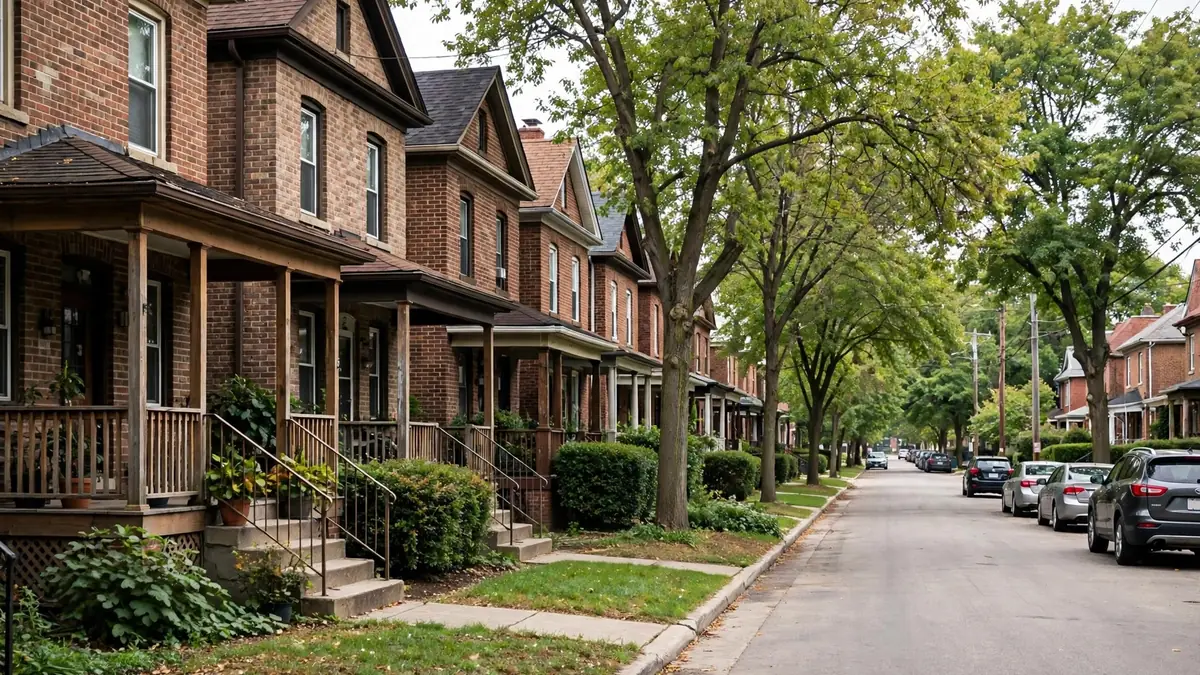
The part of Old Town south of North Avenue lies within the Near North Side [1]. Its residential streets include row houses, small walk-ups and newer infill buildings. Attached row houses share party walls, and many older ones share attic spaces or have only light separations between them.
A fire in one row house can send smoke through the attic and the shared wall into the houses on either side, and firefighting water can reach the neighbors' walls and basements. Each owner deals with their own insurer, but the restoration usually works best when the affected houses are assessed together.
Older row houses are likely to contain lead paint and possibly asbestos in older materials, so testing before demolition is part of a careful job [3][4].
Sprinklers and systems
Sprinkler water and building systems in Near North high-rises
Many Near North high-rises have sprinklers, at least in parts of the building. When a sprinkler head activates, it discharges water until the system is shut off, and that water flows down through the floor into units below. In many fires, the water damage reaches more units than the smoke.
Drying needs to start in every wet unit quickly. Because the ceiling of one unit is the floor of the one above, the moisture map should follow the water down through each floor. Building engineers will want the sprinkler zone restored to service promptly, so restoration should be coordinated with them.
Persistent odor in a unit may come from shared systems such as exhaust risers, corridor ventilation or trash chutes. Those belong to the building, so report odor that keeps returning to management.
The visit
How a Near North Side restoration usually starts
- 1
Release and building contact
Wait for the Chicago Fire Department to release the area [5], then contact management or the association.
- 2
Schedule access
The contractor books the freight elevator, loading dock or street access for equipment.
- 3
Assess the fire unit and its neighbors
Units above, below and beside, the corridor and shared systems are checked and photographed.
- 4
Start drying
Water is extracted and drying equipment set up in every wet unit.
- 5
Protect finishes and clean
Fine finishes are protected; smoke and soot cleaning proceeds with containment.
- 6
Share the scope
Photos and scopes go to the association and each household's insurer [6].
First steps
First steps for Near North Side fire situations
| Situation | First step | Then |
|---|---|---|
| Sprinkler water through your ceiling | Turn off power to the wet area; call management | Photograph and start drying |
| Smoke in your unit from another fire | Photograph and note odor locations | Report to management and your insurer |
| Fire in a Gold Coast house | Board up and tarp promptly | Protect finishes; plan exterior repairs with landmark review if designated |
| Soot on loft brick | Do not scrub or pressure wash | HEPA vacuum and masonry-safe cleaning |
| Row house fire next door | Check attic and party wall | Document and notify your insurer |
Restaurants and nightlife
Fires in River North restaurants with homes above
River North is packed with restaurants and bars, many in older buildings with apartments or lofts above. A kitchen fire in one of them sends smoke and greasy protein residue into the floors above through stairs, chases and the floor structure.
Residents above usually need their units degreased, their contents cleaned and their HVAC checked. The building owner, the business and each residential tenant typically have separate insurance. Document your own damage and keep receipts for any extra living expenses [6].
Renters and owners
Renters, owners and second-home owners
The Near North Side has a mix of renters in large towers, condo owners and owners who use their units part-time. After a fire, renters' belongings are covered by their own renter's insurance, not the landlord's policy [6]. Condo owners' interiors and contents are usually covered by their unit-owner policies, with the association covering common elements.
If you own a unit you do not live in full-time and learn of a fire in your building, contact management right away to arrange access for inspection and drying. Delays in drying a wet unit can turn a manageable water problem into a mold problem.
Permits
Permits, landmarks and building approvals on the Near North Side
Repairs after a fire, such as drywall, electrical, plumbing and flooring work, may require permits from the Chicago Department of Buildings [7]. Towers have their own processes for approving contractors and work in units.
Many Gold Coast and Old Town properties are in historic districts. For designated Chicago landmarks and properties in Chicago landmark districts, exterior work requiring a permit is generally reviewed by the Commission on Chicago Landmarks [2]. Plan for that review in the schedule for permanent exterior repairs.
Access
Access and logistics on crowded Near North streets
Street parking for work trucks is scarce on the Near North Side, especially around Michigan Avenue and the River North restaurant district. Towers have loading docks and freight elevators scheduled by management; houses and walk-ups usually have alley access at the rear.
When you call, give the building name or address, any management contact and whether there is alley or dock access, so the crew can plan how to get equipment in quickly.
Before the call
What to have ready for a Near North Side call
- Building name, address and unit number
- Management or association contact
- Whether sprinklers activated and which units are wet
- Building type: tower, loft, mansion, walk-up or row house
- Whether the building has a historic designation
- Your insurer and claim number, if available
Coverage
Near North Side ZIP codes covered
This page covers ZIP codes 60610, 60611 and 60654, which include Streeterville, River North, the Gold Coast and the part of Old Town south of North Avenue. ZIP 60642, which includes Goose Island and nearby blocks west of the river, is also covered. South of the river, the Loop and South Loop are covered on their own page.
Which ZIP codes are served depends on the contractors working the Near North Side at the time, and that can be revised. Your address is confirmed on the call itself.
Fireplaces
Fireplace and chimney fires in older Gold Coast homes
Wood-burning fireplaces are common in Gold Coast mansions, older walk-ups and Old Town row houses. A chimney fire, usually from creosote buildup in a flue that has not been cleaned, can crack the flue liner, send sparks into the attic or roof structure and fill the rooms around the fireplace with smoke and soot.
After any chimney fire, the chimney should be inspected by a qualified chimney professional before the fireplace is used again. The cleanup inside usually involves soot removal from the fireplace surround, mantel, nearby walls and ceilings, and sometimes the attic around the chimney. Stone and brick surrounds need masonry-safe cleaning, and carved wood mantels need gentle methods that protect their finish.
In row houses with shared chimney stacks, a chimney fire in one house can affect the flues and attics of the neighbors, so they should be checked too.
New towers
Newer high-rises along the river
Recent residential towers along the North Branch and in River North, including the Kingsbury Park area [1], use modern construction: concrete structure, drywall partitions, engineered or wood flooring over concrete and individual HVAC units. Fire restoration in these units focuses on drying and replacing soaked drywall and flooring, cleaning smoke residue from smooth finishes and cleaning each unit's HVAC.
Modern finishes are generally easier to clean than old plaster and brick, but drywall wicks water quickly and is more often replaced after sprinkler soaking. Engineered flooring may delaminate when wet. Moisture trapped under flooring on a concrete slab dries slowly, so flooring is often lifted to let the slab dry.
Newer buildings usually have well-documented systems and responsive management, which helps the restoration move quickly once access is arranged.
Contents
Belongings, art and collections in Near North homes
Near North Side homes often hold artwork, antiques, designer furniture and collections that need more care than everyday belongings. Smoke residue is acidic and can damage artwork, fabrics and finishes over time, and sprinkler water can ruin paper, textiles and wood.
Point out valuable or delicate items at the first walk-through. Art and antiques usually go to specialist conservators rather than general contents cleaning. Keep everything, including damaged items, until the adjuster has seen them, as the Illinois Department of Insurance advises [6]. Many policies limit coverage for jewelry, art and collectibles unless they were separately scheduled, so check your policy.
Lake winds
Weather, wind and high floors on the Near North Side
Lakefront towers in Streeterville and the Gold Coast take the full force of winds off Lake Michigan. When firefighters break windows on an upper floor, the opening has to be secured from inside, often with framed plywood panels, because exterior access is limited to the building’s own equipment. Wind through an open window on a high floor can drive rain deep into a unit and push smoke residue around.
In winter, a broken window on a high floor lets in extreme cold, and units without heat can freeze pipes and fan coil units. Securing openings and restoring heat to affected units quickly is part of protecting the building, which is why management usually wants openings covered the same day.
FAQ
Questions from River North and Streeterville residents
My Streeterville condo was flooded by a sprinkler on the floor above. What should I do first?
Turn off power to the wet area if you can safely, contact building management, photograph everything and get drying started quickly. Then notify your unit-owner insurer.
Can soot be cleaned off the exposed brick in my River North loft?
Usually, with HEPA vacuuming and masonry-safe cleaning. Avoid water scrubbing and pressure washing, which drive soot deeper and can erode old brick.
Do I need landmark approval to repair my Gold Coast house after a fire?
Interior cleaning and repairs generally do not. Exterior repairs needing a permit on designated Chicago landmarks or in Chicago landmark districts may require Commission on Chicago Landmarks review.
My row house in Old Town smells of smoke from a fire next door. Is that common?
Yes. Smoke travels through shared attics and party walls in attached houses. Document the damage and tell your insurer.
I own a unit I do not live in full-time. What happens if there is a fire in my building?
Management may contact you or grant access to inspect and dry your unit. Respond quickly; delays in drying can lead to mold.
Why does my apartment above a restaurant smell so strongly after its kitchen fire?
Restaurant fires leave heavy protein and grease residue that rises through stairs and floors. It needs degreasing and odor treatment, not just surface cleaning.
Is Goose Island covered?
Yes. ZIP 60642, which includes Goose Island, is covered along with 60610, 60611 and 60654.
Should my chimney be inspected after a fireplace fire?
Yes. A chimney fire can crack the flue liner and reach the attic or roof structure. Have a qualified chimney professional inspect it before you use the fireplace again.
How are broken windows on a high floor secured after a fire?
Usually from inside the unit with framed plywood or temporary panels, since exterior access is limited. Building management may coordinate with its own window contractor for permanent replacement.
Are River North lofts harder to clean after a fire than newer condos?
Often, yes. Exposed brick, old timber and open plans hold soot in their texture and let smoke spread widely, while newer condos have smooth painted drywall that cleans more easily but is replaced more often after water damage.
Sources and citations
- [1]Wikipedia — Near North Side, Chicago
- [2]City of Chicago — Commission on Chicago Landmarks
- [3]U.S. EPA — Lead Renovation, Repair and Painting Program
- [4]U.S. EPA — Protect your family from exposures to asbestos
- [5]Ready.gov — Home fires
- [6]Illinois Department of Insurance — What to do after an insured homeowners loss
- [7]City of Chicago — Department of Buildings permits