
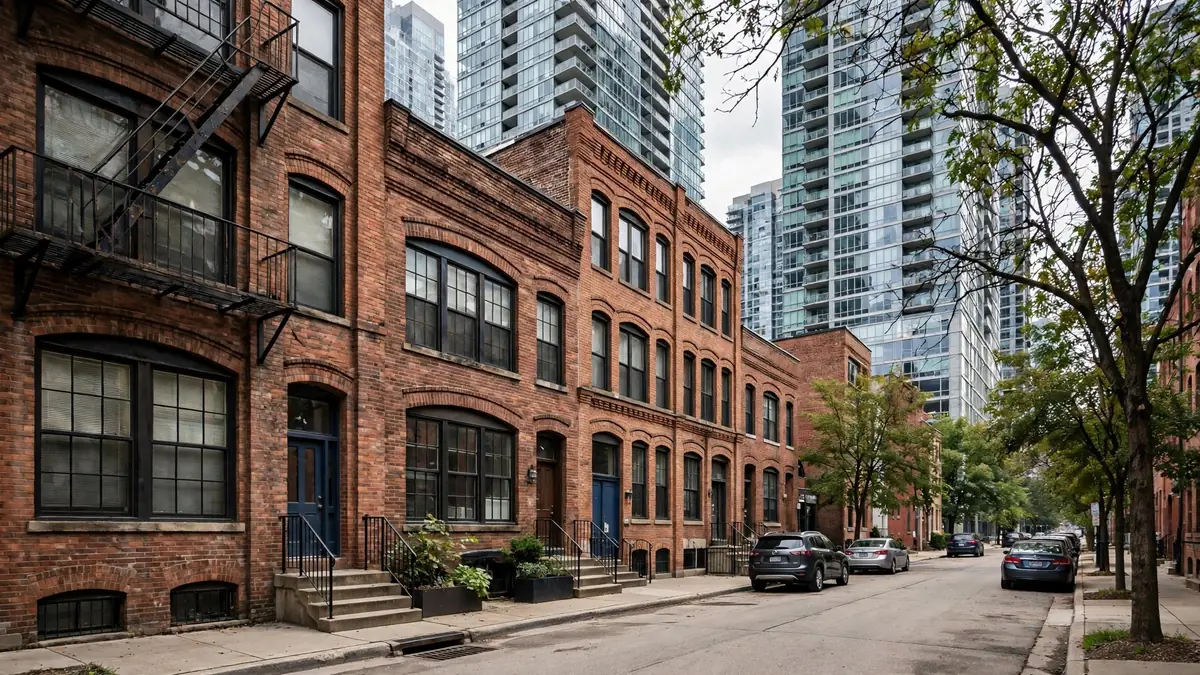
Key facts: Duct Cleaning After a Fire in River North and Streeterville
Towers
Fan coils and heat pumps
Tower units have fan coils or heat pumps whose fan, coil and pan hold residue. Cleaning usually needs the building engineer to isolate the unit first.
Lofts
Exposed loft ducts
Exposed ducts are cleaned inside under negative pressure and wiped outside.
Houses
Furnaces in mansions and row houses
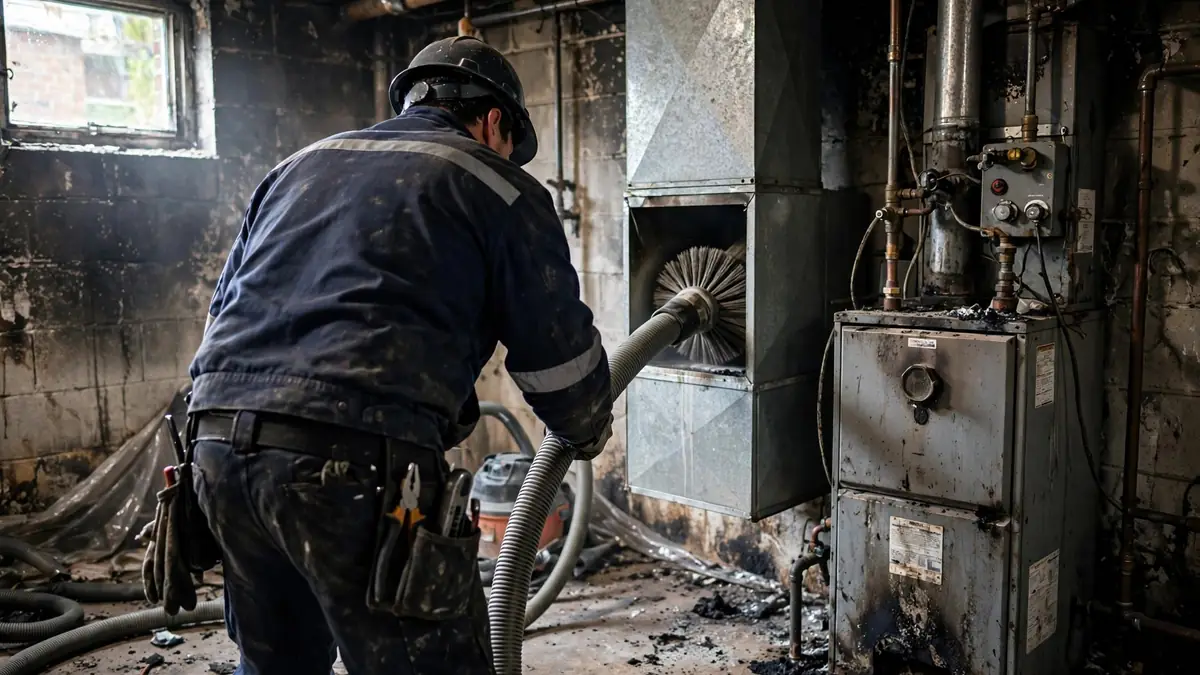
Mansions and row houses often have basement furnaces with long duct runs. Cleaning covers returns, supply runs, blower and coil.
Signs
Signs your system holds smoke
- Smell when the system starts
- Streaks at grilles
- A gray filter
- Odor when a neighbor's fan runs
- Film returning on cleaned walls
Method
What the cleaning includes
Claims
Including HVAC in the scope
Make sure your adjuster's scope lists the air system [4].
Lofts
Exposed ducts in River North lofts
Converted lofts often have exposed metal ducts running under timber ceilings. They look simple, but soot settles on the outside as well as inside, and the long open runs mean a lot of surface area. Exposed ducts also make it easier to see what has been cleaned, so ask the crew to show you. Lined duct is harder: fibrous lining that has absorbed smoke may not clean well and may need to be replaced.
Older houses
Gold Coast and Old Town systems
Older mansions, walk-ups and row houses may have had ductwork added long after they were built, threaded through chases and old chimney spaces. Some have radiators and no ducts at all, or have separate cooling units on upper floors. Access can be tight, and cutting into plaster to reach a run should be done only with care. In homes built before modern rules, old insulation around ducts or pipes may contain asbestos, so ask for testing before anyone disturbs it.
Process
What a thorough job includes
A real post-fire job goes beyond a vacuum at the registers. It should include an inspection of the air handler, coil, blower, drain pan, supply and return ducts, registers and filter housing. The system is usually cleaned under negative pressure, so dislodged residue is pulled into the collection unit rather than into your rooms. The coil matters, because residue there can keep producing odor. New filters go in at the end, and it is sensible to change them again after a short time, since remaining fine residue can collect there.
Timing matters as well. Cleaning ducts while the rooms are still dirty can recontaminate them, so this work is usually coordinated with smoke damage cleanup and odor removal. Ask for before and after photos from inside the ducts. They are useful for you and for your insurer.
Warning signs
Signs the system still holds smoke
- Smoke smell returns when the fan starts
- Dark streaks around registers
- Fine black dust on surfaces soon after cleaning
- A dirty filter shortly after replacement
- Odor strongest near vents or the air handler
- Allergy or breathing irritation at home; ask your doctor
Restaurants
Kitchen smoke from below
If a kitchen fire happened in a restaurant below your home, greasy residue may have reached your system through chases or shafts. That film holds odor and needs a suitable degreasing method. Mention the source to the crew. Otherwise, the system may be cleaned for soot alone and the smell may come back when the heat turns on. Keep notes about what you smell and when, as this helps the crew find the path.
Winter and summer
Living without the system
Being told to keep the system off is hard in a Chicago January or a humid July. Ask how long it will be off, and whether temporary heating or cooling is safe and allowed in your building. Do not use fuel-burning heaters indoors. In winter, keep enough heat to protect pipes, and let management know if the unit will be cold.
Vents
Bath and kitchen exhaust in stacked units
Exhaust from a bathroom or kitchen in a tower may run into a shared shaft. After a fire on another floor, residue can reach your unit through that path, especially if a damper has failed or was never fitted. A simple check of each grille can reveal soot. Clean the grille and report what you find to management. Dryer vents deserve a look as well, since lint and soot together can create a fire hazard of their own.
Keep a short record of what was cleaned in the unit and what belongs to the building. If a smell returns later, that record shows whether the source is likely to be inside your walls or somewhere shared, and it saves time when you speak with management and your insurer.
Choosing
Questions to ask the duct crew
Ask what equipment will be used, whether the coil and blower are included, how access holes are sealed and whether photos are provided. Ask how they will protect floors and corridors in a managed building. A clear answer before work starts prevents gaps later.
Also ask who will reseal any panels they open, and whether the building engineer needs to be present. In older houses, ask how they will reach runs hidden behind plaster without cutting more than the job truly requires.
FAQ
Near North HVAC questions
Who cleans my fan coil?
Your contractor, often with the building engineer.
Who cleans the exhaust riser?
The association or building owner, since the riser is shared.
Can mansion ductwork be cleaned?
Yes, including long runs, sometimes with added access points.
Can I run the system after the fire?
Wait until it has been checked and cleaned.
Should ducts be sprayed with sealant?
Not routinely, under EPA guidance.
How long does it take?
Often a day per system.