Key facts: Odor Removal
- Lingering smoke odor comes from residue in porous materials, cavities and ducts; removing that residue is the first step in any odor treatment [1].
- EPA says ozone at levels safe for people does little to remove odors, and high-concentration ozone used after fires must only run in unoccupied spaces [2].
- Ozone can damage rubber, wire insulation, fabrics and artwork with sensitive dyes [2].
- EPA does not recommend duct sealants or biocides as routine treatments and advises fixing the cause before cleaning ducts [3].
- Illinois insurance guidance says to keep damaged items until the adjuster sees them, including smoke-smelling furniture [4].
How it works
Where a fire smell really comes from
What you smell after a fire is a mix of gases released by residue. Smoke particles carry compounds that slowly evaporate from whatever they landed on. On a glossy surface they are cleaned away quickly. In a porous material such as drywall paper, insulation, carpet pad, upholstery foam or unfinished wood, the residue sits below the surface and keeps releasing odor for months.
Heat and humidity speed that release. A house that seemed fine in a cold, dry January can smell strongly again in a humid July, or the first day the radiators come on in the fall. That pattern is a sign that residue is still present somewhere, not that the smell is coming back from nowhere.
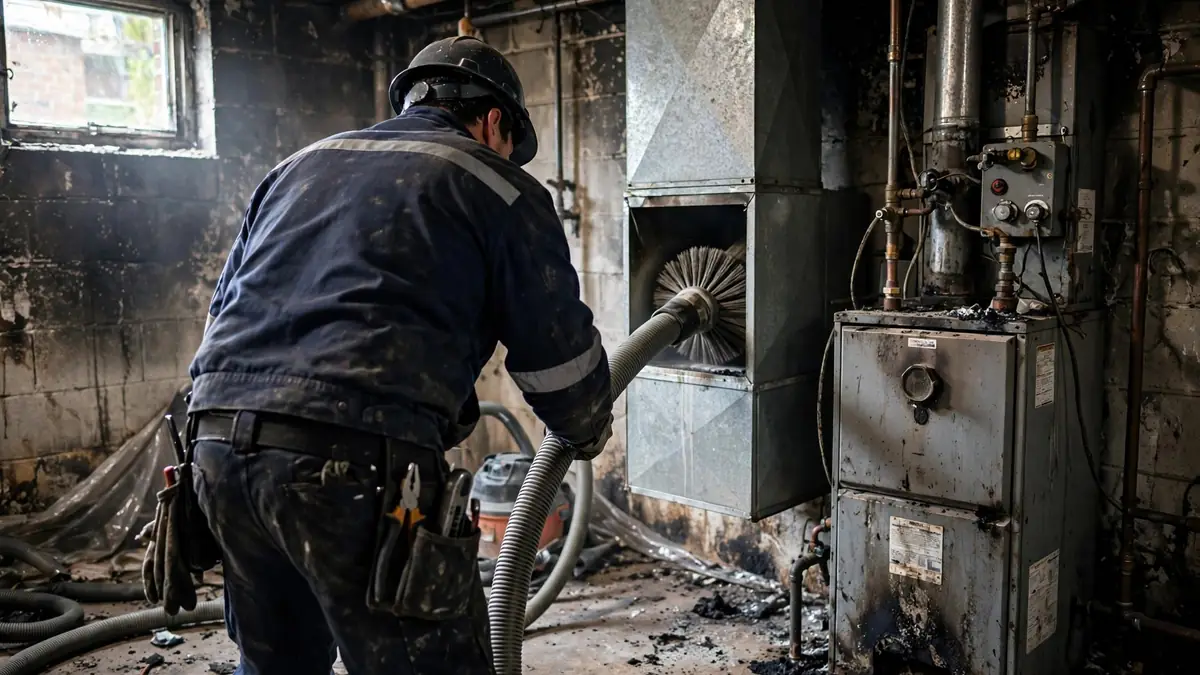
Odor travels the same paths smoke did. If smoke moved through the ductwork, wall cavities, attic or a shared stairwell, residue is there too. That is why odor control under the ANSI/IICRC S700 standard is treated as part of a larger process that includes assessment, source removal and HVAC cleaning rather than a stand-alone deodorizing step [1].
There is no single product that makes a smoke smell vanish. Fragrances and household sprays only mask it for a short time. Real odor removal combines physical cleaning, removal of materials that cannot be cleaned, sealing, and treatment that chemically breaks down the remaining odor molecules.
Signs
Clues that the odor source is still in the house
Smell is stronger in one room
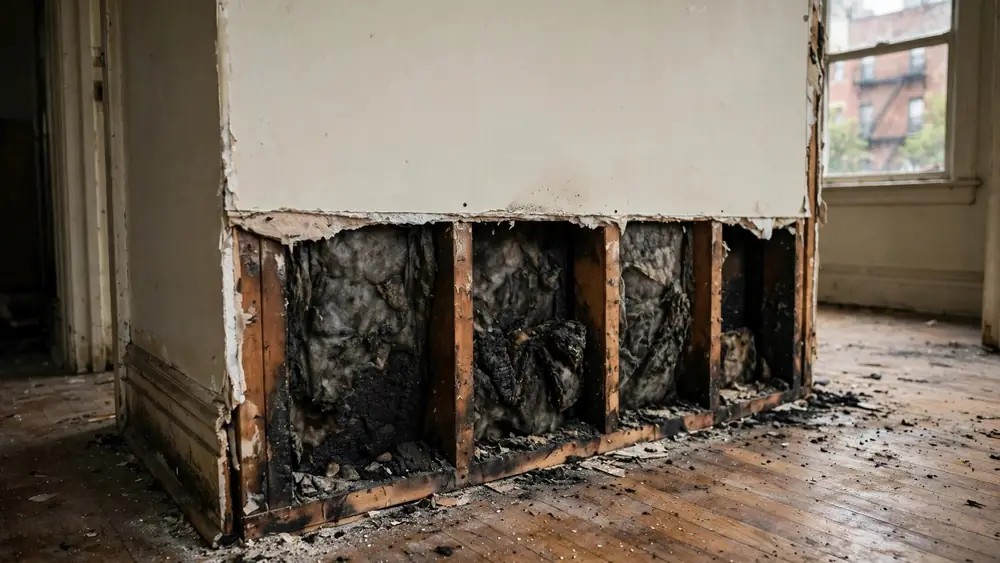
Odor that concentrates in a room or corner points to a source there: a closet, a wall cavity or a piece of furniture.
Smell when the heat or air runs
If odor rises when the furnace or air conditioner starts, residue is in the ducts, the air handler or the filter rack.
Smell on warm or damp days
Humidity reactivates residue in porous materials such as drywall, plaster, insulation and wood.
Smell in the clothes you wear
Fabrics stored in the home absorb odor from the air, a sign the air itself still carries it.
Smell near outlets and fixtures
Odor at electrical boxes and light fixtures suggests residue in the wall or ceiling cavity behind them.
Smell from the basement or attic
Exposed framing, insulation and stored belongings in these spaces often hold residue that is easy to overlook.
The process
How smoke odor is removed, in the order that works
- 1
Find the sources
The contractor walks the home room by room, checks cavities, ducts, the attic and the basement, and identifies what is still releasing odor.
- 2
Remove what cannot be saved
Charred materials, smoke-soaked insulation, carpet pad and porous items with heavy residue are taken out.
- 3
Clean every surface
Walls, ceilings, floors, fixtures, cabinets inside and out, and contents are cleaned with methods matched to the residue.
- 4
Clean the HVAC system
Ducts, registers and the air handler are cleaned so the system does not redistribute residue [3].
- 5
Treat the air and remaining materials
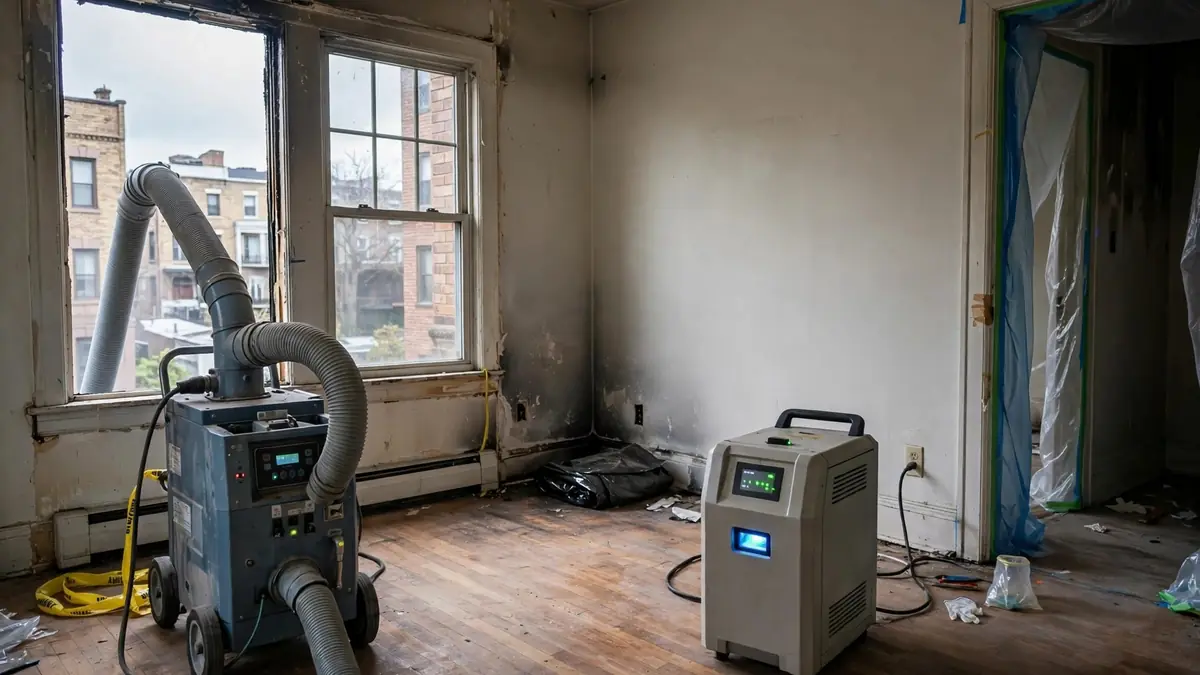
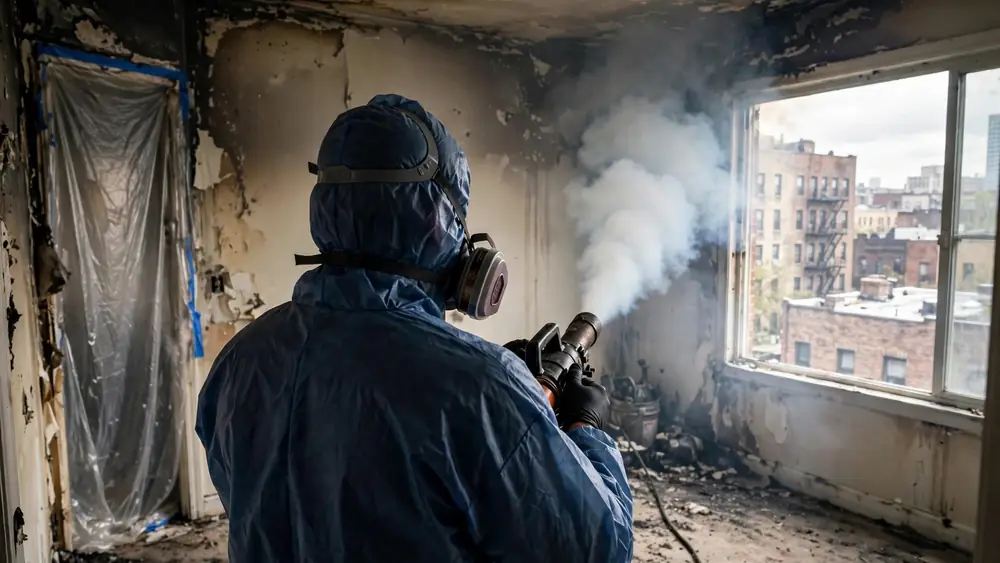
Thermal fogging, hydroxyl generators or, in an empty home, controlled ozone may be used to break down remaining odor molecules.
- 6
Seal surfaces
Framing and other surfaces that remain stained are sealed with an odor-blocking primer before insulation and drywall go back.
- 7
Check under real conditions
The home is closed up and the heat or air conditioning is run before the job is called finished.
Treatments
Odor treatments compared
These treatments finish the job after cleaning. None of them replaces source removal.
| Treatment | How it works | Can people stay home? | Watch out for |
|---|---|---|---|
| Thermal fogging | Heated deodorant forms a fine fog that follows the same paths smoke took | No, during and for a time after | Residue on surfaces if overapplied; ventilation afterward |
| Hydroxyl generators | UV light creates hydroxyl radicals that break down odor compounds in the air | Often yes, per manufacturer guidance | Works slowly; best for air and light residue |
| Ozone generators | High ozone levels oxidize odor compounds | No; space must be unoccupied, including pets and plants [2] | Damages rubber, fabrics, artwork; byproducts not fully understood [2] |
| Odor-blocking primers | Seals residue into framing or drywall | Yes, with ventilation | Only after cleaning; not a substitute for it |
| Activated carbon filtration | Air scrubbers with carbon capture odor gases | Yes | Carbon saturates and must be changed |
What you can do yourself
Odor steps a homeowner can safely take
- Ventilate when the weather allowsCross-ventilation helps clear airborne odor, though it cannot remove residue from materials.
- Replace the furnace filterA loaded filter keeps releasing odor into the air stream. Keep the system off until it has been checked.
- Bag and set aside smoke-heavy soft goodsPillows, cushions and bedding with heavy odor can be bagged, photographed and kept for the adjuster [4].
- Skip the sprays and candlesFragrances mask smoke briefly and can complicate later treatment.
- Never run an ozone machine yourself in an occupied homeEPA warns ozone irritates the lungs and is not reliable for odor removal at safe levels [2].
Local specifics
Why smoke odor lingers in older Chicago buildings
Chicago's older homes are full of places for odor to hide. Plaster-and-lath walls have gaps between the lath strips where residue collects. Balloon framing, common in older frame houses, leaves open cavities running from the basement to the attic that act like chimneys for smoke. Bungalow half-stories have knee walls with storage space behind them and attic areas that are rarely opened [5].
Greystone and brick two-flats often have plaster on masonry, built-in cabinets, original wood floors and old steam radiators. Each holds odor differently. Steam radiators are a particular nuisance: residue baked onto their fins releases a fresh wave of smell every time the boiler fires.
Multi-unit buildings add shared paths. Smoke often reaches the units above and next to the one that burned through stairwells, pipe chases and the attic or cockloft. If odor in your unit keeps returning even after thorough cleaning, residue in a shared space may be the source, and the building owner or association will need to address it.
Chicago's seasons also matter. The long heating season keeps windows closed for months and dries out materials, while summer humidity reactivates odor. A treatment that seems to work in one season should be checked again in the other.
Diagnosis
Tracking down an odor source room by room
Contractors find odor sources mostly by careful observation and a good nose. They compare rooms, check the smell at outlets, registers and fixtures, open cabinets and closets, and look at insulation in accessible spots such as the attic, rim joists and behind outlet covers.
When the source is hidden, a small inspection opening in the drywall near the floor or ceiling often answers the question. If the insulation inside is gray or black, the cavity needs work. Moisture meters help too, because damp materials from firefighting water release odor more strongly and can also lead to mold.
The findings should be written down and photographed. A scope that lists the sources and what will be done with each is easier for an adjuster to approve than a general line item for deodorization.
Quick reference
Odor symptoms and their usual sources
| When or where it smells | Likely source | Typical fix |
|---|---|---|
| Whole house, worse with heat on | Ducts, air handler, filter | HVAC cleaning and new filter |
| One room or closet | Wall cavity, insulation, contents in that room | Open, remove insulation, clean, seal |
| Kitchen, strong and greasy | Protein residue in cabinets, hood and walls | Degreasing every surface, cabinet interiors |
| Upstairs bedrooms of a bungalow | Attic insulation and knee-wall spaces | Remove insulation, clean and seal framing |
| Comes back on humid days | Porous materials still holding residue | Further cleaning or removal, then sealing |
| From the stairwell in a two-flat | Shared stair and common areas | Building-wide cleaning by the owner or association |
Ozone
Ozone treatment: what it can and cannot do
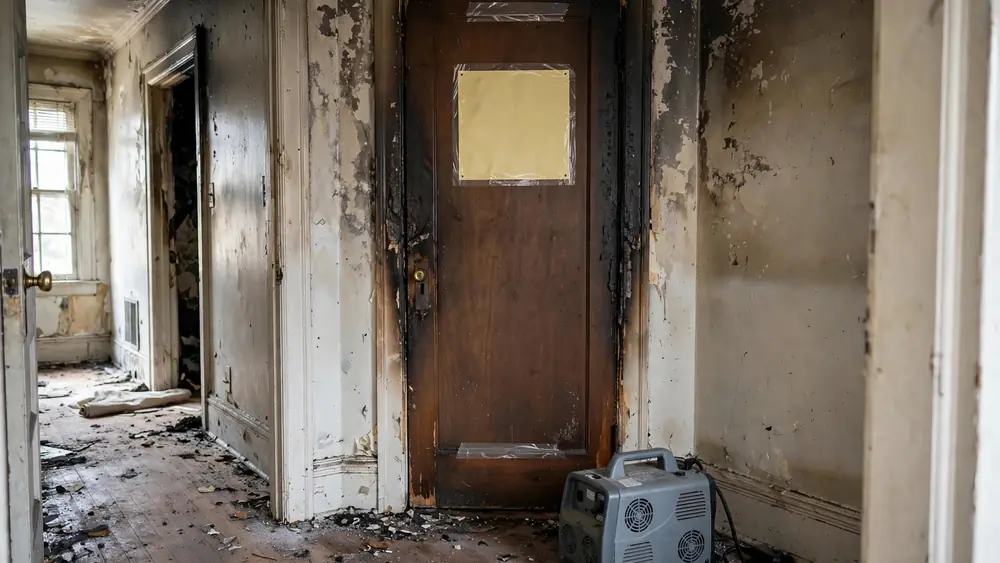
Ozone is often marketed as a cure for smoke smell. EPA's position is more cautious. At concentrations that meet health standards, ozone does little to remove odors and may mask them rather than eliminate them. High concentrations are sometimes used in unoccupied buildings after fires, but only under tightly controlled conditions so that no person or pet is exposed, and little is known about the chemical byproducts left behind [2].
Ozone also attacks materials. It can degrade rubber, the coating on wires, some fabrics and artwork with sensitive dyes [2]. If a contractor proposes ozone, ask what the concentration will be, how long the home must stay empty, what will be removed or protected first, and how they will confirm the space is safe before you return.
Belongings
Getting smoke smell out of clothing, furniture and books
Clothing and linens usually respond to specialized laundering or dry cleaning designed for smoke. Several cycles may be needed. Hot water and household detergent alone can set some residues, so ask the contractor before washing everything at home.
Upholstered furniture and mattresses absorb odor through the fabric into the foam. Some upholstery can be cleaned, but heavy exposure often means the foam or the piece has to go. Books and papers hold odor in their pages; specialists use deodorizing chambers for valuable items.
Hard goods are the easiest: dishes, glass, metal and plastic usually lose their smell with ordinary thorough cleaning. When there is a lot to process, a contents cleaning and pack-out moves the items out of the house so the structure can be treated at the same time.
DIY or professional
Odor jobs to handle yourself and ones to hand off
Fine to try
Airing out, laundering lightly affected fabrics, cleaning hard items, swapping the furnace filter.
Professional territory
Odor that persists after cleaning, smells from walls or ducts, kitchen protein residue.
Never DIY
Ozone in an occupied home, opening walls in a pre-1978 home without lead precautions [6], foggers without respirators.
The visit
What an odor assessment visit looks like
At the first visit, a contractor should walk the whole home, including the basement, attic and garage, and ask when the smell is strongest. They should look at the heating system and explain where they think the odor is coming from before recommending any treatment.
Ask what will be removed, what will be cleaned, what treatment they propose and why, and whether you can stay in the home during each stage. Ask how they will check the result, ideally by running the HVAC system and checking again after the house has been closed up for a day or two.
If the work involves opening walls or replacing insulation and drywall, ask whether a Chicago building permit is needed for the repair phase [7].
Prevention
Keeping the house smelling clean after treatment
Change the furnace filter more often for the first season after a fire. Keep humidity moderate, since damp air brings out residual odors. If a smell reappears in one place, tell the contractor promptly; a single missed source is easier to fix while the job is fresh.
Over the long term, the best prevention is preventing the next fire. Working smoke alarms on every level, careful cooking habits and regular heating equipment service matter most [8].
Treat or remove
When odor treatment is not enough
If an item or material keeps smelling after cleaning and treatment, the residue is too deep. At that point, removal is the honest answer. This is common with mattresses, foam cushions, insulation and carpet pad, and sometimes with drywall in the rooms closest to the fire.
Structural framing almost never has to be removed for odor alone. Cleaning and sealing it with an odor-blocking primer usually locks remaining residue in place. A good contractor will tell you which approach applies to each material and why.
Related problems
Services that go hand in hand with odor removal
Duct cleaning after a fire
Removing residue the HVAC system would otherwise spread.
Read moreSurface cleaning comes first
Surface cleaning that comes before any odor treatment.
Read moreSoot removal
Heavy carbon deposits that carry strong odor.
Read moreThe smell will not leave
A guide to working out why odor persists.
Read more
Kitchen fires
Protein odor from a kitchen fire
Kitchen fires that burn food rather than the room itself are some of the hardest odor jobs. Burned meat, grease and other proteins leave a thin film that is almost invisible, yet the smell can fill the whole home and cling to every fabric. Because the film is hard to see, it is easy to under-clean.
The residue has to be removed from every surface it reached: the inside and outside of cabinets, the range hood and its filter, walls and ceiling, light fixtures, window coverings and the tops of door frames. Degreasing or enzyme cleaners work better on protein than the cleaners used for dry soot. Only after that cleaning does deodorization make a real difference.
Kitchen fires are common: NFPA identifies cooking as the leading cause of home fires [9]. If yours was a small stovetop fire that the fire department did not need to fight, the odor cleanup can still be extensive, and it is worth asking your insurer whether it is covered.
Multi-unit buildings
Coordinating odor work in condos and two-flats
When a fire happens in a building with more than one home, odor work in one unit is rarely enough by itself. Smoke spreads through the shared stairwell, the attic or cockloft and the plumbing and electrical chases. If those spaces are not cleaned, residue in them keeps feeding odor into every unit.
In a condominium, the association typically controls common areas and building systems, while owners handle their own interiors. In a rental two-flat or courtyard building, the owner generally arranges cleaning of the structure and common spaces, and tenants handle their personal belongings and renter's insurance claims. The Illinois Department of Insurance notes that a landlord's insurance does not cover a tenant's belongings [4]. Talking early with the other owners or the landlord saves repeated treatments that never fully work.
Questions to ask
Questions to ask before agreeing to an odor treatment
- Where do you think the odor is coming from?A clear answer about specific sources is a better sign than a promise that one treatment will fix everything.
- What will be removed, and what will be cleaned?Odor treatment comes after cleaning and source removal, not instead of them.
- Which treatment, and can we stay in the home?Fogging and ozone require an empty home; hydroxyl units and carbon filtration often do not.
- What will be protected or taken out first?Ozone can damage rubber, fabrics, wiring and artwork, so sensitive items should be removed [2].
- How will we know it worked?Ask for a check with the house closed up and the heat or air conditioning running.
- Does the scope include the ducts?If the HVAC system carried smoke, odor work without duct cleaning often fails [3].
FAQ
Smoke odor removal questions
How long does it take to get rid of smoke smell after a fire?
With source removal, cleaning and treatment, most homes improve within days to a few weeks. Heavy damage or residue in hidden cavities takes longer. The smell should be checked again with the heat or air conditioning running.
Does ozone get rid of smoke smell?
Ozone at high levels in an empty home can help after cleaning, but EPA notes that at safe levels it does little and that it can damage rubber, fabrics and artwork. It should never be used with people or pets inside.
Why does the smoke smell come back when it's humid?
Humidity and heat make residue in porous materials release odor faster. If the smell returns on damp days, residue is still in drywall, insulation, wood or furniture.
Can I stay in my house during odor treatment?
It depends on the method. Hydroxyl units and carbon filtration usually allow occupancy. Thermal fogging and ozone require the home to be empty for a period. Ask the contractor for specifics.
Will painting the walls stop the smell?
Regular paint will not. After cleaning, an odor-blocking primer can seal remaining residue into the surface, and then the finish coat goes on.
Do air fresheners help with smoke odor?
Air fresheners only mask smoke odor for a short time. Smoke odor stops when the residue releasing it is cleaned, removed or sealed.
Why does my apartment smell of smoke when the fire was next door?
Smoke travels through shared walls, stairwells, chases and the attic in multi-unit buildings. Residue in those shared spaces can keep releasing odor into your unit until the building cleans them.
Is lingering smoke smell harmful?
The odor itself signals residue that may include irritating compounds and fine particles. People with asthma or heart conditions may be more sensitive. Removing the residue is the safest course.
Can smoke odor get into the walls?
Yes. Smoke moves through gaps around outlets, fixtures and trim into wall and ceiling cavities, where residue settles on insulation and framing. That residue keeps releasing odor until it is removed or sealed.
Is a hydroxyl generator safer than ozone?
Hydroxyl units are generally designed to run with people present, following the manufacturer's guidance, while ozone treatments require an empty home. Hydroxyl works more slowly, so it is often used for lighter odor or after cleaning.
Sources and citations
- [1]IICRC — ANSI/IICRC S700 Standard for Fire and Smoke Damage Restoration
- [2]U.S. EPA — Ozone generators that are sold as air cleaners
- [3]U.S. EPA — Should you have the air ducts in your home cleaned?
- [4]Illinois Department of Insurance — What to do after an insured homeowners loss
- [5]Wikipedia — Chicago bungalow
- [6]U.S. EPA — Lead Renovation, Repair and Painting Program
- [7]City of Chicago — Department of Buildings permits
- [8]Ready.gov — Home fires
- [9]NFPA — Cooking fire safety