Key facts: Board-Up and Tarping
- Illinois insurance guidance says to make temporary repairs such as boarding up windows and patching roof holes as soon as possible, even before the adjuster visits [1].
- It also says to keep all bills and receipts for temporary repairs and to photograph damage before work starts [1].
- Covering furnishings with heavy plastic or tarps, or moving them elsewhere, is part of the same guidance [1].
- Ready.gov advises waiting for the fire department to confirm the building is safe to enter [2].
- Permanent repairs to roofs, windows and structure in Chicago may require a Department of Buildings permit [3].
How it works
Why openings appear during firefighting
Fire produces hot gases that build up inside a building. To reach the fire, find people and let heat and smoke escape, firefighters ventilate. That can mean breaking windows, forcing doors and cutting holes in the roof. Walls and ceilings may also be opened to check for hidden fire. These actions save lives and limit the spread of fire, but they leave the building open once the trucks are gone.
An open building is vulnerable in several ways. Rain and snow get into rooms that were not damaged by the fire. Wind drives soot and debris further inside. Cold air freezes pipes in winter. People can walk in and take what is left, or be hurt in an unsafe structure. Animals get in. Every one of these adds damage that the original fire did not cause.
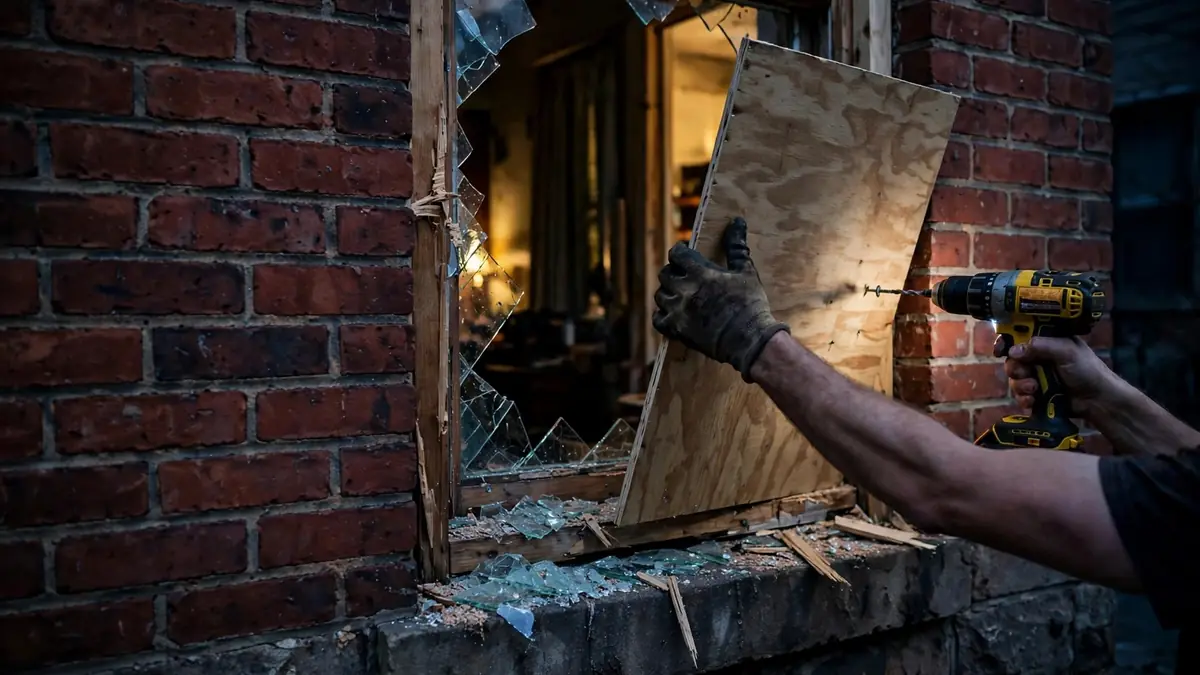
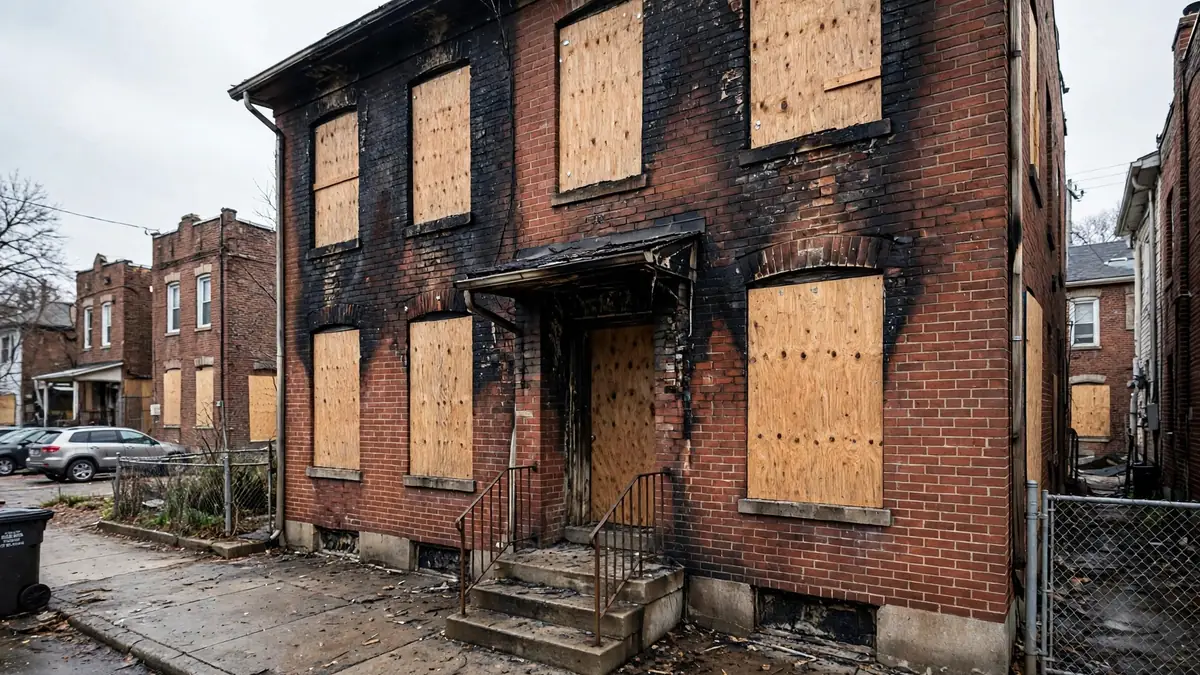
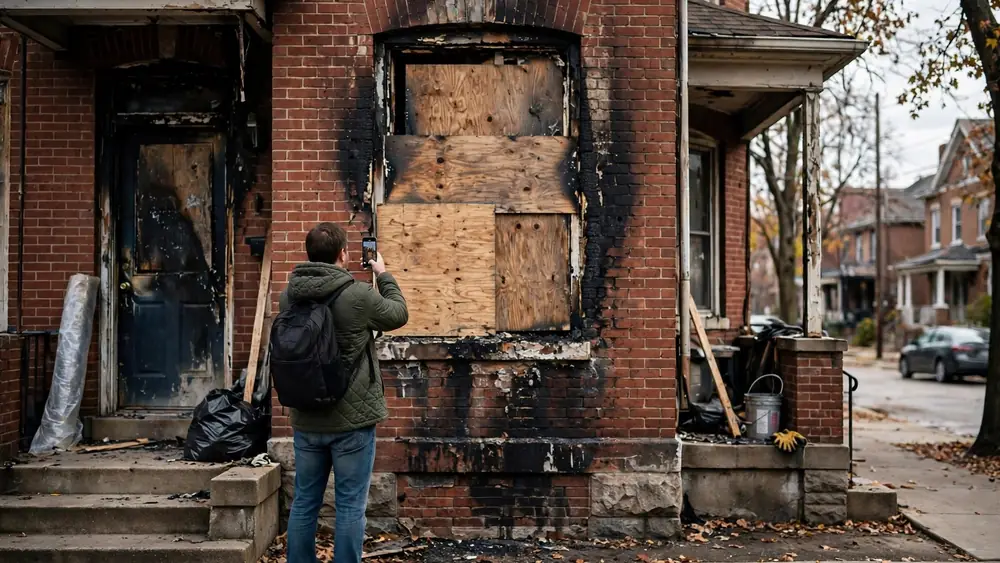
Board-up and tarping are temporary measures that close the openings until permanent repairs can be made. They are not meant to be pretty or permanent; they are meant to be secure, weather-resistant and quick.
Signs
Openings that need securing right away
Broken or missing windows
Ground-floor and garden-unit windows are the highest priority for security; upper windows for weather.
Forced or damaged doors
A door that no longer latches or locks should be secured or boarded the same day.
Vent holes in the roof
Square cuts made by firefighters leave the attic open to rain and snow.
Burned-through roof sections
Areas where the fire breached the roof need tarping, often over damaged framing.
Damaged skylights and roof hatches
Common on flat-roofed buildings, these let in a surprising amount of water.
Open rear porches and stairs
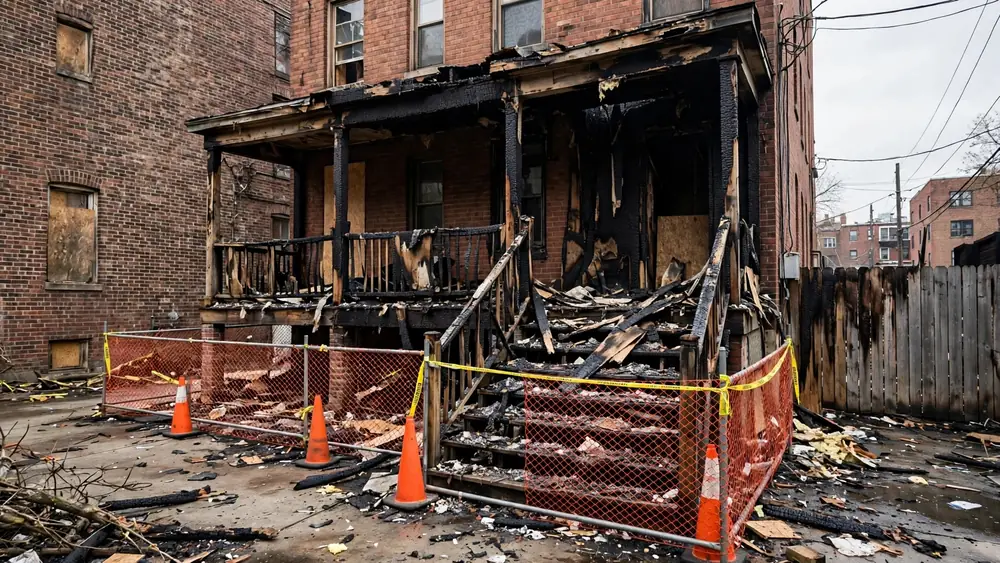
In two-flats and three-flats, a damaged back porch or stair can leave the rear units open and unsafe.
Breached exterior walls
Holes in siding or masonry need covering to keep weather out of wall cavities.
Damaged garage doors
A garage that cannot be closed exposes the alley side of the property.
The work
How a fire board-up and tarp job is done
- 1
Fire department clearance
Crews wait until the fire department releases the scene and confirms it is safe to work on [2].
- 2
Photograph every opening
Before anything is covered, each broken window, door and roof opening is photographed for the insurance record [1].
- 3
Assess the structure
The crew checks whether walls, roof framing and stairs can safely support workers and the temporary covers.
- 4
Board windows and doors
Plywood is cut to fit and fastened from the outside or inside, depending on the opening and the masonry; at least one secure entry door is set up for access.
- 5
Tarp the roof
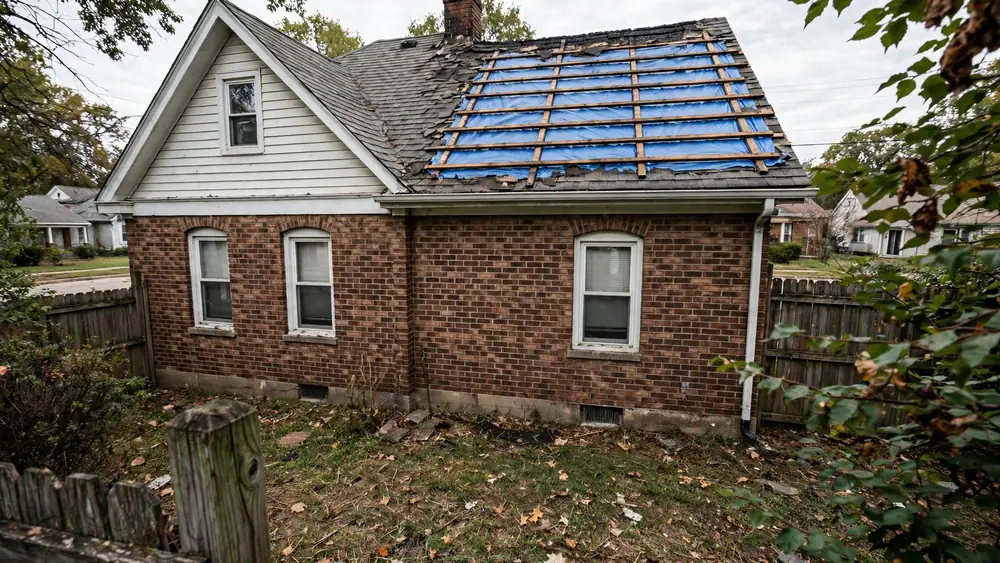
Heavy tarps are laid over openings, extended well past the damage, and fastened with wood battens so wind cannot get under them.
- 6
Protect the interior
Furniture and belongings near openings are covered with plastic or moved, as Illinois guidance suggests [1].
- 7
Leave access instructions
You receive notes on how the building is secured and how contractors and the adjuster can get in.
Methods
Temporary protection methods and where each fits
| Method | Used for | Notes |
|---|---|---|
| Plywood board-up | Windows, doors, wall breaches | Most secure; usually at least half-inch plywood fastened to framing or masonry |
| Reinforced roof tarp with battens | Pitched roofs with vent holes or burn-through | Battens keep wind from lifting the tarp; extends over the ridge where possible |
| Shrink wrap | Larger roof areas, flat roofs, complex shapes | Heat-shrunk plastic forms a tight cover; good for longer gaps before repair |
| Plastic sheeting | Interior openings, protecting furniture | Not a substitute for exterior covers |
| Temporary fencing | Lots with debris or unsafe structures | Keeps people away from collapse and debris hazards |
| Temporary shoring | Damaged porches, stairs, floors | Supports damaged members until permanent repair |
What you can do yourself
Homeowner steps while you wait for the board-up crew
- Stay off the roofFire weakens decking and framing in ways you cannot see from above.
- Photograph openings from the groundPictures before covering help your insurer see what firefighting caused [1].
- Remove valuables if safeTake small valuables and documents to a safe place, as Illinois guidance recommends [1].
- Tell the police and neighborsA neighbor watching the property and a non-emergency report to police can help if the home will be empty overnight.
- Report the open building to your insurerTell them the building is open. Ask whether they have preferred vendors but remember you choose who works on your home.
- Keep receiptsEvery receipt for temporary repairs and supplies belongs in your claim file [1].
Local specifics
Securing Chicago bungalows, greystones and flat roofs
Chicago buildings present some specific challenges. Bungalows have a low-pitched roof over the half-story [4], often with dormers that firefighters may cut into. Many greystones [5] and brick two-flats and three-flats have flat or low-slope roofs with parapet walls, where tarping or shrink wrap must be fastened differently than on a pitched roof. Masonry window openings need fastening that does not damage old brick or limestone.
Rear porches are a Chicago signature. Many multi-unit buildings have wooden back porches and stairs serving each floor. Fire damage to these structures can leave rear units without a safe second exit and create a collapse risk, so temporary shoring or blocking access may be needed until they are rebuilt. Porch rebuilding in Chicago is permitted work, so the permanent fix goes through the Department of Buildings [3].
Weather is the other factor. Chicago winters bring snow loads, ice and wind, and summer storms can be intense. A tarp that is weighed down with bricks rather than battened down will not survive the first windy night. In winter, the crew should also consider whether the plumbing needs to be drained if heat cannot be kept on.
Alley access matters too. Many Chicago properties are reached from the alley at the rear, which is often where the board-up crew sets up and where security is most needed.
Assessment
Judging what can safely be boarded or tarped
Before anyone climbs a ladder, a crew looks at the building from the ground. They check for leaning walls, sagging rooflines, cracked lintels over windows and loose masonry. They look at the porch and stairs for burned or weakened members.
Inside, they look at the ceiling below each roof opening to judge how much framing burned. A roof with extensive char or sag may not be safe to walk, and tarping may need to be done from a lift or limited to what can be reached safely. If the structure looks unstable, they may recommend a structural engineer, which the Illinois Department of Insurance notes your insurer may arrange when a home appears unsafe [1].
These observations, with photos, help your adjuster understand both the fire damage and the reason for any temporary shoring.
Quick reference
Priorities for securing a fire-damaged property
| Priority | Opening | Reason |
|---|---|---|
| 1 | Entry doors and ground-level windows | Security and liability |
| 2 | Roof openings over undamaged rooms | Prevent water damage to rooms the fire did not reach |
| 3 | Remaining broken windows | Weather, cold and pests |
| 4 | Damaged porches and stairs | Prevent use and collapse |
| 5 | Garage and outbuildings | Security of stored property |
Insurance
Why insurers expect temporary repairs
Most homeowners policies require you to take reasonable steps to protect the property from further damage. The Illinois Department of Insurance says this directly: make temporary repairs such as boarding up windows and patching holes as soon as possible, even if you have not yet seen the company representative, and keep all receipts [1].
It also says you can contact your insurance company if you need emergency funds for temporary repairs, and that you should take photos before repairs start. If later rain damage happens because a building was left open, that damage may be harder to claim. Securing the building promptly protects both the house and the claim.
Security
Keeping a vacant fire-damaged home secure
Many families cannot stay in their home after a fire. A vacant, damaged building attracts attention. Boarding is the first layer of security. Beyond that, consider changing locks on any secured door, asking a neighbor to watch the property and checking in regularly.
Remove valuables, important documents and medications as soon as the building is safe to enter. Make a list of what was left behind. If the home will be empty for some time, ask your insurer about any vacancy conditions in your policy.
DIY or professional
Securing jobs for an owner and jobs for a crew
Owner can do
Covering a single ground-floor window from inside with plywood, locking up, photographing damage, moving valuables.
Crew should do
Roof tarping, upper-floor windows, masonry openings, anything requiring ladders on a damaged building.
Engineer or specialist
Leaning walls, damaged porches and stairs, sagging roof framing.
The visit
What to ask the board-up crew
Ask what materials they will use, how they will fasten covers to masonry, how they will keep roof tarps in place in wind and snow, and how you and other contractors will get in afterward. Ask for photos of the openings before and after covering.
Ask how long the temporary protection is expected to last and when it should be checked, especially after storms. Board-up is usually a short-term step before smoke damage cleanup and the rest of the restoration, so ask whether the same contractor handles the cleaning, drying and rebuilding or whether you will need separate firms. For permanent repairs, ask who will obtain any required Chicago building permits [3].
Prevention
Making the building easier to protect in the future
Keep a record of your home's window sizes and layout, along with photos of the outside, stored away from the house. It helps with both claims and repairs. Make sure every level has working smoke alarms so fires are caught early [6]. For the full sequence after a fire, see our first-week checklist, and for quick answers, the fire damage FAQ. In multi-unit buildings, keep rear porches and stairs clear and in good repair, since they are the second way out for many residents.
Temporary or permanent
When temporary protection should give way to repair
Temporary covers buy time; they are not a long-term fix. Tarps degrade in sunlight and wind, and plywood does not insulate. The goal is to keep the building protected until the insurer has inspected it and permanent repairs are agreed.
If the restoration is delayed by claim questions or permits, check the covers regularly and after every storm. Shrink wrap is often used when a roof will stay covered for an extended period. Permanent roof, window and porch repairs follow once the scope is agreed, the house is dry and permits are in place.
Related problems
Next steps after the building is secured
Water from firefighting
Getting the structure dry before mold starts.
Read moreSmoke cleanup
Cleaning residue once the building is closed up.
Read moreWhat to do first
A step-by-step guide to the first days after a fire.
Read more
Winter
Board-up and tarping in a Chicago winter
A fire in January creates problems a summer fire does not. Snow can pile onto a tarp and push it into a roof opening. Ice makes ladders and roofs more dangerous. Most importantly, a building that loses heat can freeze its plumbing within a day or two of severe cold, causing a second round of water damage when the pipes thaw.
For winter fires, securing the building usually goes hand in hand with protecting the plumbing. That may mean keeping heat on in undamaged parts of the house if it is safe, or having a plumber drain the system and shut off the water. Ask the board-up crew and your plumber to coordinate so the building is both closed and protected from freezing.
Shrink wrap is often preferred over tarps for winter roof protection, because it forms a tighter cover that sheds snow better. Whichever method is used, check it after every heavy snowfall.
Documentation
Keeping a record of temporary repairs
Temporary repairs belong in your claim file. Keep a dated list of what was boarded or tarped, the materials used, who did it and the receipts. Photos before and after each cover show the insurer exactly what was protected. The Illinois Department of Insurance emphasizes keeping all bills and receipts from repairs and photographing damage before cleanup and repairs begin [1].
If the board-up crew is separate from the restoration contractor, give the restoration contractor copies so their scope picks up where the temporary work left off. If an adjuster visits after the openings are covered, the photos show what lies underneath without the boards having to come down.
Neighbors and the city
Neighbors, the alley and city rules for damaged buildings
A fire-damaged building affects the people around it. Debris in the gangway, a damaged fence or a leaning porch can be a hazard to neighbors. Temporary fencing or barricades keep people away until the structure is repaired or cleared.
The City of Chicago's Department of Buildings oversees building safety and permits for repair and demolition work [3]. If the building will be vacant for a long time, ask your contractor and your insurer what the city expects for securing a vacant property, and keep the board-up in good condition so the building does not become a nuisance.
Let your immediate neighbors know who to contact about the property. In a two-flat or three-flat, make sure everyone who lives in the building knows which exits are safe to use while the rear porch or stairs are out of service.
Checklist
Board-up checklist for the first 48 hours
- Fire department has released the building
- Every opening photographed before covering
- Ground-floor windows and doors secured first
- Roof openings covered with battened tarps or shrink wrap
- One lockable access door set up
- Valuables, documents and medications removed
- Furniture near openings covered or moved
- Plumbing protected if the heat is off in cold weather
- Damaged porches and stairs blocked off
- Receipts and photos filed for the insurer
Commercial and mixed-use
Storefronts and mixed-use buildings along Chicago's commercial streets
Many Chicago streets mix storefronts on the ground floor with apartments above. When a fire damages one of these buildings, the large storefront glass is often broken by firefighters to reach the fire or vent smoke. Those openings are big, and they face the sidewalk, so securing them quickly matters for both security and public safety.
Storefront board-up uses larger panels and framing to span wide openings. The upstairs apartments may still need their own windows, roof openings and rear stairs secured. Owners of mixed-use buildings should expect to coordinate with commercial tenants, residential tenants and possibly several insurers, and the same documentation rules apply to all of them [1].
This site focuses on homes, but the contractors you can reach by phone often handle small mixed-use buildings too. Mention the storefront when you call so the right crew and materials are sent.
Choosing a crew
What separates a careful board-up crew from a rushed one
A careful crew takes photographs before covering anything, checks the structure before climbing, fastens covers so wind and snow cannot lift them, and leaves you with a secure way to get in. A rushed crew nails plywood over windows without photos, weighs tarps down with bricks and leaves without explaining how the building is secured.
Ask whether the people securing the building are part of the company that will do the cleanup and repairs, or a separate firm. Either can work, but you should know who is responsible if a cover fails. And remember that signing for board-up does not commit you to a contractor for the full restoration; Illinois guidance advises getting your adjuster's agreement before contracting for major repairs [1].
FAQ
Board-up and tarping questions
Why did firefighters break my windows and cut a hole in the roof?
Firefighters ventilate a burning building to release heat and smoke, find people and reach the fire. It limits how far the fire spreads, but it leaves openings that need to be secured afterward.
How soon should a fire-damaged house be boarded up?
As soon as the fire department releases the building. Illinois insurance guidance says temporary repairs such as boarding windows should be made as soon as possible, even before the adjuster visits.
Does insurance cover board-up and tarping?
Many homeowners policies include reasonable temporary repairs to prevent further damage. Keep receipts and photos, and confirm the details with your insurer.
Can I tarp the roof myself?
It is not safe on a fire-damaged roof. Burned decking and framing can fail without warning. Leave roof work to a crew with the right equipment.
How long can a tarp stay on the roof?
Tarps are short-term protection and wear out in sun and wind. They should be checked after storms and replaced or upgraded to shrink wrap if repairs will take a while.
What happens to a fire-damaged rear porch?
Damaged porches and stairs are usually blocked off and shored until they can be rebuilt. Porch repairs in Chicago are permitted work.
Should I stay in the house once it is boarded up?
Only if the fire department and your contractor confirm it is safe and utilities are working safely. Many families need to stay elsewhere for a time.
Who pays for boarding up a rental building after a fire?
The building owner normally secures the structure under the building's policy, while tenants handle their own belongings under renter's insurance. Talk to the landlord and your own insurer early.
Can the board-up stay on while I wait for the insurance adjuster?
Yes. Temporary covers are meant to protect the home until the adjuster inspects and repairs are agreed. Photos taken before covering let the adjuster see the openings without removing the boards.