
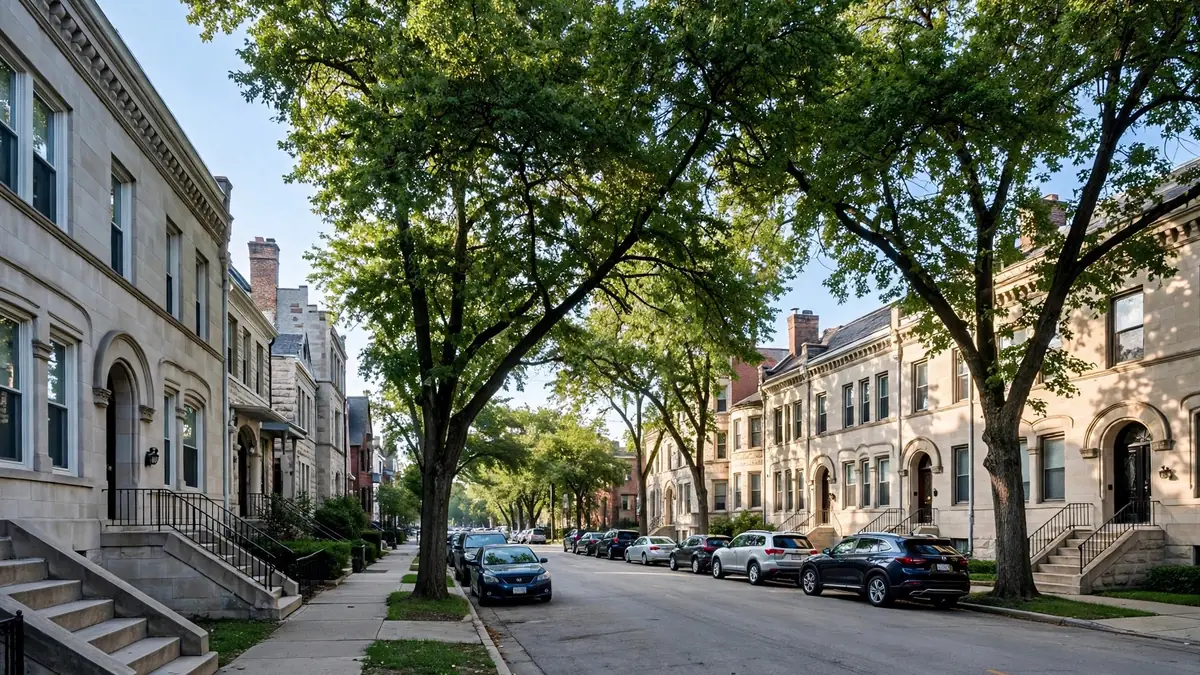
Key facts: Board-Up and Tarping in Logan Square
- Illinois insurance guidance says to make temporary repairs such as boarding windows as soon as possible and to keep receipts [1].
- The Logan Square Boulevards Historic District is a Chicago Landmark district [2].
- Permanent repairs such as porch rebuilding may need a Chicago Department of Buildings permit [3].
Bay windows
Boarding greystone bay windows without damaging stone
The front bay window is a signature of the greystone, and it is often where firefighters break glass to vent smoke. Boarding a bay is fiddly: three angled openings framed in wood, set into limestone. Fastening plywood through the stone cracks it, so crews fasten to the wood window frames or brace the panels from inside.
Careful board-up preserves the original openings, which matters for the permanent repair, especially on the landmark boulevards.
Landmarks
The landmark district and permanent repairs
Because the Logan Square Boulevards Historic District is a Chicago Landmark district [2], permanent exterior work there that needs a permit, such as replacing windows or porches visible from the street, can require review by the Commission on Chicago Landmarks [4]. Temporary protection is not part of that process.
Photograph the original windows, doors and trim before covering them. Those photos help match replacements later.
Porches
Rear porches and stairs over the alley
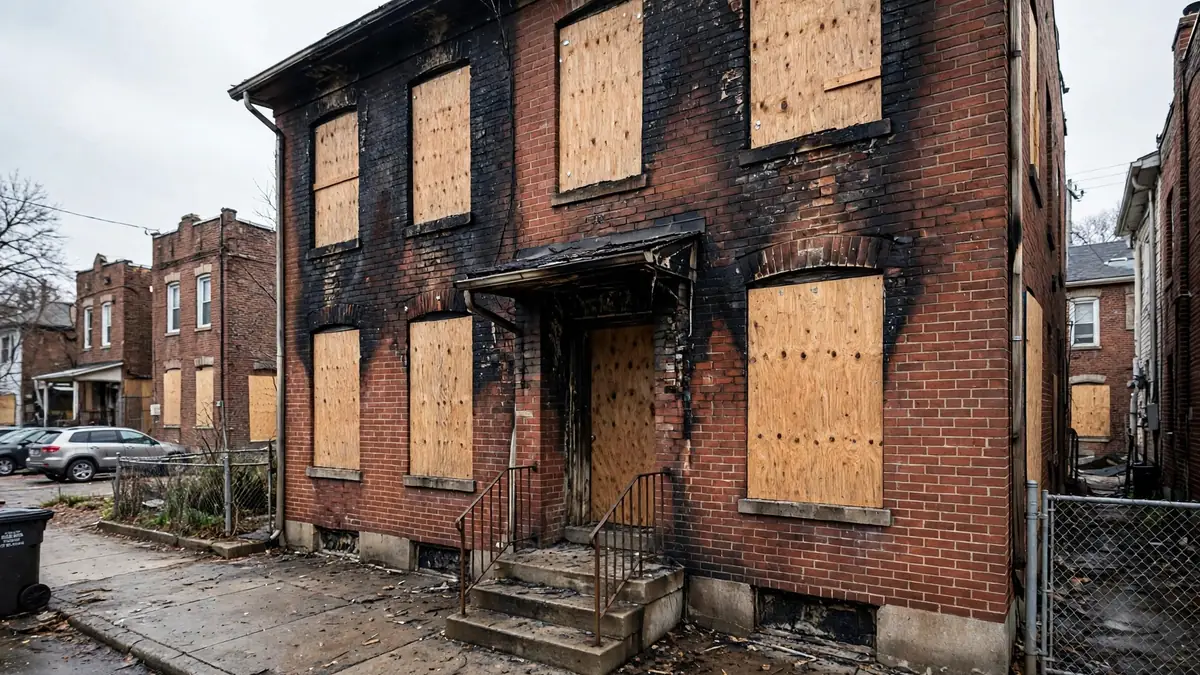
Greystones and two-flats in Logan Square usually have wooden rear porches and stairs that serve as each flat's second exit. Fire damage there can make them unsafe and leave the upper flats with only the front stair. Crews block the porch off and shore damaged members.
Rebuilding the porch is permitted work through the Department of Buildings [3], and on a landmark property its visible parts may also be reviewed.
Priority order
What gets secured first in Logan Square
- Ground-floor doors and the front bay window
- Roof vents over undamaged flats
- Damaged rear porches and stairs
- Upper-floor windows
- Alley garages and gates
Roofs
Flat roofs and cottage roofs
Greystones usually have flat roofs behind parapets, where vent holes collect water rather than shed it; the cover is framed for slope or shrink-wrapped. Bucktown cottages have pitched roofs, where tarps are laid over the ridge and fastened with wood battens.
Either way, weights alone will not hold a tarp through a Chicago storm.
Cottages
Securing narrow cottages and the house next door
On Logan Square's narrow lots, a cottage fire can break windows and scorch siding on the house across the gangway. Board-up crews secure the fire house first and, with permission, the neighbor's broken windows.
Each owner documents and claims their own damage through their own insurer.
Garages
Alley garages and gates
Detached garages along Logan Square's alleys are common fire sources and fire victims. A burned garage door or gate leaves the back of the property open. Crews secure them and fence off a damaged garage until it can be rebuilt under permit.
Winter
Board-up in a Chicago winter
In winter, an open building loses heat fast, and greystones with one central boiler can freeze pipes in every flat. Securing openings and protecting plumbing go together. Shrink wrap holds up better than tarps under snow.
Records
Receipts and photos for the claim
The Illinois Department of Insurance says to keep all bills and receipts from temporary repairs and to photograph damage before work [1]. Photograph every opening before and after it is covered, and share the record with the building's other households.
Security
Keeping a vacant flat secure
If a flat will be empty during repairs, change locks on secured doors, ask a neighbor to keep watch, and check the covers after every storm. Remove valuables, documents and medications as soon as it is safe.
Mixed-use
Storefront glass on Milwaukee Avenue
Mixed-use buildings along Milwaukee Avenue have large storefront windows at street level and apartments above. When firefighters break storefront glass, the opening is wide and faces a busy sidewalk. Crews frame the opening with lumber and install larger plywood panels to span it securely.
The apartments above may need their own windows boarded during the same visit. The business, the building owner and residents usually have separate insurers, so photos of every opening help each of them.
Choosing a crew
What to ask a Logan Square board-up crew
Ask how they will avoid damaging limestone, brick and original window frames; how roof covers will stay in place through wind and snow; how you and the adjuster will get in afterward; and whether they photograph every opening before and after.
Signing for board-up does not commit you to that company for the full restoration. Illinois guidance advises getting your adjuster's agreement before contracting for major repairs [1].
Timeline
How long temporary covers stay up
Covers usually stay until the insurer has inspected and permanent repairs are agreed and, on the boulevards, reviewed if needed. That can be weeks. Check covers after every storm and ask the crew to upgrade tarps to shrink wrap if the wait will be long.
Records
Photographing original features before boarding
Before plywood goes over a bay window, a carved door or a leaded transom, photograph it closely. Those pictures help the adjuster understand what was there and help the carpenter or window maker match it later. In the landmark district, they also support the permit application for the permanent repair.
FAQ
Logan Square board-up questions
Can boards be fastened to my limestone front?
Crews avoid fastening into limestone. They attach to wood window frames or brace panels from inside.
Does landmark status delay board-up on the boulevards?
No. Temporary protection goes ahead immediately. Permanent exterior repairs may need review.
What happens to a burned rear porch?
It is blocked off and shored, then rebuilt with a permit.
Will a tarp hold on my greystone's flat roof?
Only if it is framed or shrink-wrapped to shed water. Flat roofs collect rain.
Who boards up the house next door if it was damaged?
Its owner arranges it, often with the same crew. Each owner claims their own damage.
Should I photograph windows before they are boarded?
Yes. Photos help the insurer and help match replacements, especially in the landmark district.
How long do temporary covers last on a Logan Square building?
Until permanent repairs are agreed and complete, often several weeks. Check them after storms and upgrade tarps to shrink wrap for a long wait.
Can my Milwaukee Avenue storefront be boarded the same day?
Usually, once the fire department releases the building. Wide storefront openings need framed panels, so mention the size when you call.
Who arranges board-up in an owner-occupied two-flat?
The owner, who insures the structure, normally arranges it. The tenant should photograph their own unit and belongings for their renter’s insurer before the boards go up, and keep a record of anything moved for safekeeping.