
Key facts: Board-Up and Tarping in Uptown and Edgewater
Rear porches
Wooden rear porches on six-flats
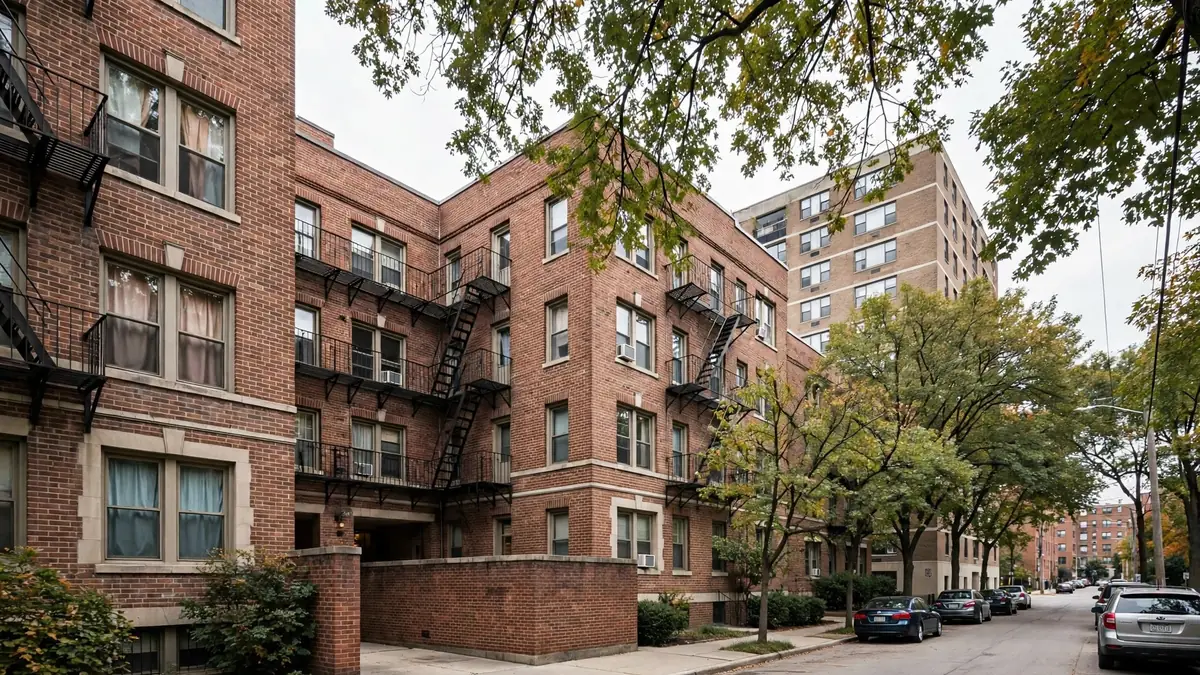
Six-flats and courtyard buildings usually have wooden rear porches and stairs serving every floor. A fire on one porch can spread to those above and leave several units without a second exit. Crews block off and shore damaged porches. Rebuilding is permitted work [4].
Make sure every resident knows which exits are safe while the porch is out of service.
Flat roofs
Flat roofs behind parapets
Most of the area's walk-ups and courtyard buildings have flat roofs. Vent holes in them collect rain, so covers are framed for slope or shrink-wrapped and fastened to the deck.
Storefronts
Storefront glass on commercial streets
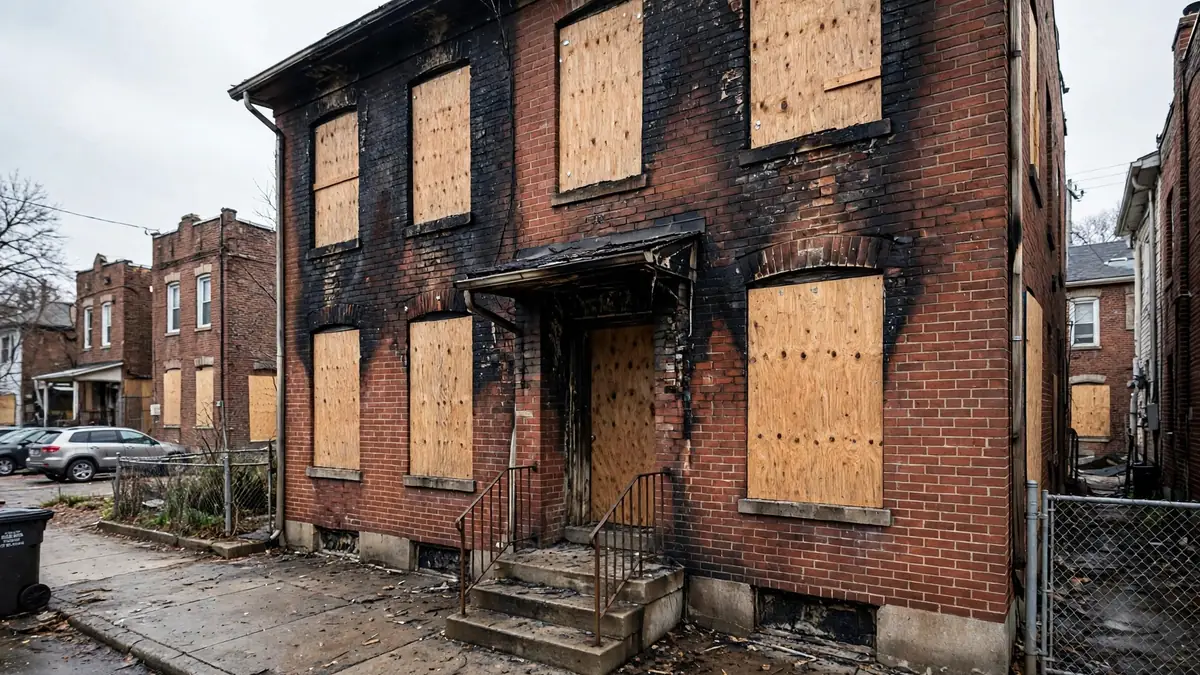
Broken storefront glass on Broadway, Argyle or Clark faces heavy foot traffic. Wide openings need framed plywood panels. Upstairs apartment windows are often boarded at the same visit.
Priority order
What gets secured first
- Street-level doors and windows
- Roof openings over undamaged units
- Damaged rear porches
- Upper-floor windows
- Storefront glass
Historic facades
Boarding historic buildings
Temporary board-up is not delayed by historic status. Crews fasten to window frames rather than drilling into terracotta or stone. Permanent exterior repairs on designated Chicago landmarks may need review by the Commission on Chicago Landmarks [5].
Towers
Upper-floor windows in towers
In Sheridan Road towers, broken windows on high floors are secured from inside with framed panels, since exterior access is limited. Management usually coordinates permanent replacement.
Lake wind
Wind and cold off the lake
Close to the lake, wind tears loosely fastened tarps. Covers need battens or shrink wrap. In winter, a building with broken windows and no heat risks frozen pipes in several units.
Security
Securing a partly vacant building
After a serious fire, some units stay empty during repairs. Change locks on secured entries, keep common doors closed and check covers after storms.
Records
Photos and receipts
Photograph every opening before and after covering and keep every receipt [1].
Choosing a crew
What to ask the board-up crew
Ask how they fasten to masonry and terracotta without damage, how covers will survive lake wind and how residents and the adjuster will get in afterward.
Courtyard buildings
Securing courtyard buildings
A courtyard building has many street-facing windows and several entries. After a fire, broken ground-floor windows and forced entry doors are secured first, because they open into a shared building where other residents still live. The courtyard gate and any secondary entries are checked too.
Roof openings over the affected stack are covered next, then upper-floor windows. Residents of the affected entry may need temporary instructions on which doors to use.
Mansions
Board-up for large historic houses
Buena Park's mansions and older Sheridan Road houses have large windows, leaded and stained glass, and ornate doors. Board-up protects these openings without damaging the frames or glass that survived. Crews brace panels from inside where possible and photograph each feature before covering it, which helps both the claim and the eventual restoration.
Winter
Board-up in winter
A fire in January can leave a building open to lake wind and freezing cold. Broken windows let heat out and cold in, and a building without heat can freeze pipes in several units within a day or two. Securing openings and protecting plumbing go together. Shrink wrap is often the better roof cover under snow.
Timeline
How long covers stay up
Temporary covers stay until permanent repairs are agreed, permitted and, where needed, reviewed. That can be weeks. Check covers after storms.
Choosing a crew
What to ask a board-up crew
Ask how they will fasten covers to masonry and terracotta without damage, how roof covers will survive lake wind and snow, how residents and the adjuster will get in afterward, and whether they photograph every opening before and after. Ask whether they can coordinate with the restoration contractor so drying and cleaning can start right away behind the boards.
A board-up signature covers the emergency work only, so you can still choose someone else for the rest. Before signing for major repairs, Illinois guidance says to get your adjuster's agreement.
Records
Photos and receipts for each opening
Photograph every opening before and after covering and keep every receipt. The Illinois Department of Insurance advises keeping all bills and receipts from temporary repairs [1]. In a building with many households, share the photos with the owner or association so every insurer sees the same record.
FAQ
Uptown and Edgewater board-up questions
How soon should a building be boarded up after a fire?
As soon as the fire department releases it.
Does historic status delay board-up?
No. Temporary protection goes ahead; permanent exterior repairs may be reviewed.
What happens to burned rear porches?
They are blocked off and shored, then rebuilt under permit.
How are high-floor tower windows secured?
Framed panels go in from indoors, and management arranges the new glass.
Will a tarp hold on a flat roof?
Only if framed or shrink-wrapped to shed water.
Who arranges board-up in a rental building?
The owner normally secures the building. Tenants should photograph their units.
Is Rogers Park covered as well as Uptown and Edgewater?
Rogers Park, north of Devon Avenue, is not in the covered ZIP codes listed on this site. Uptown and Edgewater ZIP codes 60640 and 60660 are covered.
Can stained glass be protected during board-up?
Yes. Crews brace panels from inside and photograph the glass before covering it.
Should residents use a different entry after a fire?
If the usual entry or rear porch is unsafe, the owner should post which doors to use.
Does insurance cover board-up?
Many policies include reasonable temporary repairs. Keep receipts and photos, and confirm with your insurer or the building owner.
Can I board up my own windows?
A single ground-floor window from inside may be manageable. Upper floors and roofs are for a crew.
How long can boards stay up?
Until permanent repairs are agreed and complete, often several weeks. Check them after storms.
Do I need a permit for temporary board-up?
Temporary protection goes ahead right away. Permanent repairs may need permits and, for designated buildings, landmark review.
Who boards up a condo building after a fire?
The condo association normally secures common elements such as the roof, exterior walls and common doors. Owners handle their own unit interiors, and everyone should photograph damage before covers go up.
Should I photograph my windows before they are boarded?
Yes. Photos of the original windows, doors and trim help your insurer and help match replacements, especially on historic buildings.