
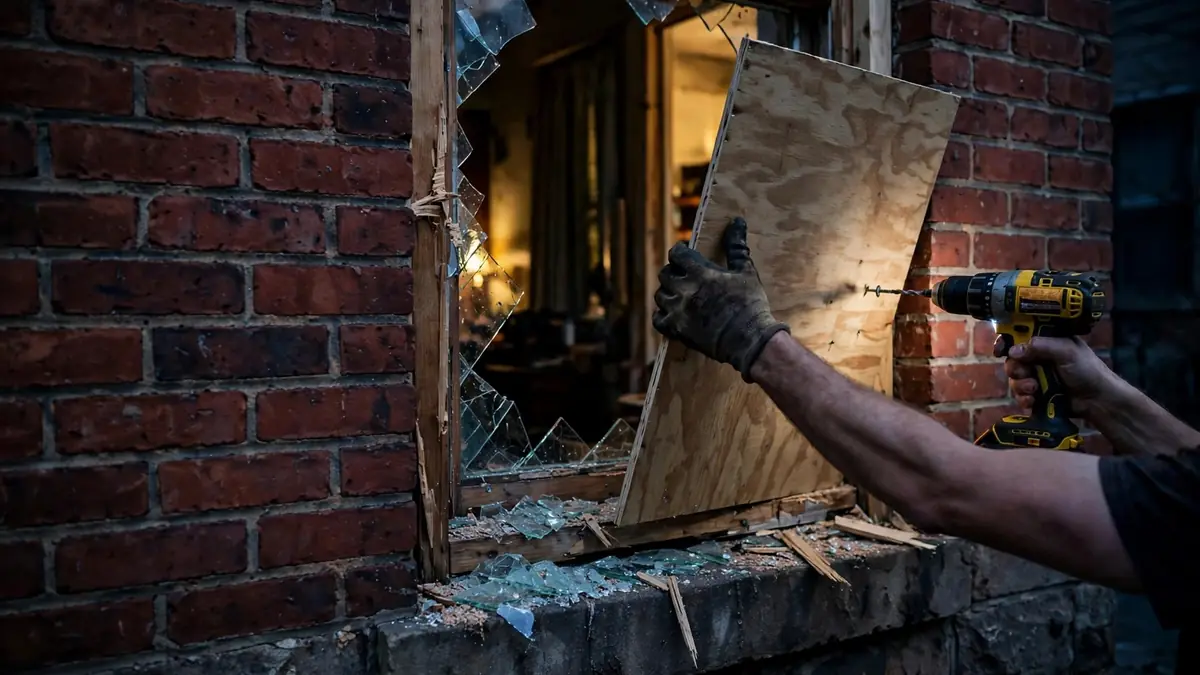
Key facts: Emergency Board-Up Service
- Illinois guidance says boarding windows and patching roof holes should be done as soon as possible, even before seeing a company representative [1].
- The same guidance says to photograph damage before repairs and keep all receipts [1].
- Ready.gov says to confirm with the fire department that the building is safe to enter [2].
- Permanent roof, window and structural repairs in Chicago may need a Department of Buildings permit [3].
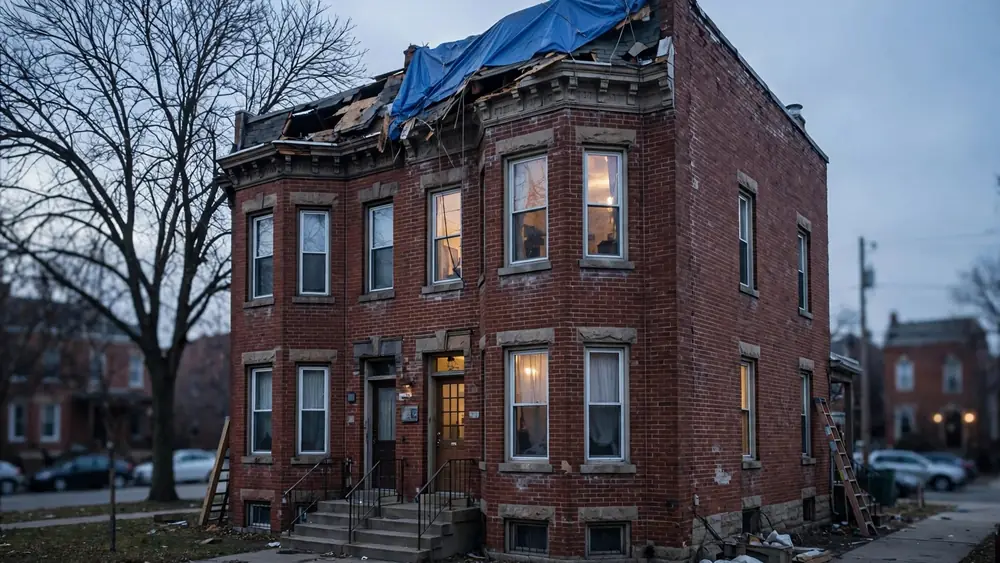
Why tonight
Why an open building should not wait for a weekday
Illinois insurance guidance is unusually plain on this point: make temporary repairs as soon as possible, including before you have met the company representative, and keep the receipts [1]. Damage that arrives after the fire, through a hole no one covered, is the sort of thing that can complicate a claim.
There are practical reasons as well. A Chicago thunderstorm can blow rain sideways through an empty window frame, and snow can drift onto floors that already got soaked. Cold air reaching the plumbing adds another risk. Passersby may notice an unlit, unlocked home with a door hanging open, particularly from the alley side, where few people are watching. None of these threats keep business hours, and that is why calling tonight makes sense, even though no one can honestly tell you the exact moment a crew will be standing at your door. Ask about timing during the call, then plan around what you actually hear.
Ground rules
Leave the roof and the upper windows to a crew
A burned roof can look normal from above and give way underfoot. Decking and rafters lose strength in ways you cannot judge by flashlight, and wet surfaces or ice make that worse. Do not go up there to spread a tarp, however light the rain looks. The same applies to second-floor frames with broken glass still in the sash, and to a rear porch or stair that burned.
What you can do is modest and safe. If officials have allowed entry, move valuables away from openings and cover furniture with heavy plastic [1]. Close interior doors. Sweep nothing, and do not pull boards or glass out of frames. On a ground-level door you could fit a temporary lock, if the frame is still sound and you have been cleared to touch it. Those small acts count; the risky ones can wait for someone with the right equipment and a second person on the ladder.
Photo list
Shots to take before the covers go on
- Every side of the building, including the alley and gangway
- Each broken window or forced door, close and from a distance
- Any hole in the roof visible from the ground or a neighbor's window
- The rear porch, stairs and any fallen debris
- Inside rooms below an opening, only if entry has been cleared
Phone script
Details a board-up contractor will want
Begin with the address and how a truck reaches it. Many Chicago lots are served by an alley, so say whether the rear is open or blocked by a fallen fence or a police line. Count the openings and give rough sizes: two front windows on the first floor, one back door, a storefront pane. Tell them what the roof is like, because a flat roof behind a parapet on a three-flat is a different job from the low pitch over a bungalow's half story.
State whether the fire department has released the building, and whether anyone's still living in another unit, as those residents need a usable way in and out. Explain who has authority to approve work if you don't. Ask what materials will be used, whether you'll get before-and-after photos and a written record, how you and other trades will get in afterward, and how the cover will be checked after a storm. Note the answers and the company's name.
Who signs off
Renters, condo boards and absent owners
A tenant can certainly raise the alarm, but the building belongs to someone else, so ring the landlord or manager first and leave a message with the time. If you own a condo, the windows and roof may be the association's responsibility, even though the rooms behind them are yours. Find the board president or management company tonight if at all possible, and keep a record of who you reached.
Owners out of town can authorize work by phone or email and ask a trusted neighbor to meet the crew. If your two-flat has a tenant upstairs, make sure they know which exits are safe, particularly when the back stairs are out of service. Keep your authorization narrow, too: approving a temporary cover does not need to commit anybody to the full rebuild, and Illinois guidance advises getting the adjuster's agreement before contracting for major repairs [1].
After the covers
Closing out the first night
- 1
Walk the perimeter
From the ground, confirm that each opening is covered.
- 2
Get access sorted
Hold the key or code for any secured door.
- 3
Collect paperwork
Save the invoice, the photos and a list of what was covered.
- 4
Notify your insurer
Tell them which temporary work has been done.
Snow and wind
Protecting an open building in a Chicago winter
Ask directly about winter when you call between roughly November and March. Snow can load a tarp until it sags into the hole it was meant to cover, and wind off the lake finds any loose corner. Roof work on ice is risky for trained crews as well, so a covered opening may take more planning than it would in June. Ask how the cover will be kept tight, and who checks it after each heavy snowfall.
Heat is the companion question. With windows out and service shut off, a soaked building is a candidate for frozen pipes. Keep a plumber on your list for tomorrow and ask whether the system should be drained if heat cannot safely stay on. Don't try to warm a damaged home with a space heater or open flame, since that can put you right back at square one.
Tomorrow
From temporary covers to a real plan
Plywood is a pause button, and the board-up service page compares the temporary options if you want to read further. In the morning, send your insurer the photos and receipts, and ask about emergency funds for temporary repairs, which Illinois guidance says you may request [1]. Once the adjuster has inspected and the scope is agreed, the permanent roof, window and porch work begins, and that work may need a City of Chicago Department of Buildings permit [3]. Ask whoever does the permanent repairs who will obtain it.
A vacant home calls for a little extra care. Take out valuables as soon as the building is safe to enter. Ask your insurer whether vacancy affects your policy, and give a neighbor your number. In a landmark district or on a historic greystone, mention that to your contractor before anything permanent is chosen for the facade. The temporary covers themselves are simply there to hold the line while the rest of the emergency plan moves forward.
FAQ
Board-up questions when the building is open
Can I board it up myself to get it done?
A low ground-floor window is possible once officials clear it, if you are able and it is safe. Roof holes, upper floors and burned porches should go to a crew.
Do I need the adjuster's approval first?
Illinois guidance says temporary repairs should not wait for the company representative. Photograph the openings and keep the receipts [1].
How soon can a crew get here?
Only the contractor can speak to that, and it varies with weather, access and demand. Ask on the call, since the line itself is open around the clock.
Will boards hurt my brick or limestone?
Ask how the covers will be fastened. Fastening into old masonry should be considered carefully, and you can request an approach that uses the window frame where possible.