
Key facts: Emergency Firefighting Water Removal
- Mold guidance from EPA gives you a window of 24 to 48 hours to get wet materials dry [1].
- Illinois guidance says to remove water and dry furnishings as soon as possible, and to have wet electrical equipment checked before use [2].
- Ready.gov says not to reconnect utilities yourself [3].
- Any gas odor means walking out, then phoning 911 and Peoples Gas once you are outdoors [4].
Electric and gas
Sorting out utilities in a soaked building
Firefighters or the utility may have already shut services off. Ask them before they go, and if you missed them, assume nothing. Ready.gov is direct about this: do not try to reconnect utilities on your own [3]. Illinois guidance adds that electrical equipment exposed to water should be checked by a professional before use [2], and that includes lamps, power strips and the outlet you were hoping to charge your phone from.
The basement is the usual trouble spot in Chicago, since this is where the panel, furnace and water heater often sit. If water reached those units, leave the stairs alone and treat that level as off limits. Should you catch the rotten-egg smell of gas anywhere, walk out and call 911 and Peoples Gas once you are outside [4]. Don't operate switches on your way, and don't go back to look for the source.
Overhead
Plaster ceilings can fall hours after the hoses stop
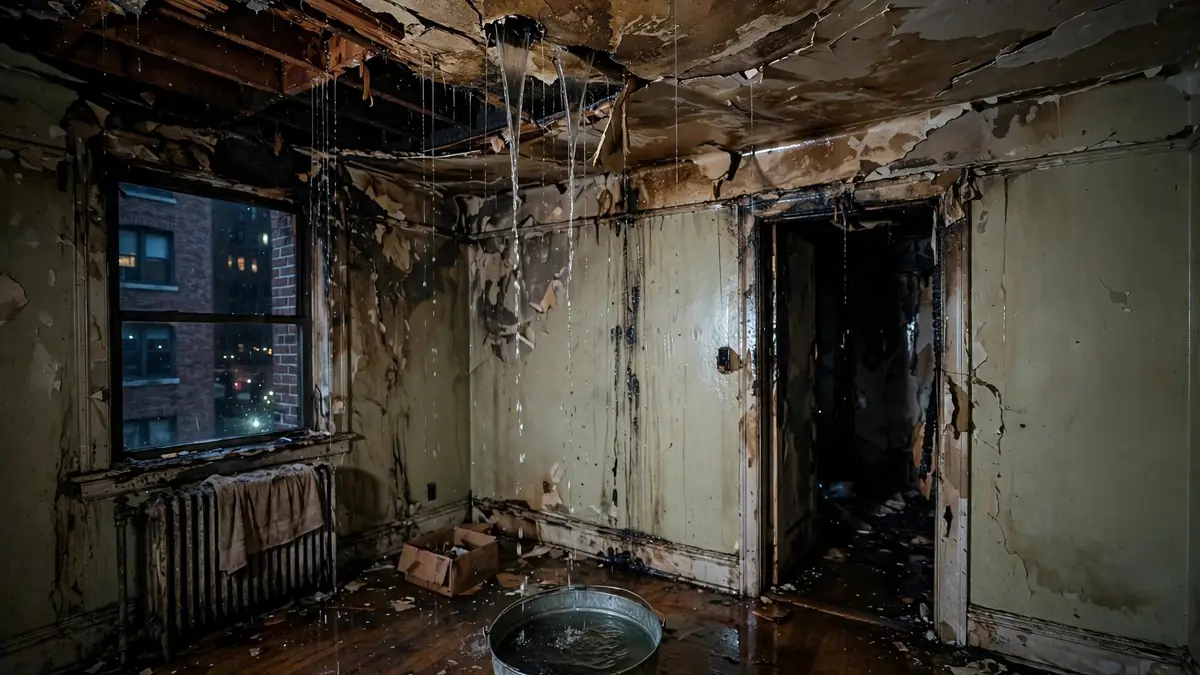
Vintage Chicago flats are full of plaster on wood lath. It takes on water slowly, grows heavy and can lose its grip with little warning, sometimes long after the fire is out. Warning signs are a belly in the ceiling, a fresh crack that widens, water running from a light fixture or a brown stain that keeps growing. When you see any of them, close the door and keep out of the room.
Do not poke a bulge with a broom to let the water out. That trick is often suggested online, and a ceiling can drop in one slab when disturbed. Move belongings only if you can reach them without passing beneath the sag. Attic spaces and the area above a top-floor unit can hold insulation that is soaked and weighty, so the room below deserves the same caution even if it looks dry at first.
Downstairs
Water from upstairs: when the fire was not yours
In a three-flat or courtyard building, the home below a fire can end up wetter than the one that burned. You might have slept through the alarm, then woken to a dripping fixture. Take a moment to protect yourself first, then take photographs and report it to the landlord or association right away. Your own insurer also needs to hear from you, since your belongings are generally a matter for your own policy and not the upstairs neighbor's.
If you live in a garden apartment or use a basement for storage, check on the state of that level only when it is safe. Most bungalows sit over a full basement [5], and water from above tends to collect there. If you own the building, make contact with every tenant tonight. Water in towers can run many floors down, so a resident there should ring the front desk or management, who may control shutoffs and elevator access.
If cleared to enter
Low-risk moves while you wait
- 1
Shoot first
Photograph water lines, ceilings and floors before moving anything.
- 2
Lift
Raise soft goods and papers off the floor, wearing gloves.
- 3
Separate
Set wet items apart, with nothing valuable thrown away.
- 4
Shield
Slide foil or plastic under furniture legs to limit stains.
The clock
Why drying needs a start date, starting now
EPA's guidance is to dry wet materials and belongings within 24 to 48 hours to prevent mold growth [1]. That span starts when things got wet, not when the paperwork clears, so ask on your very first call how soon drying could begin and what could be done until then. Illinois guidance says the same in insurance terms: remove water, ventilate and dry furniture, bedding and carpet as soon as possible [2].
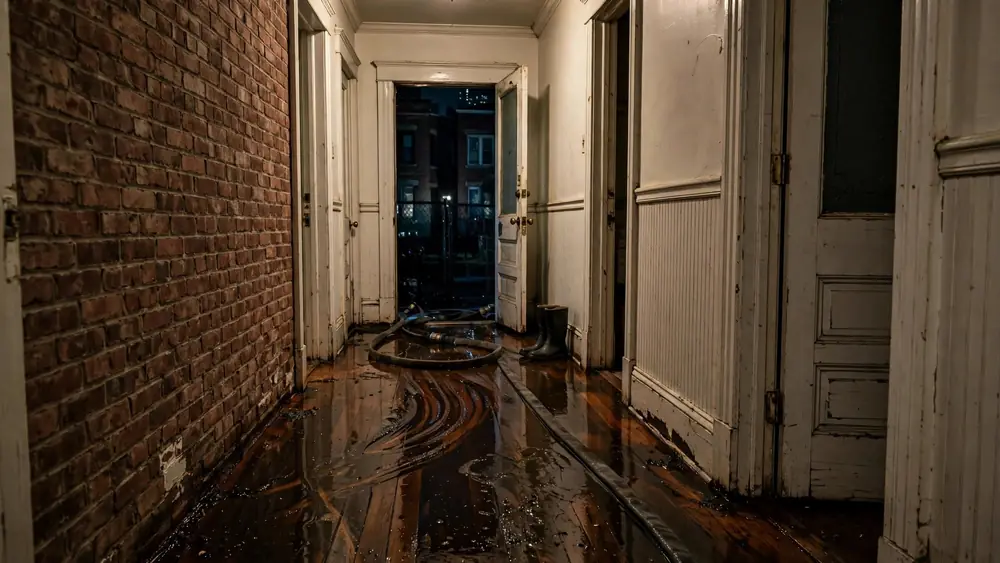
Hose water is also dirty. It has passed through soot, ash and burned material, so don't treat it like a clean leak. Wear gloves and sturdy shoes, keep children and pets out, and wash your hands before eating. A mop and a shop vacuum may feel productive, but wet-vacuuming around damaged wiring is a poor idea and spreading sooty water to clean rooms makes the job larger. If you do anything, keep it to what you can reach safely from a dry spot.
Phone script
Telling a contractor where the water went
Describe the path as you understand it: fire on the second floor, drips through the first-floor dining room ceiling, an inch on the basement floor. Say how long it has been since the hoses stopped, whether water is still moving, and whether sprinklers ran too. Note what is under the wet areas, such as hardwood, carpet, a finished basement, or a furnace. Then explain which services are on or off and whether heat is working.
An independent contractor can then talk through what is realistic. Ask how water will be removed, how moisture will be measured, whether drying can begin before cleanup, and whether a plumber or electrician should come first. If water was still flowing long after firefighters left, say so, since a heat-damaged supply pipe could be feeding it. Finding the main water shutoff and closing it, if you can reach it safely, is reasonable in that case.
Tomorrow
Morning jobs for a wet home
Report the wet areas to your insurer along with the time you discovered each one. Keep every receipt, including those for rented fans, sleeping elsewhere and bags of ruined clothing [2]. Keep damaged items of value for the adjuster, and photograph anything that must go because it smells or is growing something. Important papers and family photographs deserve early attention: spread photographs face up on a clean surface, out of direct sun, and avoid stacking anything wet.
Look too for water you could not see last night. Stains can expand overnight, and floors may have started to cup. Ask whether heat can be restored, because a wet, unheated Chicago building in winter is at risk of frozen pipes, and drying slows in cold rooms. The firefighting water service page describes the drying sequence. Later work will depend on structural drying, and any later rebuild may call for its own permits, but neither of those has to be decided today. For the wider first-night checklist, go to the main emergency page.
FAQ
Firefighting water questions for tonight
Why is my unit soaked when the fire was upstairs?
Water follows gravity through joists, pipes and light fixtures. Report it to your landlord or association, and to your own insurer.
Can I run a dehumidifier I already own?
Only if the circuit has been confirmed safe and the unit stayed dry. Otherwise, leave it unplugged and raise it on the call.
Is the basement safe if the water looks shallow?
Not until someone confirms the power is safe. Panels, furnaces and water heaters commonly sit down there, and shallow water still conducts.
Who picks up the phone at 3 a.m.?
The line is open every hour, holidays included, and it connects you with an independent contractor who can discuss the water and the options.