
Key facts: Board-Up and Tarping in Portage Park and Jefferson Park
Bungalow roofs
Tarping a bungalow roof and dormers
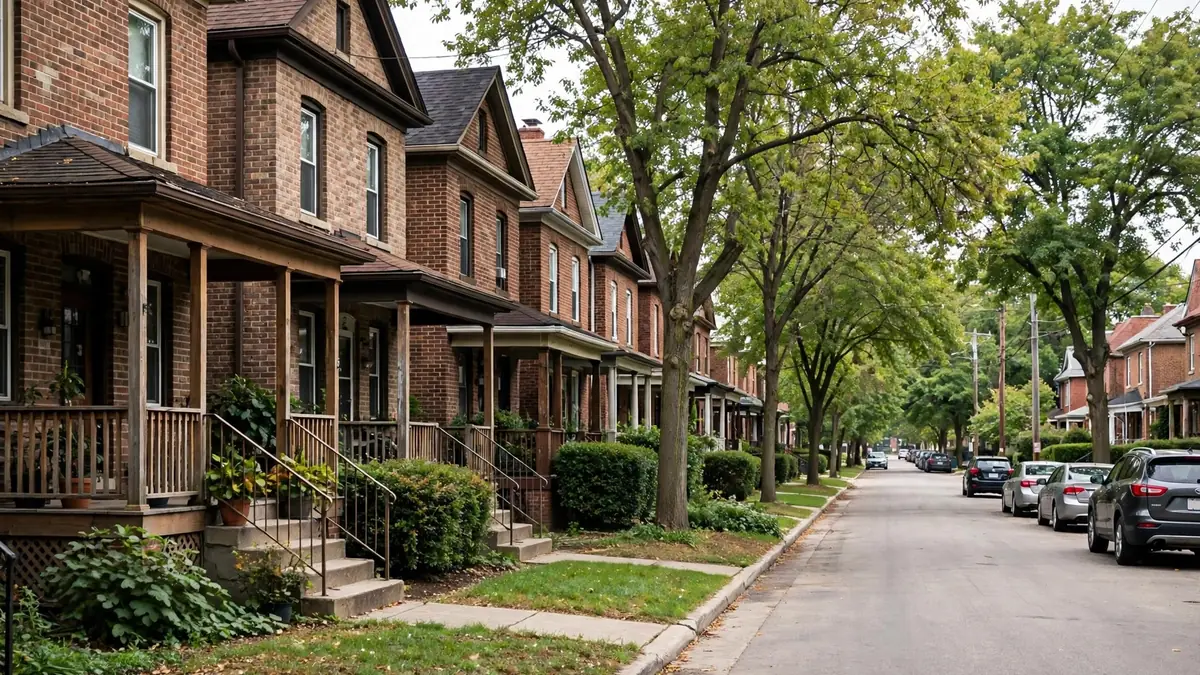
Bungalow roofs are relatively low-pitched, with the gable running parallel to the street [2]. Firefighters often vent through the roof above the half-story or through dormers. Tarps are laid over the opening, extended well past it and fastened with wood battens through to the structure.
Gambrel roofs
Steep roofs on Gladstone Park Dutch Colonials
The gambrel roofs of Gladstone Park's Dutch Colonials are steep on their lower slopes, making tarping harder and more dangerous. Crews use proper fall protection or work from a lift; owners should never try it themselves.
Porches
Front sunporches and rear porches
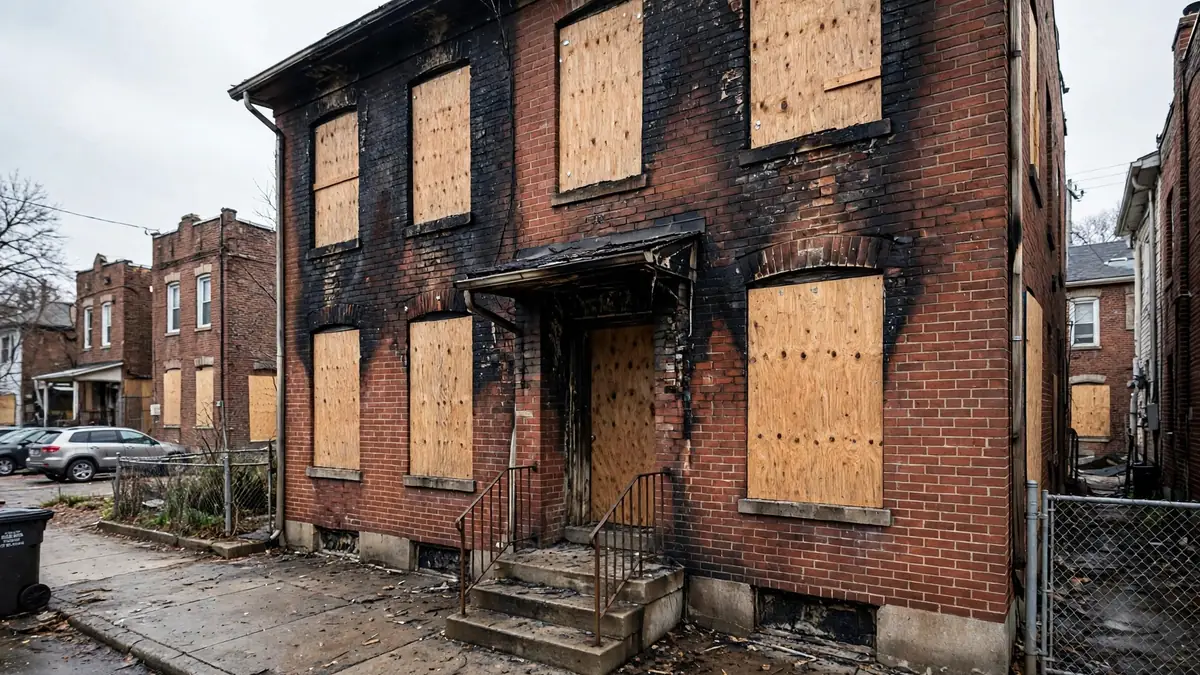
Enclosed front porches often lose their windows in a fire. They are boarded to protect the living room behind them. On two-flats, wooden rear porches serve as the upper unit's second exit; a damaged one is blocked off and shored until it is rebuilt under permit [3].
Priority order
What gets secured first
- Front door and ground-floor windows
- Roof openings over the half-story
- Rear porch of a two-flat
- Front sunporch windows
- Garage doors on the alley
Garages
Detached garages on the alley
Detached garages are common fire sources here. A burned garage door leaves the yard and alley open. Crews secure the door or fence off a badly damaged garage until it can be rebuilt with a permit.
Windows
Brick openings and storm windows
Bungalow windows sit in brick openings, often with storm windows outside. Crews fasten plywood to the window frames or brace it from inside rather than drilling into the brick.
Winter
Winter board-up and frozen pipes
A winter fire that knocks out the furnace leaves a bungalow at risk of frozen pipes. Securing the openings and protecting the plumbing go together. Shrink wrap holds up better than tarps under snow.
Security
Keeping a vacant home secure
If the family is staying elsewhere, change locks on secured doors, ask a neighbor to watch the house and check covers after storms.
Records
Photos and receipts
Photograph each opening before and after covering, and keep every receipt for temporary repairs, as the Illinois Department of Insurance advises [1].
Choosing a crew
What to ask a board-up crew
Ask how they fasten to brick without damage, how tarps will survive wind and snow, how you and the adjuster get in afterward and whether they photograph every opening.
Glass block
Basement windows and glass block
Bungalow basements often have small windows near grade, some replaced with glass block. Firefighters may break basement windows to vent a basement fire. These low openings are a security risk and let in rain and snow; they are boarded from outside or inside and sealed at the edges.
Window wells collect debris and water; clearing them prevents water from pooling against the boards.
Timeline
How long temporary covers stay up
Covers usually stay until the insurer inspects and permanent repairs are agreed and permitted. That can take weeks. Check them after every storm and replace tarps with shrink wrap if the wait will be long.
Choosing a crew
What to ask a Northwest Side board-up crew
Ask how they will fasten covers without damaging brick and window frames, how roof tarps will stay put through wind and snow, how you and the adjuster will get in afterward and whether they photograph every opening before and after covering. Ask whether they can coordinate with the restoration contractor so drying and cleaning can start behind the boards right away.
Signing for board-up does not commit you to the same company for the rest of the restoration.
Records
Photos and receipts for temporary work
Photograph each opening before and after it is covered and keep every receipt. The Illinois Department of Insurance advises keeping all bills and receipts from temporary repairs and photographing damage before repairs start [1].
Winter
Snow, ice and temporary roof covers
Northwest Side winters bring snow loads and ice. A tarp laid over a bungalow roof can collect snow and sag into the opening if it is not supported and fastened well. Shrink wrap sheds snow better and is often used when a roof will stay covered through winter.
Ice also makes ladders and roofs dangerous, which is another reason owners should leave roof work to a crew.
FAQ
Northwest Side board-up questions
How soon should my bungalow be boarded up?
As soon as the fire department releases it, per Illinois insurance guidance on temporary repairs.
Can a tarp hold on a steep gambrel roof?
Yes, if it is fastened properly by a crew with fall protection.
What happens to a burned two-flat rear porch?
It is blocked off and shored, then rebuilt under permit.
Do I need to secure my burned garage?
Yes. Secure or fence it off until it can be rebuilt.
Does insurance cover board-up?
Many policies cover reasonable temporary repairs. Keep receipts and photos.
Can I tarp the roof myself?
No. Fire-damaged roofs can fail; leave it to a crew.
Are basement windows boarded too?
Yes. Broken basement windows are a security and weather risk and are covered from outside or inside.
Can the crew board my neighbor's windows?
With the neighbor's permission, yes. Each owner claims their own damage.
How long can a roof tarp stay on my bungalow?
Tarps are short-term protection, usually weeks. Check them after storms and switch to shrink wrap if repairs will take longer.
Will a tarp hold under snow?
Only if it is well supported and fastened. Shrink wrap usually handles winter snow better.
Should I stay in my bungalow once it is boarded up?
Only if the fire department and your contractor say it is safe and the utilities work safely.
Who should board up a rented two-flat after a fire?
The owner normally secures the building under the building policy. Tenants should photograph their own units and belongings first.
Can storm windows be reused after the fire?
Sometimes. Undamaged storm windows can be removed and stored during board-up, then reinstalled when permanent repairs are done.
Do I need a permit for temporary board-up?
Temporary board-up and tarping to protect the building generally go ahead right away. Permanent repairs such as a new roof, porch or garage may need a Chicago building permit, which the contractor should handle.