
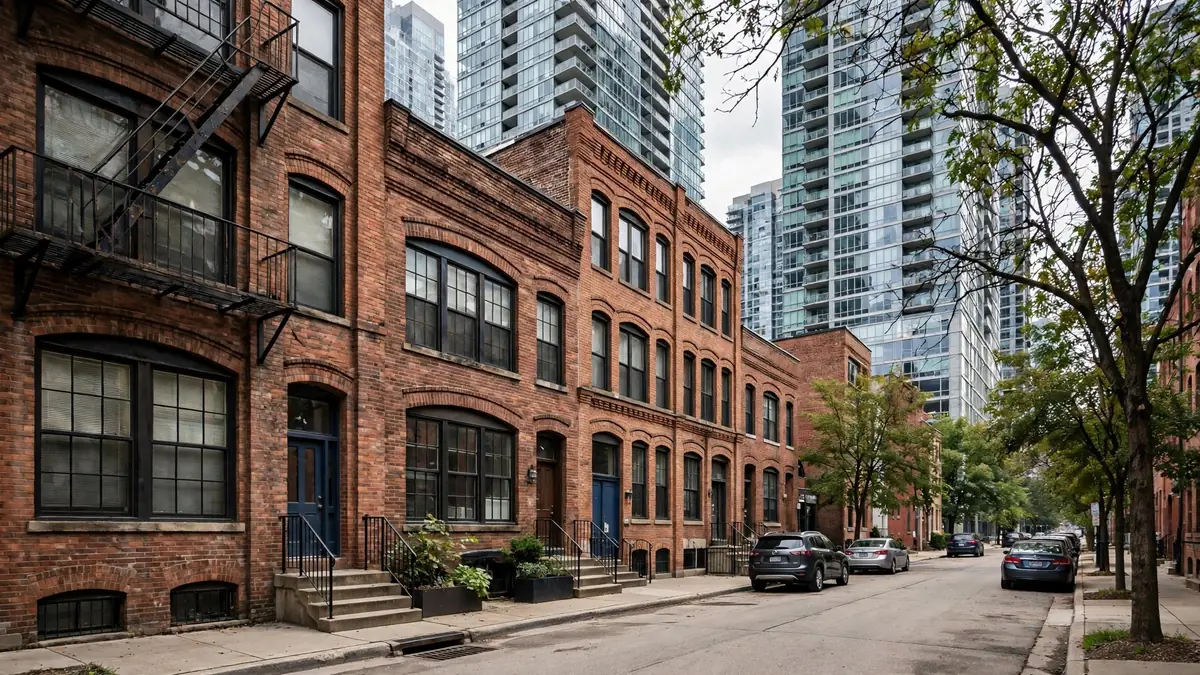
Key facts: Board-Up and Tarping in River North and Streeterville
Towers
High-floor windows
Wind at height drives rain and cold through a broken window. Crews install framed panels from inside, sealed at the edges, and management coordinates glass replacement.
Mansions
Historic doors and windows
Mansion doors, leaded glass and carved frames are protected without fastening into stone. Panels are braced from inside where possible, and every feature is photographed first.
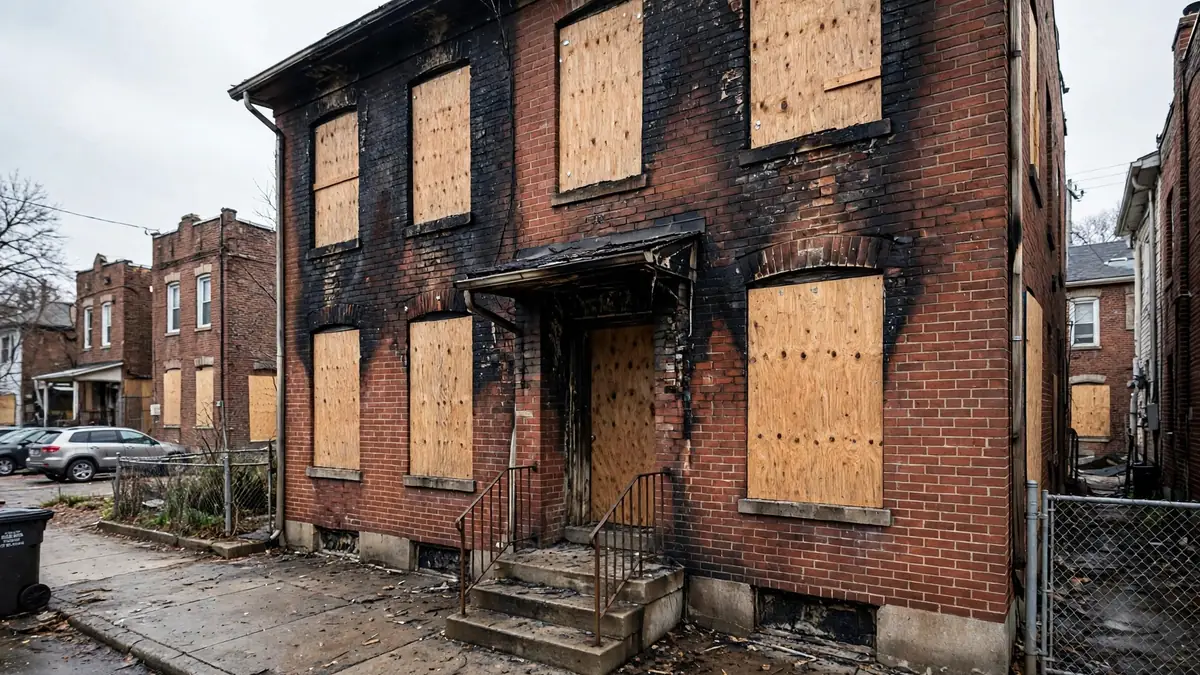
Lofts
Loft windows and roof hatches
Large loft windows are covered with framed panels fastened to frames. Roof hatches and skylights are sealed.
Priority order
What gets secured first
- Forced entry doors
- Broken windows on any floor
- Roof openings on row houses and lofts
- Storefront glass
- Damaged balconies
Row houses
Row-house roofs and fronts
Attached row houses may need roof openings tarped and front windows boarded, coordinated with neighbors whose roofs adjoin.
Storefronts
Street-level glass
River North storefronts below apartments need framed panels across wide openings.
Records
Photos and receipts
Photograph each opening before and after, and keep receipts [1].
Towers
Securing a window forty floors up
A broken window on an upper floor of a Streeterville tower cannot be covered from outside the way a house window can. Exterior access belongs to the building and its own equipment, so the opening is usually closed from inside with a framed panel fixed within the room. The frame has to resist wind off Lake Michigan, which can be far stronger at height than it feels on the sidewalk. Ask how the panel is braced and whether it can be removed from indoors when the glazier arrives.
Management decides much of what happens next. It may require a registered contractor, proof of insurance and a booked freight elevator before anyone brings up lumber. If you are not in town, give management your contact details and written permission for entry, so a damaged unit is not left open while people try to reach you.
Lofts
Big openings in River North lofts
Converted warehouse buildings in River North have large windows, often in old frames set into brick. A single opening can be much larger than a standard sheet of plywood, so crews build a frame and join panels. Fixing into old masonry needs care: fastening through the frame or bracing from inside tends to do less harm than drilling into original brick. Roof hatches and skylights on top-floor lofts are also common entry points for rain after a fire, so check them along with the windows.
Street level
Storefronts and doors along busy blocks
Restaurants and shops in River North often occupy the ground floor of buildings with homes above. When a storefront is broken, securing it protects the apartments upstairs too, since the stair door and lobby may be reachable from the damaged space. Street parking for work trucks is scarce near Michigan Avenue and the restaurant district. When you call, mention any alley or dock access, so the crew can plan how to bring materials in.
Houses
Gold Coast houses and Old Town row houses
Houses and walk-ups usually have alley access at the rear, which makes securing simpler, but the buildings themselves need more thought. Leaded and stained glass, carved frames and old masonry are hard to replace, so temporary covers should be fixed in ways that avoid fresh damage. Many of these properties are in historic districts. Exterior work that requires a permit on a designated landmark or in a landmark district is generally reviewed by the Commission on Chicago Landmarks, so tell the crew if your building is designated. Row-house roofs may share attic space with neighbors, so a tarp on one roof can matter to the houses on either side.
Winter
Cold air and frozen pipes behind a broken window
In a Chicago winter, an open window does more than let in snow. Cold air on a high floor can reach pipes in walls and sprinkler lines, and a frozen line can cause a second water loss after the fire is out. Tell management as soon as a window is broken, so building engineers can check nearby lines. Keep the panel tight and keep some heat in the unit if it is safe and the building allows it.
At the door
What to have ready for the crew
- Building name, unit number and floor
- Management or doorman contact
- Freight elevator and dock instructions
- Which windows, doors or hatches are damaged
- Whether firefighters or the building have released the unit
- Your insurer and claim number if you have one
- Whether anything valuable is still inside and visible
Afterward
From temporary cover to permanent repair
A board-up is a holding measure, and it can stay in place while the insurer inspects and repairs are scheduled. Custom glass for a tower or a large loft window can take a while, so ask the crew to check the cover after heavy wind. Keep photos taken before and after securing, along with the crew's paperwork. Once the opening is closed, the next jobs are usually water damage from firefighting and smoke cleanup.
Goose Island
Low buildings near the river
ZIP 60642, which takes in Goose Island and nearby blocks west of the river, has a different feel from the towers to the east. Low commercial and newer residential buildings there may have flat roofs and large ground-floor openings, which a crew can usually reach directly. A flat roof damaged by fire is not tarped like a sloped one. The cover must be weighted or fastened so wind cannot get under it, and it should direct water toward a working drain.
Tell the crew what kind of roof you have and how to reach it. Ladders may not be enough for a taller building, so roof access through a hatch or stair can decide how quickly it gets covered.
Who decides
Sorting out responsibility in a condo building
In a condo tower, the association usually handles common elements, and the window itself may fall on either side of that line depending on the declaration. Rather than guess, ask management who will arrange securing and who signs. Get that answer in writing if you can. If management is already sending a crew, do not hire a second one for the same opening.
FAQ
Near North board-up questions
How are high-floor windows secured?
From inside with framed panels; management coordinates glass.
Can mansion doors be protected without damage?
Yes, with panels braced from inside.
Does landmark status delay board-up?
No; only permanent exterior repairs may be reviewed.
Who arranges row-house roof tarping?
The owner, coordinating with neighbors.
Does insurance cover board-up?
Many policies cover reasonable temporary repairs.
Can I board up a window myself?
Not on an upper floor.