
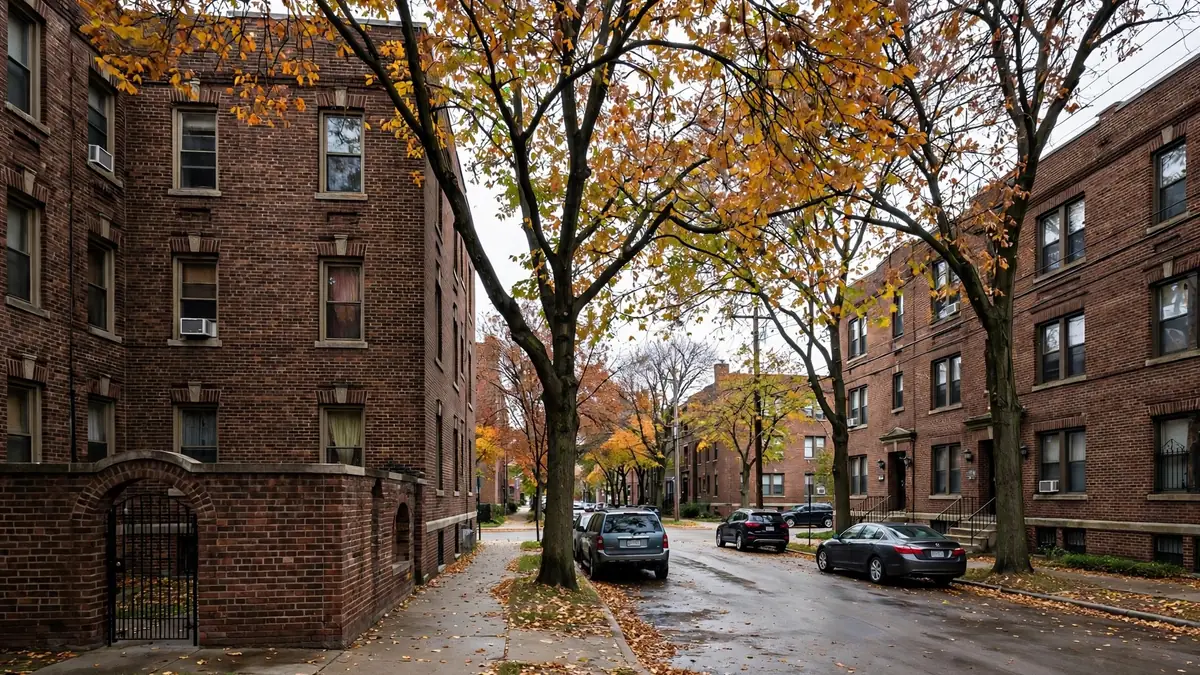
Key facts: Board-Up and Tarping in Lakeview
- Illinois insurance guidance says to make temporary repairs such as boarding windows as soon as possible, even before the adjuster visits [1].
- Northalsted's greystone and brownstone walk-ups usually have wooden rear porches and stairs [2].
- Porch rebuilding and other permanent repairs in Chicago may require a Department of Buildings permit [3].
Flat roofs
Tarping low-slope roofs on Lakeview walk-ups
Many Lakeview walk-ups and courtyard buildings have flat or low-slope roofs behind parapet walls. A vent hole cut by firefighters in a flat roof collects rain instead of shedding it, so a loose tarp is worse than useless. Crews fasten covers to the deck around the opening, often with wood framing to create slope, or use shrink wrap for larger areas.
Roof hatches and skylights damaged during the fire get the same treatment. The aim is a cover that survives a lake-wind storm until the roof is permanently repaired.
Rear porches
Securing the wooden back porches and stairs
Rear porches on Lakeview's two-flats, three-flats and walk-ups are wood, open to the alley and often the place where fire spreads between floors. After a fire, a charred porch can leave upper units without a safe second exit and create a collapse risk over the alley.
The temporary fix is to block access and shore damaged members. The permanent rebuild is permitted work through the Chicago Department of Buildings [3], so expect a gap between the board-up crew's work and the new porch.
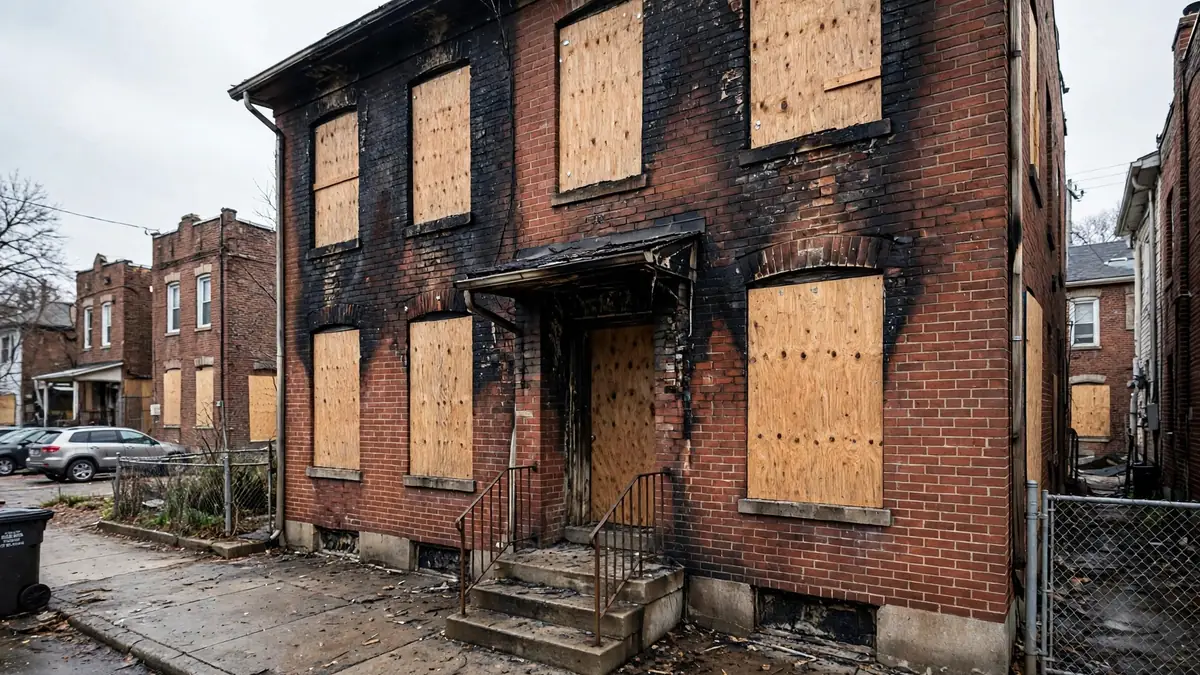
Street fronts
Ground-floor windows on busy Lakeview streets
Courtyard buildings and mixed-use buildings along Broadway, Clark and Halsted face heavy foot traffic. Broken ground-floor windows and forced entry doors are the first priority for security, both to protect belongings and to keep people out of an unsafe building.
Storefront glass in mixed-use buildings needs larger framed panels. Upstairs apartments may need their own windows boarded at the same visit.
Priority order
What gets secured first on a Lakeview property
- Ground-floor doors and windows facing the street
- Roof vents over undamaged units
- Damaged rear porches and stairs
- Upper-floor broken windows
- Garages and gates on the alley
Landmarks
Boarding a building in a Lakeview landmark district
Temporary board-up is not restricted by landmark status and should happen right away. Permanent window and masonry replacement on designated buildings, such as those in the Oakdale Avenue landmark district, may need review by the Commission on Chicago Landmarks [4].
Ask the crew to fasten boards in a way that does not damage historic masonry or window frames, so the original openings can be restored.
Wind and cold
Lake weather and temporary covers
Close to the lake, wind is the enemy of temporary covers. Tarps weighed down with bricks will not survive the night; they need wood battens fastened through to the structure. In winter, snow loads and ice add stress, and shrink wrap is often the better choice for roofs that will stay covered for weeks.
If heat is off in the building, the plumbing needs protection too, or frozen pipes add a new water problem behind the boards.
Records
Keeping receipts and photos for every opening
The Illinois Department of Insurance says to photograph damage before repairs and keep all bills and receipts for temporary work [1]. Photograph each opening before it is covered and again afterward.
In a multi-unit building, share those photos with the owner or association so the building's insurer and each household's insurer see the same record.
Garages
Alley garages and gates behind Lakeview buildings
Many Lakeview two-flats and houses have a detached garage or a parking pad on the alley, and rear gates that close the yard. A fire that reaches the rear of a building can damage the garage, the fence and the gate, leaving the back of the property open to the alley.
Board-up crews secure garage doors and broken gates along with the building itself. If the garage is badly damaged, the area may be fenced off until it can be rebuilt with a permit, since a weakened garage roof is a hazard in winter snow.
Vacant units
Keeping a damaged Lakeview building secure while tenants are away
After a serious fire, some units may stay empty for weeks while repairs go on. A boarded, unoccupied building on a busy Lakeview street can attract attention. Beyond the boards, change locks on secured entries, ask a neighbor to keep an eye on the property and check the covers after storms.
Make sure every remaining resident knows which exits are safe while the rear porch is out of service, and post that information at the stair if the owner agrees.
Choosing a crew
What to ask a Lakeview board-up crew
Ask how they will fasten covers to masonry without damaging it, how roof covers will stand up to lake wind, how you and the adjuster will get in afterward, and whether they photograph every opening before and after. Ask, too, whether they can coordinate with the restoration contractor so drying and cleaning can start behind the boards straight away.
Signing for board-up does not commit you to that company for the rest of the restoration. Illinois guidance advises getting your adjuster's agreement before contracting for major repairs.
FAQ
Lakeview board-up questions
How fast should a Lakeview building be boarded up after a fire?
As soon as the fire department releases it. Illinois guidance treats temporary repairs as part of preventing further damage.
Can a tarp hold on a flat Lakeview roof?
Only if it is fastened and shaped to shed water. Flat roofs collect rain, so crews frame or shrink-wrap the opening.
What happens to a burned rear porch?
It is blocked off and shored until it can be rebuilt with a Chicago building permit.
Do landmark rules delay board-up?
No. Temporary protection goes ahead immediately; landmark review applies to permanent exterior repairs on designated buildings.
Who arranges board-up in a rental walk-up?
The building owner normally secures the structure. Tenants should photograph their own units and belongings.
How long can the boards stay up on my Lakeview building?
Temporary covers are meant to last until repairs are agreed and done, often several weeks. Check them after every storm, and replace tarps with shrink wrap if the wait will be long.
Can I board up my Lakeview windows myself?
A single ground-floor window from inside is manageable. Upper floors, masonry openings and roofs on a fire-damaged building are safer left to a crew.
Does insurance usually cover board-up after a Lakeview fire?
Many policies include reasonable temporary repairs that prevent further damage. Keep the receipts and before-and-after photos, and confirm the details with your insurer or the building owner, since the structure is normally insured under the building policy rather than a tenant policy.