
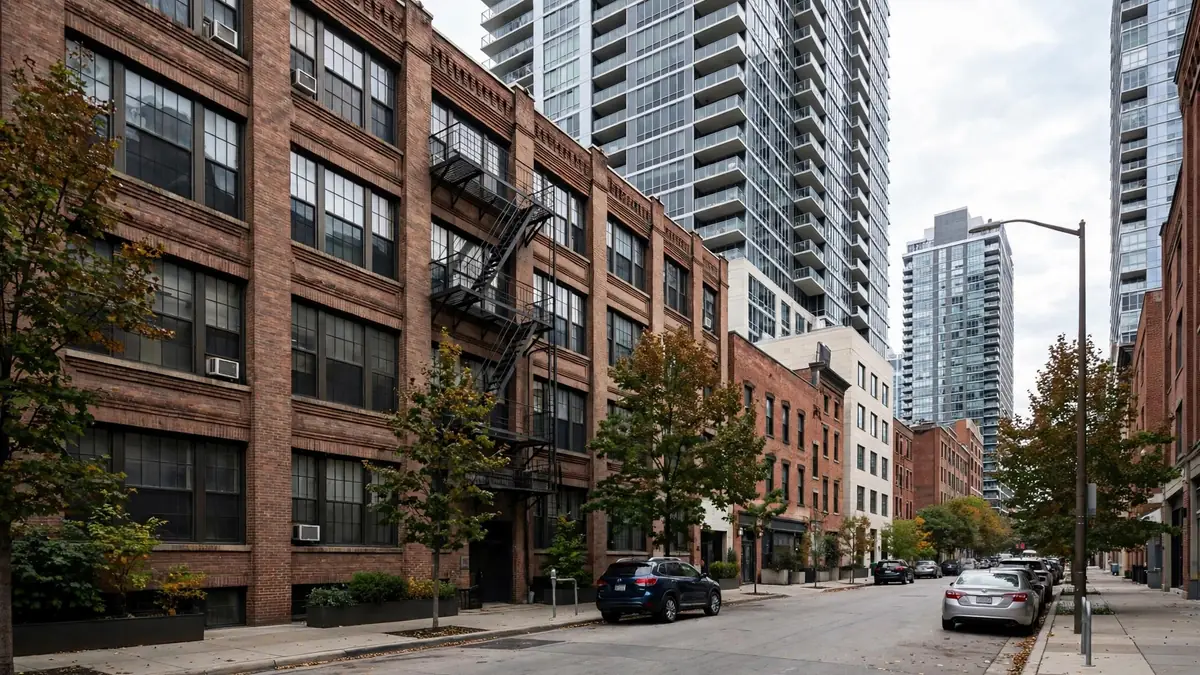
Key facts: Odor Removal in Loop and South Loop
Risers
Exhaust risers and trash chutes
Kitchen and bathroom exhaust in towers often runs through shared risers. If smoke entered the riser, odor can appear in your unit whenever a neighbor's fan runs. Trash chutes and corridor ventilation can do the same. These are building systems; report the pattern to management so the engineer can trace and clean them.
Lofts
Odor in brick and timber
Exposed brick and timber in lofts absorb smoke odor deeply. After cleaning, sealing brick with a breathable sealer and timber with a clear odor-blocking finish can lock in remaining residue. Open plans mean odor is shared through the whole unit.
Fan coils
In-unit fan coils and heat pumps
Your unit's fan coil or heat pump holds residue on its fan and coil and releases odor every cycle. Cleaning it is part of the odor work [3].
Clues
Where to sniff in a downtown unit
- Under the unit door facing the corridor
- Kitchen and bath exhaust grilles
- The fan coil closet
- Exposed brick walls
- Shared walls in townhomes
Treatments
Treatments in a tower
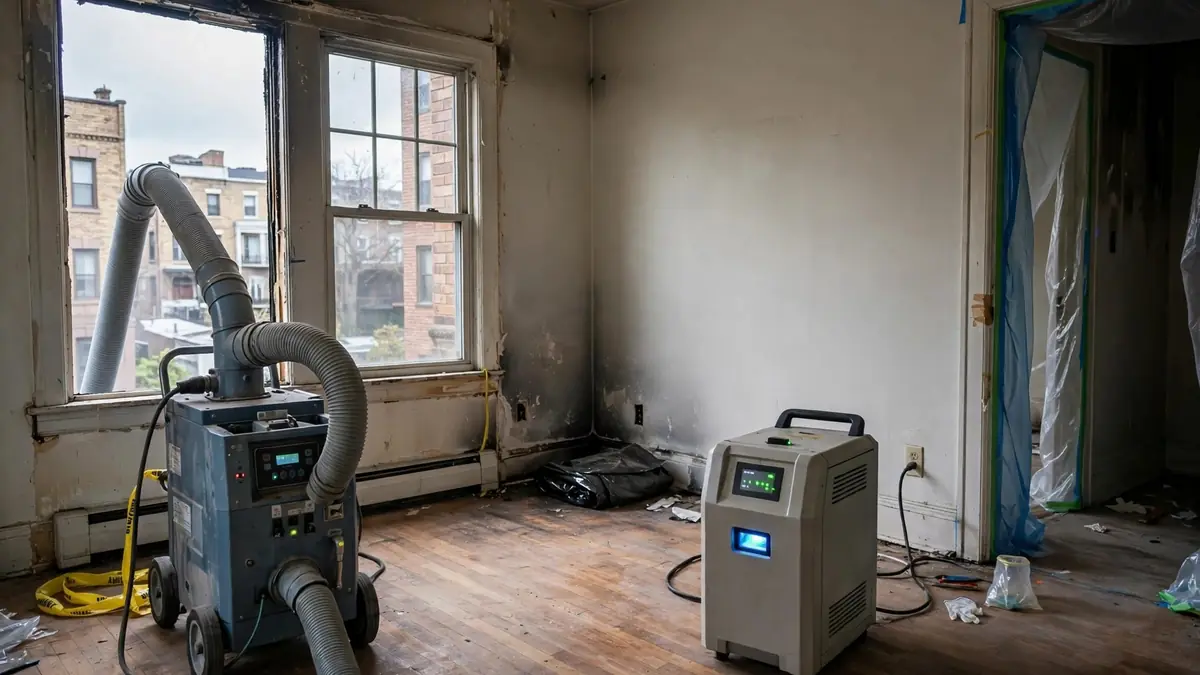
Hydroxyl units and carbon filtration can usually run in an occupied building. Ozone requires an unoccupied, sealed space, and EPA warns it can damage rubber, fabrics and artwork [2]. Because it can leak into corridors, many buildings do not permit it.
Townhomes
Odor in attached townhomes
In South Loop townhomes, odor can come through shared attics and party walls from a neighbor's fire. Attic insulation near the shared wall is checked and removed if it absorbed smoke.
Contents
Fabrics and furniture
Clothing, curtains and upholstered furniture absorb odor. Laundering for smoke usually works; foam with deep odor may not. A pack-out keeps clean items away during treatment.
Renters
Renters in managed towers
If odor persists after the owner's cleaning, put it in writing to management. Your belongings are covered by your own renter's insurance [4].
Verification
Checking the result
Close the unit for a day or two with the HVAC running and check again. Report returning smell promptly.
Tenants
Odor complaints in rental towers
Tenants in rental towers should report persistent smoke smell to management in writing. The owner handles the building’s systems; your clothes, bedding and furniture that absorbed smell are covered by your own renter’s insurance.
Restaurants
Odor from restaurants in mixed-use buildings
Some downtown residential buildings sit above restaurants, especially in the South Loop and around Printers Row. A commercial kitchen fire sends greasy protein residue up through shafts and floors into apartments. That film needs degreasing on every surface before odor treatment works, and the business's commercial policy is separate from residents' policies.
Order of work
Why treatment comes last
Treating odor before the sources are cleaned or removed only masks it for a few weeks. The order is: clean every surface and the corridor, clean the fan coil and any ducts, seal brick or stained surfaces where needed, then treat what remains.
Lofts
Open-plan lofts and odor
In an open-plan loft, there are no doors to close off the worst-affected area. Odor spreads through the whole unit and into exposed brick, timber and ducts. Cleaning and treatment have to cover the entire space at once, and the exposed ductwork is cleaned inside and out.
Lake air
Humidity and odor downtown
Humid summer air off the lake makes residue in brick, wood and fabric release odor faster. A unit cleaned in winter can smell again in July, signaling a missed source rather than a failed job.
Checking the result
Testing a unit for odor
Ask the contractor to check the result with the unit closed for a day or two and the HVAC running. Note where and when any smell returns, and report it while the job is fresh.
Contents
Belongings and odor in small units
In compact downtown units, clothing, bedding and furniture sit close to every surface and absorb odor for as long as residue remains. Laundering made for smoke usually clears fabrics, while foam cushions and mattresses with deep odor may not recover. A pack-out keeps cleaned items away while the unit is treated.
Townhomes
Odor through party walls
In attached South Loop townhomes, a neighbor's fire can push smoke through gaps in the party wall and shared attic. Odor then appears near outlets on the shared wall and in upstairs rooms. Opening the attic and checking insulation along the party wall usually finds the source.
FAQ
Downtown smoke odor questions
Why does my unit smell when my neighbor's fan runs?
The exhaust riser likely holds residue. Report it to management.
Can ozone be used in my tower unit?
Only if the unit is empty and sealed, and many buildings do not allow it.
Can odor be removed from exposed brick?
Usually, by cleaning and then sealing the brick.
Who cleans the trash chute and corridor?
The building, as common areas.
Can my clothes be saved?
Most can, with laundering made for smoke residue.
How long does odor removal take?
With sources cleaned, usually days to a few weeks.
Do I need building approval before a contractor starts work downtown?
Often. Fogging or other treatment can set off detectors and reach corridors, so tell management the method and date, and show proof of insurance.
Will repainting remove the smell?
Only after cleaning and sealing with an odor-blocking primer.
Do air purifiers help?
A HEPA purifier with carbon reduces airborne odor but cannot remove residue in brick, fabric or ducts.
How long until my unit stops smelling?
With sources cleaned, usually days to a few weeks. Shared systems can stretch that until the building cleans them.
Can my clothes be saved from smoke smell?
Most can, with laundering or dry cleaning made for smoke residue.
Why does my townhome smell after a neighbor's fire?
Smoke passes through the party wall and shared attic. Insulation there is checked and removed if it absorbed smoke.
Can ozone be used in a South Loop townhome?
Only if the home is empty, including pets and plants, and sealed from neighbors. Many contractors prefer hydroxyl units.
Who pays to clean the corridor?
The association or owner, under the building’s policy.