
Key facts: Contents Cleaning and Pack-Out
- Illinois insurance guidance says your claim is split into one part for the building and one for personal property, and both need documentation [1].
- The same guidance says not to throw out damaged furniture or valuables until the adjuster has examined them [1].
- An inventory listing where each item was bought, its brand and model helps the adjuster settle the contents claim [1].
- The IICRC S700 standard includes contents restoration as a defined part of fire and smoke restoration [2].
- Ready.gov advises inventorying damaged property before discarding anything and keeping receipts for fire-related spending [3].
How it works
What a contents pack-out is and when it makes sense
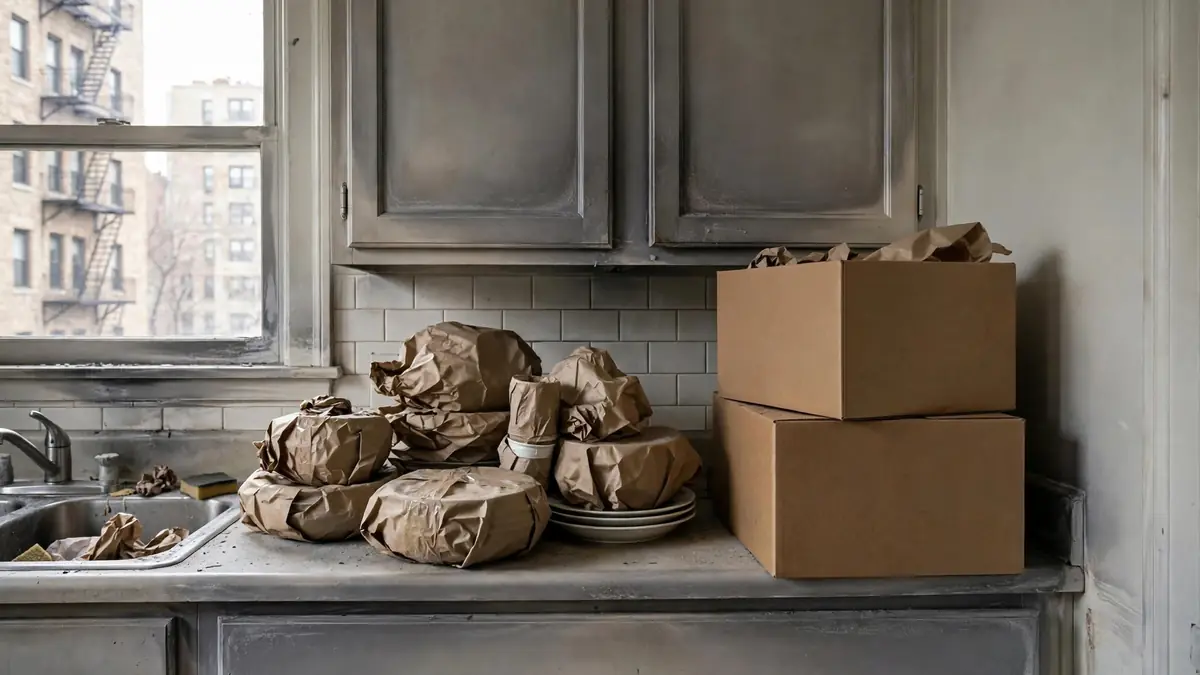
A pack-out is the organized removal of belongings from a fire-damaged home. Each item is inventoried, photographed, packed and taken to a facility where it can be cleaned, deodorized and stored until the house is ready. When the home has been cleaned and repaired, the cleaned items come back, often room by room.
Pack-outs make sense when there are many affected belongings, when the structure needs heavy cleaning or repair that would damage contents left in place, or when the family cannot live in the home. Moving the contents out lets the crew clean walls, floors and ceilings without working around furniture, and keeps clean items from picking up residue again.
Not every fire needs a full pack-out. For a small fire, contents can sometimes be cleaned on site, moved from room to room as the cleaning progresses. A contractor should explain which approach suits your home and why.
Contents restoration is one of the sections of the ANSI/IICRC S700 standard for fire and smoke damage restoration, alongside assessment, source removal and odor management [2]. That gives a reference point for how belongings should be assessed and cleaned.
Signs
Signs your belongings need professional cleaning
Clothes smell of smoke inside closed closets
Smoke reached the closet air; every garment there has residue even if it looks clean.
Gray film on dishes and glassware
Residue settled inside cupboards and on shelves, not just on the counters.
Yellowed plastics and electronics
White plastic housings that changed color are reacting to acidic residue.
Upholstery smells when sat on
Pressure pushes trapped odor out of foam cushions.
Wet boxes in the basement
Firefighting water soaked stored items, which can grow mold within days.
Soot on books and papers
Fine residue settles on page edges and covers and spreads when handled.
The process
A contents pack-out from the first walk-through to return
- 1
Walk-through with you
The crew goes room by room with you to identify items you want handled with special care, things to keep with you and things clearly beyond restoring.
- 2
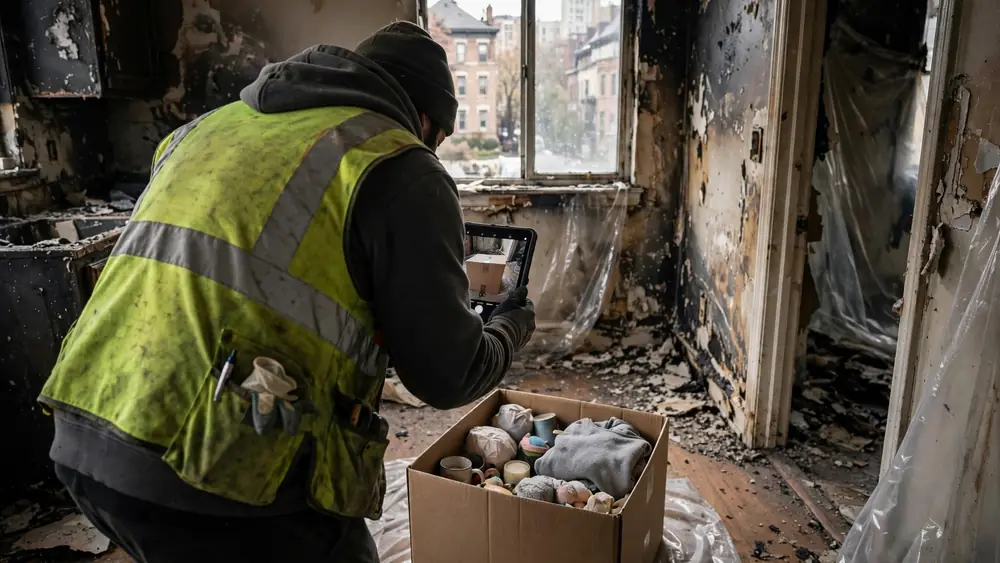
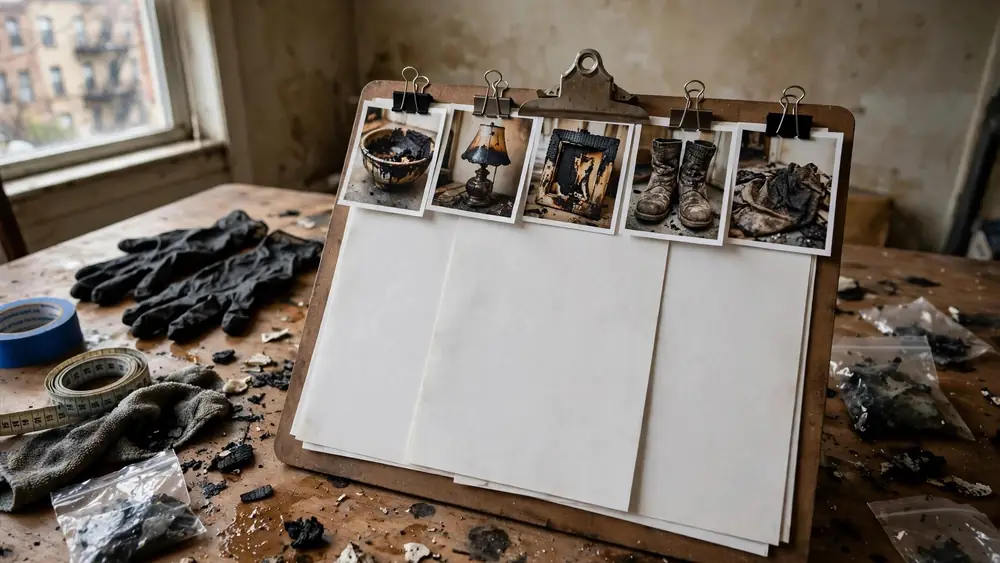
Inventory and photographs
Each item or box is photographed and listed by room, with notes on condition; this becomes part of your claim record [1].
- 3
Set aside non-salvageable items
Items that cannot be restored are listed and kept for the adjuster rather than thrown out [1].
- 4
Pack and label
Belongings are wrapped and boxed by room with labels that match the inventory.
- 5
Transport to the cleaning facility
Contents are moved to a secure facility for cleaning and storage.
- 6
Clean by material
Textiles, hard goods, electronics, furniture and documents each go through processes suited to them.
- 7
Deodorize and inspect
Items are deodorized as needed and checked for remaining smell or residue.
- 8
Store until the home is ready
Cleaned items stay in storage while the house is cleaned and repaired.
- 9
Pack-back
Belongings are returned, unpacked and placed by room, checked against the inventory.
By material
How different belongings are usually cleaned
| Item type | Usual approach | Outlook |
|---|---|---|
| Clothing and linens | Specialized laundering or dry cleaning for smoke, sometimes several cycles | Usually good |
| Dishes, glass, metal | Hand or machine washing with appropriate cleaners | Very good |
| Hard furniture | Dry cleaning, wet cleaning, refinishing if the finish is damaged | Usually good |
| Upholstered furniture | HEPA vacuuming, upholstery cleaning, deodorizing | Depends on odor depth |
| Mattresses and pillows | Rarely cleaned after heavy smoke | Usually replaced |
| Electronics | Specialist inspection and cleaning | Varies; acidic residue can cause later failure |
| Books and papers | Dry cleaning; deodorizing chambers; freeze-drying if wet | Often good with prompt handling |
| Photographs and artwork | Conservator handling | Often recoverable |
| Food, cosmetics, medicine | Not cleaned | Discarded for health reasons |
What you can do yourself
Getting your belongings ready before the crew arrives
- Take the essentialsMedications, documents, glasses, chargers, school items and a few days of clothing go with you.
- Photograph each roomWide shots of each room and close-ups of valuable items support the contents claim [1].
- Start a list from memoryIllinois guidance suggests picturing each room and listing what was in it if you have no inventory [1].
- Find receipts and recordsBank and card statements, online order histories and photos help show what you owned.
- Do not wash clothes at home yetSome residues set in hot water; wait until the contractor identifies the residue.
- Separate wet itemsMove wet belongings away from dry ones so mold does not spread.
Local specifics
Pack-outs from Chicago walk-ups, bungalows and high-rises
Getting belongings out of a Chicago home is not always simple. Many two-flats and three-flats have narrow front and rear stairs, and upper units have no elevator. Bungalows often have steep stairs to the half-story bedrooms [4]. Crews plan the move around these routes, protect stair treads and railings, and use the rear porch only if it is safe after the fire.
In high-rise condos and apartments, the building usually controls the freight elevator and loading dock. Pack-outs need to be scheduled with management, and some buildings require proof of insurance from contractors before they can work. Parking for a truck on a busy street, or in a narrow alley, also needs planning.
Weather plays a role too. Moving belongings in rain or snow without protection can add water damage, so crews wrap items and use covered trucks. In winter, contents left in an unheated, wet building can freeze; moving them out promptly helps.
Assessment
How restorers decide which items can be saved
Restorers look at three things: the material, the residue and the damage. Hard, non-porous items such as glass, ceramic and metal clean well even after heavy smoke. Porous items such as foam, unfinished wood, paper and fabric hold residue and odor more deeply. Items that were burned, melted, soaked with sooty water or exposed to heat that changed them are often beyond restoration.
They also consider the item's value to you. A family photograph or a grandparent's chair may be worth more effort than its market value suggests, and specialized restoration is possible for many such items. Tell the crew which items matter most to you at the walk-through.
Whatever the outcome, every item is listed. Items that cannot be restored are recorded and kept for the adjuster, since Illinois guidance says not to throw out damaged items of value until the adjuster has seen them [1].
Quick reference
Pack-out or clean in place?
| Situation | Usual choice | Why |
|---|---|---|
| Small fire, one or two rooms affected | Clean in place | Fewer items; minimal disruption |
| Whole-house smoke or soot | Pack-out | Structure needs full cleaning; contents would be re-soiled |
| Heavy water damage | Pack-out of wet and at-risk items | Prevent mold and further damage |
| Family moving out during repairs | Pack-out | Secure storage while the home is empty |
| High-value or fragile collections | Pack-out to specialists | Controlled conditions and expert handling |
Insurance
How the contents inventory fits into your claim
Homeowners and renters policies usually treat the building and its contents separately. The Illinois Department of Insurance explains that your claim is divided into one part for the house and one for personal property, and that additional living expenses may also be covered [1]. The contents inventory is the backbone of the personal property part.
The guidance also explains the difference between actual cash value and replacement-value coverage for contents, and notes that many policies set time limits for replacing items. Ask your insurer which applies to you. Keep copies of the pack-out inventory, photos and any list of non-salvageable items, and send receipts for replacements as you go [1].
Renters
Contents restoration for Chicago renters
Chicago has a large share of renters, many in two-flats, courtyard buildings and high-rises. If you rent, the building owner's insurance covers the structure but not your belongings. The Illinois Department of Insurance states plainly that a landlord's insurance does not cover a tenant's personal property [1]. Your own renter's policy, if you have one, is what covers contents cleaning and replacement.
Tell your renter's insurer about the fire right away and ask how they handle contents cleaning. If you do not have renter's insurance, the cleaning is still worth discussing with a contractor, since many belongings can be restored. Keep your landlord informed about access to the unit for the building's own repairs.
DIY or professional
Belongings you can clean and ones to leave to specialists
Fine to clean yourself
Dishes, glass and metal from rooms with light residue, once you know the residue is dry.
Ask first
Clothing and linens, since some residues set in a regular wash.
Leave to specialists
Electronics, photographs, artwork, documents, antiques and upholstered furniture.
The visit
What to ask a contents restoration contractor
Ask how the inventory is kept and whether you get a copy, how items are labeled, where they will be stored and how the facility is secured. Ask which items they clean in-house and which go to specialists, such as electronics or artwork restorers.
Ask how they handle items you want to keep with you, how you can request a specific item from storage before pack-back, and how they communicate with your insurer. Illinois guidance recommends getting your adjuster's agreement before you contract for repairs and services [1].
Finally, ask how the pack-back works: whether they return everything at once or room by room, and whether they place items or leave boxes for you to unpack.
Prevention
Protecting belongings before the next emergency
The single most useful step is a home inventory stored away from the house. The Illinois Department of Insurance suggests recording model and serial numbers for valuable items, keeping receipts and taking photos or video of each room, with the records kept somewhere other than your home [1].
Store irreplaceable documents and photos in a fire-resistant container or keep digital copies in the cloud. In basements, keep stored items on shelves rather than the floor, in plastic bins rather than cardboard, so water from any source does less harm.
Restore or replace
When belongings are better replaced
Some items are not worth the effort or the risk of restoring. Food, drinks, medicine and cosmetics exposed to heat, smoke or firefighting water should be discarded. Mattresses, pillows and stuffed toys that absorbed heavy smoke are usually replaced. Items that melted, charred or warped are generally beyond repair.
For everything else, the decision balances condition and meaning. A contractor can tell you what is realistically restorable; you decide what matters enough to try. Either way, the item stays on the inventory and the adjuster sees it first [1].
Checklist
Contents checklist for the week after a fire
- Essentials, medicine and documents removed and safe
- Every room photographed, including closets and drawers
- Insurer notified about contents damage
- Inventory started from memory, statements and photos
- Wet items separated from dry ones
- Items you value most named at the walk-through
- Copy of the pack-out inventory received
- Non-salvageable items listed and kept for the adjuster
Related problems
Other parts of the restoration that affect your belongings
Smoke damage cleanup
Cleaning the structure while the contents are away.
Read moreOdor removal
Getting smoke smell out of what comes back.
Read moreWorking with your adjuster
How contents fit into the claim.
Read more
Textiles
Clothing, bedding and curtains after smoke
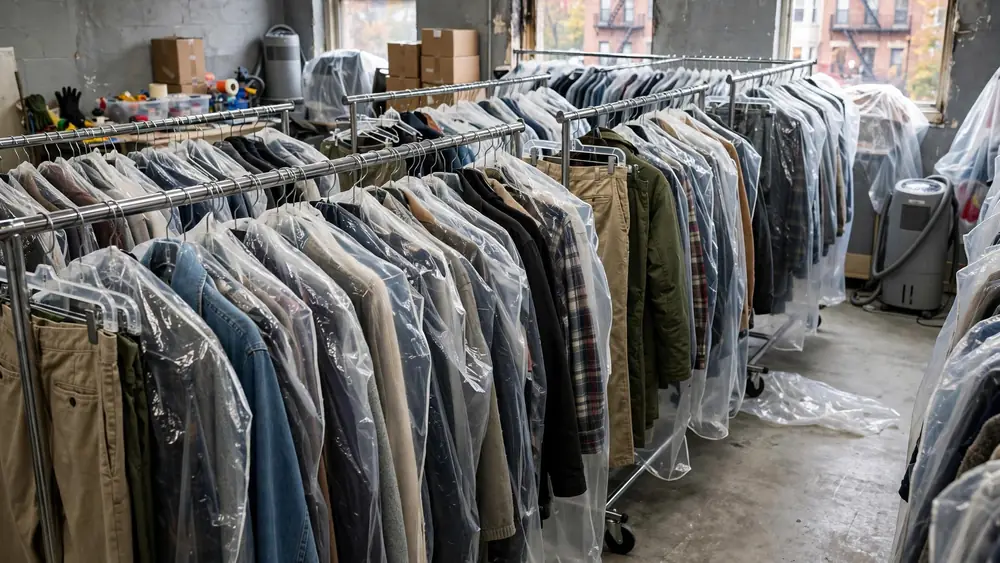
Fabrics are usually the largest group of belongings in a pack-out, and the most likely to come back in good shape. Smoke residue sits on and between the fibers, and laundering or dry cleaning made for fire residue lifts it out. Heavily affected items may need more than one cycle, plus deodorizing between cycles.
The reason restorers ask you not to wash everything at home first is chemistry. Wet smoke residue from burned plastics is oily, and protein residue from kitchen fires can bond to fabric in hot water. Ordinary detergents may not break either down, and a hot dryer can set the smell for good. A contractor who knows which residue is present can choose the right process.
Curtains and drapes hang in the path of rising smoke and often carry heavy residue. Lined and delicate drapes usually go to dry cleaning. Wool rugs and area rugs are cleaned separately from wall-to-wall carpet, often at a rug cleaning facility.
Furniture
Wood furniture, upholstery and heirloom pieces
Solid wood furniture with an intact finish usually cleans well. Residue is vacuumed, sponged and wiped from every surface, including drawer interiors and the undersides of tables, which collect more smoke than people expect. Where heat or residue has clouded the finish, refinishing may be the better result.
Upholstered pieces are judged one by one. Fabric can often be cleaned, but foam cushions absorb odor deeply. Some pieces respond to thorough cleaning and deodorizing; others keep releasing smell when sat on and are better replaced. Antique and heirloom furniture is worth a specialist's opinion before anyone decides.
Furniture that sat in firefighting water needs drying before any cleaning, and veneered or particleboard pieces may swell and delaminate. Note water damage separately on the inventory, since it may be assessed differently from smoke damage.
Electronics and appliances
Televisions, computers and small appliances
Electronics are among the trickiest belongings after a fire. Smoke carries acidic compounds that settle on circuit boards and connectors. A laptop or television may power on normally for weeks before corrosion causes it to fail. Water exposure adds shock and short-circuit risks.
The safe approach is to keep electronics unplugged and off until a specialist inspects them. Some can be cleaned internally; others are documented as losses. Data on computers and phones is often recoverable even when the device is not, so ask about data recovery for anything holding family photos or important records.
Small kitchen appliances that sat near the fire are often replaced, since residue inside heating elements can smell or smoke when they are next used. Larger appliances need an inspection before use, particularly gas appliances.
Pack-back
Bringing everything home again
The pack-back is the last step and the one families look forward to. Before it starts, the home should be fully cleaned, repaired and free of odor; bringing clean belongings back into a house that still smells undoes the work. Walk the house first and make sure you are satisfied.
Check returned items against the inventory as they come in. Note anything missing or still smelling of smoke right away, while the crew is there. Most contractors will re-clean items that did not come out right. Keep the final inventory with your claim records in case questions come up later.
Documents and photos
Papers, books and family photographs
Paper absorbs both smoke and water. Books and documents with light soot can often be cleaned page edge by page edge with dry sponges and deodorized in a chamber. Wet paper is more urgent: unless it can be dried within a day or two, freezing it stops mold and buys time for freeze-drying by a specialist.
Family photographs deserve particular care. Do not wipe soot off a print; it scratches the emulsion. Wet prints should be separated and dried face up. Albums with plastic sleeves can trap water and residue against the photos, so remove prints carefully if they are wet.
Important records such as passports, birth certificates, insurance policies and tax documents should be set aside and handled first. Replacement copies can be requested if needed, but the originals often survive with careful handling.
Special care
Items to point out at the walk-through
- Heirlooms, antiques and family photographs
- Artwork, framed prints and musical instruments
- Computers and drives holding personal files
- Collections such as books, records or stamps
- Firearms, which need special handling and storage
- Work equipment and children's school items you need right away
FAQ
Contents cleaning and pack-out questions
What is a pack-out after a fire?
A pack-out is the organized removal of belongings from a fire-damaged home. Items are inventoried, packed, cleaned at a facility and stored until the house is repaired, then returned.
Can smoke-damaged clothes be saved?
Most can. Clothing and linens usually respond to laundering or dry cleaning designed for smoke residue, sometimes over several cycles. Heavily charred items are the exception.
Do I have to throw away food after a fire?
Yes, food, drinks and medicine exposed to heat, smoke, soot or firefighting water should be discarded. Photograph and list them for your claim before discarding.
Can I keep some things with me during a pack-out?
Yes. Tell the crew at the walk-through which items you need, such as medications, documents, work equipment and clothing, and they will set them aside.
How long are my belongings stored?
Usually until the home is cleaned and repaired. That can be a few weeks for a small fire or several months for major damage.
What happens to items that cannot be restored?
Unrestorable items are listed on the inventory with photos and kept for your adjuster to see before disposal, as Illinois guidance recommends.
Does renter's insurance cover contents cleaning?
Renter's insurance generally covers a tenant's personal property, while the landlord's policy covers the building. Check your own policy and contact your insurer promptly.
Are electronics safe to use after a fire?
Not until they have been checked. Acidic residue can corrode circuits over time, and water exposure creates shock risks. Keep them unplugged until a specialist looks at them.