

Key facts: Soot Removal in River North and Streeterville
Fireplaces
Chimney fires in Gold Coast homes
Wood-burning fireplaces are common in Gold Coast mansions, older walk-ups and Old Town row houses. A chimney fire, usually from creosote, can crack the flue liner and send soot over the mantel, nearby walls and sometimes the attic. Stone and brick surrounds are cleaned with masonry-safe methods; carved wood mantels need gentle cleaners that protect the finish. The chimney is inspected before reuse.
Lofts
Soot on loft brick and timber
River North lofts have exposed brick and timber that trap soot in their texture. HEPA vacuuming, dry sponging and tested masonry cleaners are used; pressure washing is avoided. Exposed ducts are vacuumed outside and cleaned inside under negative pressure [3].
Towers
Soot on tower finishes and glass
Soot on drywall, cabinets and glass in towers usually cleans well. Glass is cleaned early because acidic soot can etch it. Corridors are cleaned by the building.
Hidden soot
Where soot hides on the Near North Side
- Fireplace surrounds and mantels
- Mortar joints in loft brick
- Tops of timber beams and exposed ducts
- Carved trim and plaster moldings
- Window tracks and glass
Mansions
Carved woodwork and decorative plaster
Carved oak, decorative plaster and leaded glass need gentle methods and specialists. Finishes are tested before cleaning, and refinishing may be better where heat damaged them.
Containment
Protecting neighbors
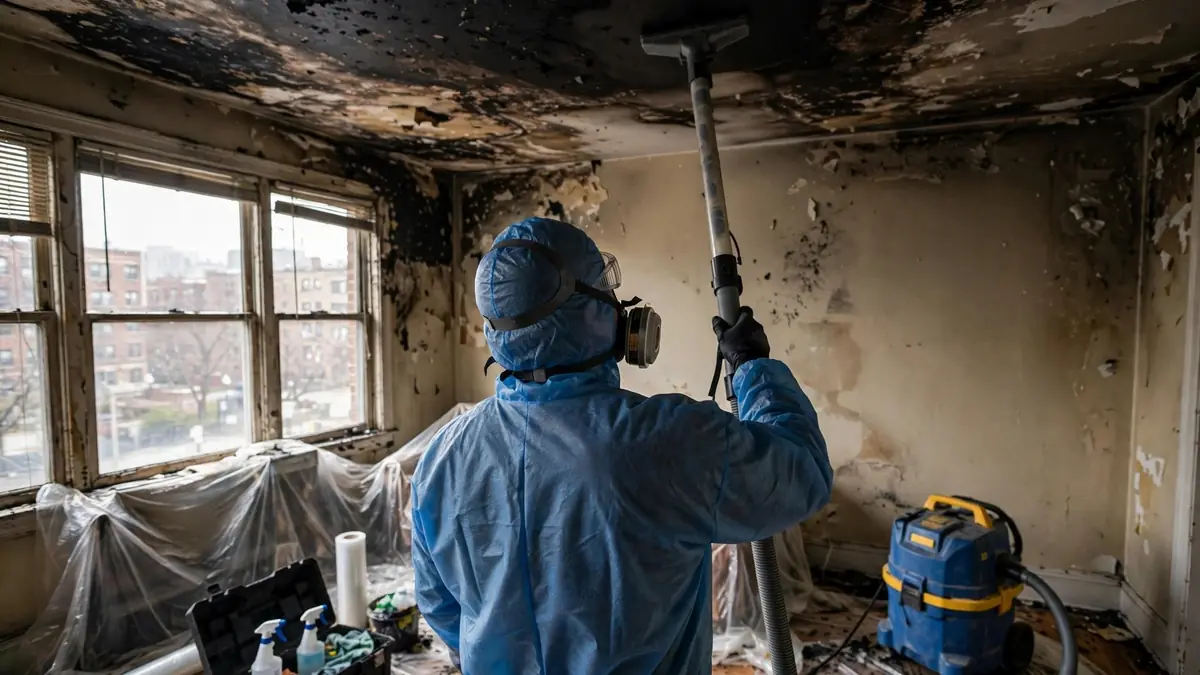
Crews seal work areas, run HEPA air scrubbers and keep negative pressure so soot does not reach corridors or neighbors [2].
Records
Photographing soot first
Photograph soot before cleaning and keep receipts [4].
Lead
Older paint
In pre-1978 homes, sanding or scraping sooty painted surfaces requires lead-safe practices [5].
Surfaces
Why Near North finishes need different methods
Soot behaves differently depending on what it lands on. Polished stone in a tower lobby or kitchen can stain if residue is left to sit. Glass and metal clean easily but can etch over time, so early attention helps. Exposed brick in a River North loft traps particles in its rough face and mortar joints, so it is vacuumed first and cleaned with masonry-safe methods, not pressure washed. Carved woodwork in a Gold Coast house needs gentle work in the details, where a rough cleaner can do real harm.
High-rise windows, large wall-to-ceiling glass and metal frames often take a thin film which is easy to overlook until sunlight hits it. Crews should check those during the final walk-through.
Types
Dry soot, wet smoke and greasy residue
A fast, hot fire tends to leave dry, powdery soot that can be vacuumed and sponged. A slow, smoldering fire leaves a sticky, smeary residue that is harder to lift. A kitchen fire, common in River North restaurants with homes above, leaves a thin greasy film with a strong smell. Each needs a different method, so tell the crew what burned and where. Using the wrong one first can set the residue and make the job harder.
High ceilings
Reaching lofts and grand rooms
Loft ceilings and mansion stairwells can be very tall, and soot rises. Crews may need scaffolding or lifts inside, which takes planning in a tower and care on old floors. Timber beams and decorative plaster at height are often overlooked by quick jobs. Before the crew leaves, look up, use a flashlight and check the tops of beams, ledges and light fixtures.
Avoid
What to avoid before crews arrive
- Wiping walls or ceilings with wet cloths
- Using household vacuums, which can blow fine soot back out
- Touching light-colored fabrics or walls
- Running the HVAC
- Sitting on upholstered furniture
- Scrubbing brick, stone or carved wood
Finish
How to judge the result
A clean surface should show no film on a white cloth, and should not smell of smoke. Use a flashlight held low against walls, which shows streaks that are invisible under normal light. Ask the crew to walk the unit with you and check closet interiors, cabinet tops and the backs of doors. Paint is not a substitute for cleaning, so residue should be removed before any sealer or color goes on.
Fireplaces
Soot from a chimney fire
Wood-burning fireplaces are common in Gold Coast mansions, older walk-ups and Old Town row houses. A chimney fire can send soot through rooms around the fireplace, and sometimes into the attic through a cracked flue. Before the fireplace is used again, have it inspected by a qualified chimney professional. Soot around the hearth often needs dry cleaning first, and stone or brick surrounds need methods suited to the material. Check rooms above and beside the chimney, including closets that share a wall with the flue, as residue may have traveled through small gaps in the masonry.
Questions
What to ask a soot crew
Ask how they will test each surface before cleaning, and which products they plan to use on stone, brick and old wood. Find out whether they will clean inside cabinets and closets or just the visible rooms. In a tower, confirm that management has approved the crew and that corridors will be protected. In a loft, ask how they will reach the tops of beams and ducts. For a historic house, ask whether they have worked on plaster and carved woodwork, and ask to see a small test area first. Keep written notes of the answers for your insurer.
Ask them to label any area they leave for a specialist, such as leaded glass or decorative plaster, so nothing is forgotten. A short written list at the end shows what was cleaned, what was left and who is responsible for the rest.
FAQ
Near North soot questions
Should my chimney be inspected after a fireplace fire?
Yes, before the fireplace is used again.
Can soot be cleaned off a stone fireplace surround?
Usually, with masonry-safe methods tested first.
Can exposed loft brick be pressure washed?
It is not recommended; it can erode old brick.
Does soot etch glass?
Acidic soot can, so glass is cleaned early.
Who cleans soot in my tower corridor?
Usually the building, as corridors are common areas.
Is soot cleanup safe for my neighbors?
Yes, as long as the area is contained and HEPA scrubbers run.