
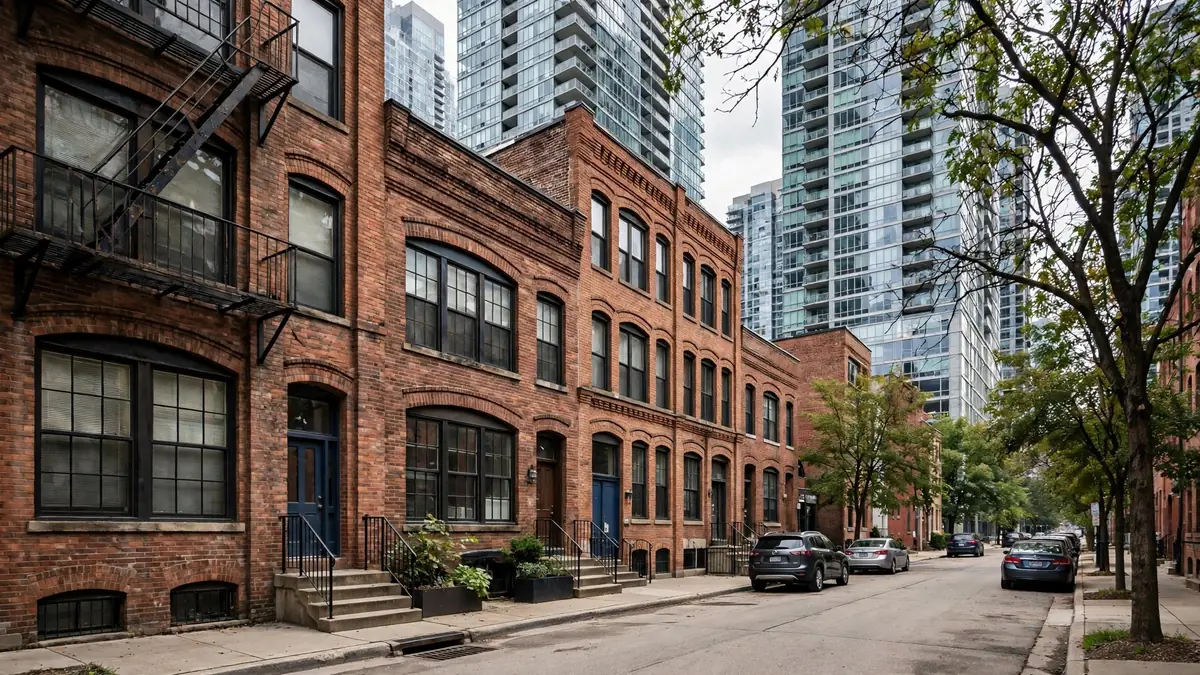
Key facts: Structural Drying in River North and Streeterville
Slabs
Tower slabs
Water under flooring sits on concrete and dries slowly. Flooring is lifted so the slab can dry and be measured.
Lofts
Loft timber and brick
Heavy timber and brick dry slowly; controlled drying prevents checking and cracking [1].
Mansions
Mansion plaster
Plaster and decorative moldings are dried slowly to protect them.
Checklist
Drying checklist
- Dry standards set for each material
- Flooring lifted where water reached the slab
- Every wet unit on one plan
- Daily readings shared
- Management informed
Row houses
Row-house party walls
Water can soak shared walls and neighbors' basements; both homes may need drying.
Mold
Checking afterward
Check closets and floors a few weeks later [2].
Records
The drying log
Daily readings help every insurer [4].
Fire water
Why a fire becomes a drying job
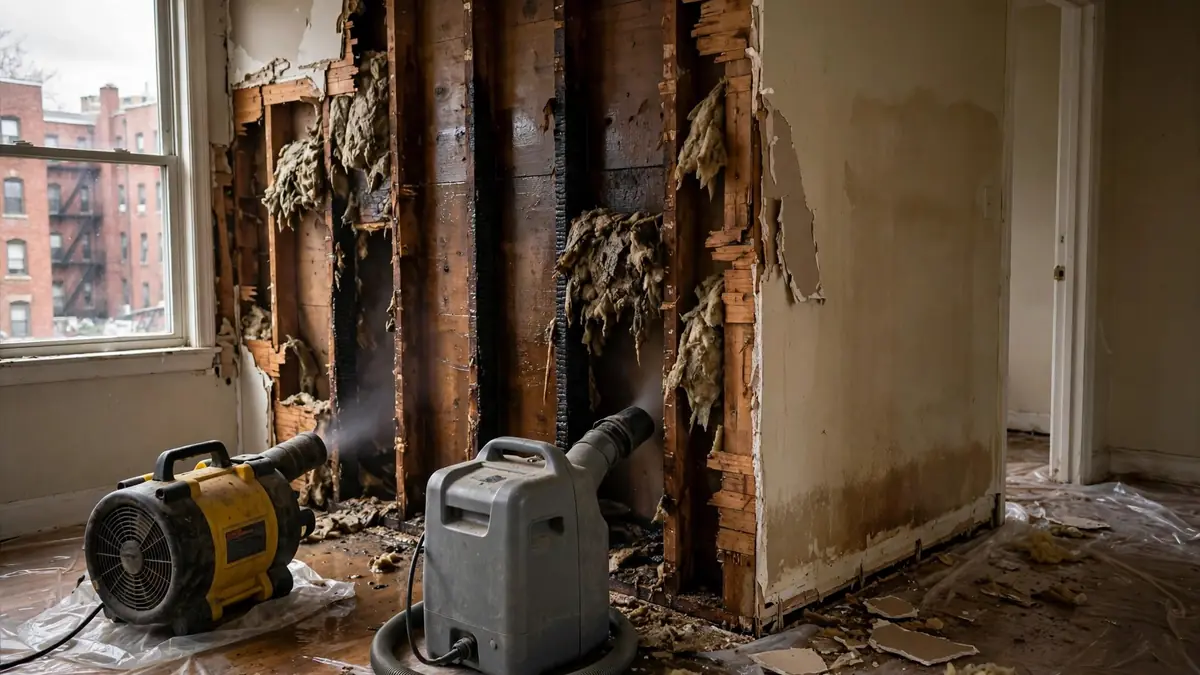
Water from hose lines and sprinklers often reaches more of a building than the fire does. On the Near North Side, that water follows the structure down: through a tower slab into the unit below, along loft timbers, or through plaster and party walls in older houses. Heat from the fire can also leave materials damaged in ways that change how they dry. A drying plan starts with a moisture map that follows the water to wherever it stopped, not simply the rooms that burned.
Slabs
What happens under tower flooring
In newer towers along the river, wood or engineered floors often sit on concrete, sometimes with a sound mat required by the building. Water can be trapped under those layers for a long time and show no sign at the surface. Lifting a section lets the crew measure the slab directly. Concrete gives up water slowly, so it can be the last thing to reach its goal. Installing new flooring on a damp slab invites failure, so ask for a written reading before flooring goes back in. Check whether the building has rules for replacement sound mats.
Stacked units
Following water through several floors
When sprinklers discharge in a tower, the ceiling below one unit is the floor of another. Every wet unit should be on the same plan, with its own readings, even when the owners have different insurers. Absent owners complicate this, since a second home can sit wet for days. Management can often arrange entry, so ask them to check the units under the fire. Wet ceilings can sag and fall, and fixtures may be unsafe, so stay clear until someone qualified has checked them.
Lofts
Controlled drying for timber and brick
Heavy timber holds a lot of water and gives it up gradually. Drying too quickly can open checks and cracks, so crews usually bring humidity down in steps and watch readings. Brick walls can carry water from the outside face to the inside, and salts can bloom on the surface as it dries. These deposits can be brushed off, and they show that moisture is moving. Open-plan lofts have a large air volume, so dehumidifiers need to be sized for the whole space, or a part of it should be contained.
Season
Drying in Chicago weather
Winter air is often dry, but windows are broken or covered and heat may be off, which slows evaporation. Cold spaces need different equipment from warm ones, and frozen pipes can add new water. In humid summer weather near the lake, opening windows may add moisture, so the unit stays closed and the dehumidifiers do the work. Power can also be a limit in a damaged unit. Ask the crew whether the unit's power can run equipment, or whether the building can provide it.
Your part
Keeping the job on track
- Leave equipment running day and night
- Do not move air movers without asking
- Keep windows closed unless told otherwise
- Keep pets and children away from cords
- Tell the crew about new stains or smells
- Share the drying log with your insurer
- Tell management when equipment leaves
Measuring
What the readings should tell you
A good log lists the date, the spot, the material and the reading, alongside a dry reference from an unaffected area of the same material. Numbers should fall over time. If a spot stalls, the crew should explain why, perhaps a hidden pocket of water, a wet wall behind a cabinet or not enough equipment. Thermal cameras can suggest where to look, but a meter confirms it.
Repairs
When repairs can start
Do not let drywall, flooring or paint go back until the readings have reached the goal. Closing a wet wall traps moisture, and that is where mold often begins. Repairs may need permits from the Chicago Department of Buildings, and towers have their own approval process for work in units, so plan for those before the drying crew leaves. Ask the drying contractor to give the final log to whoever handles the repairs.
Equipment
Noise, power and access
Drying equipment runs day and night and can be loud, which is worth raising with management and close neighbors. Equipment also draws a lot of power, so older buildings may need circuits checked before everything is switched on. Crews usually return to take readings and move equipment, so arrange access in advance. In a tower, that may mean a standing permit for the elevator or a note at the front desk. If you are staying elsewhere, leave clear entry instructions and a phone number, so a missed visit does not stretch out the job.
If the building limits working hours, ask whether monitoring visits are allowed outside them. Equipment that keeps running while nobody can reach it still needs checks, so agree a schedule with management before the first machines arrive on the floor.
FAQ
Near North drying questions
Why lift my flooring?
The concrete below cannot dry or be measured otherwise.
How long does drying take?
Often days to two weeks.
Can loft timber be dried without damage?
Yes, if drying is controlled and gradual.
Does my neighbor's row house need drying too?
If water reached it, yes.
How do I know it is dry?
Once its readings match those of dry materials.
Will drying crack plaster?
Drying in steady, controlled stages helps prevent it.