
Key facts: Smoke Damage Cleanup in Loop and South Loop
Towers
Smoke beyond the unit in a downtown tower
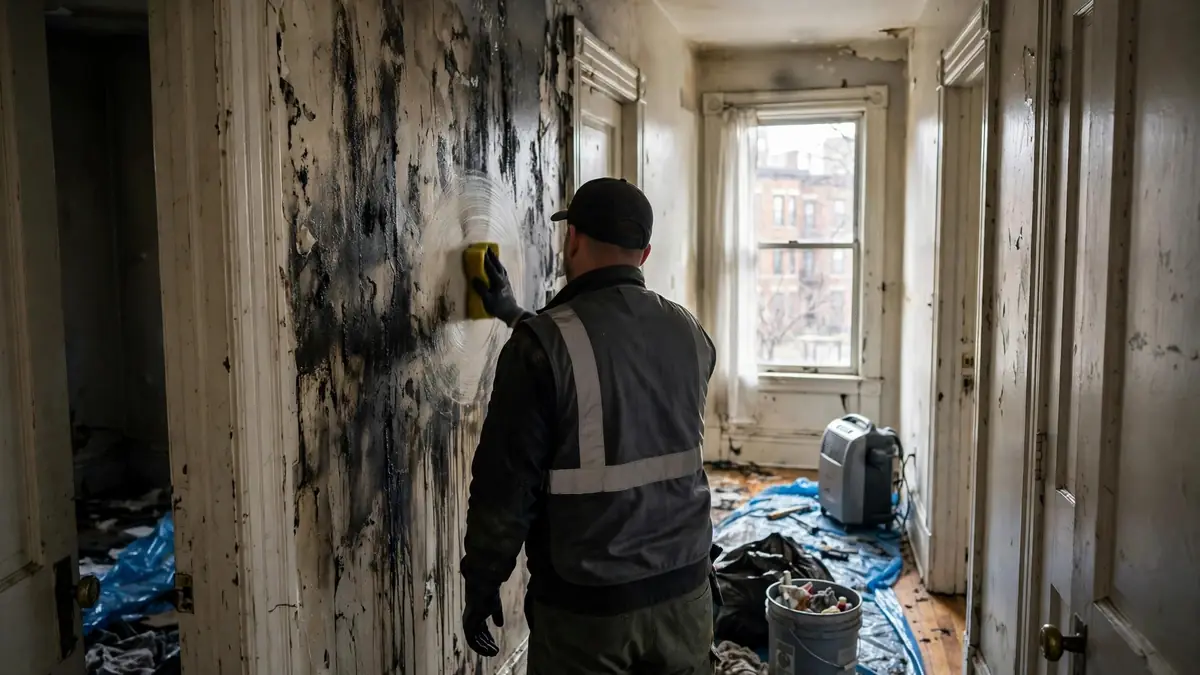
In a residential tower, a fire is usually contained to one unit by the building's construction, but smoke escapes into the corridor when the door opens and can drift through shafts and ventilation into neighboring units. Smoke film on the corridor ceiling and staining around neighbors' doors are common after even a small kitchen fire.
Cleanup inside your unit is your contractor's job under your unit-owner or renter's policy. The corridor, elevator lobbies and building systems belong to the association or owner and are cleaned under the building's policy. Coordinating both at once avoids residue drifting back into a unit that has just been cleaned.
Lofts
Exposed brick and timber in Printers Row lofts
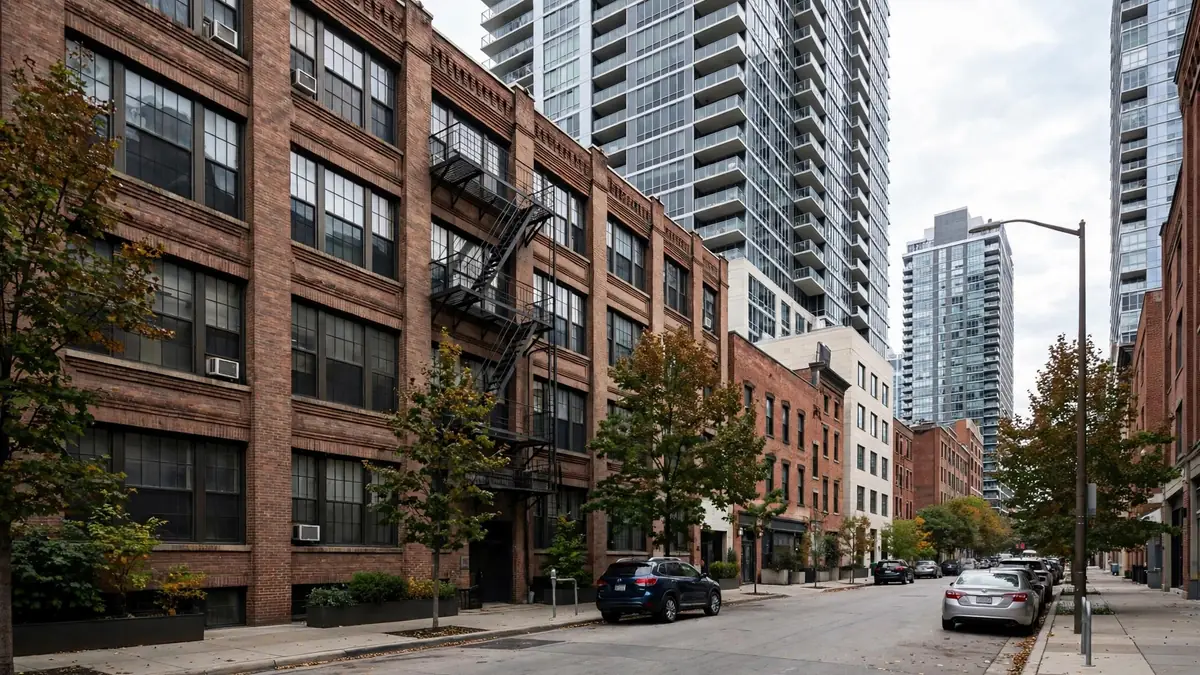
Converted lofts in Printers Row have open plans, high ceilings, exposed brick and heavy timber or iron columns [1]. Smoke fills an open plan quickly and settles into the rough texture of old brick and timber, which holds residue far more than smooth painted drywall.
Brick is HEPA vacuumed and cleaned with masonry-safe methods, never pressure washed. Timber is vacuumed and cleaned gently; surfaces charred by heat may need assessment by a qualified professional. Ductwork exposed along the ceiling is cleaned inside and out.
Townhomes
Attached townhomes in Dearborn Park and Central Station
The South Loop's rail-yard neighborhoods, such as Dearborn Park and Central Station, include attached townhomes and low-rise condos [1]. Smoke from a fire in one townhome can pass through the shared attic or party wall into the next, so neighbors may need cleaning too.
These homes are newer, with drywall, ducted heating and cooling and engineered floors. Smoke film on smooth drywall usually cleans and seals well; ductwork usually needs cleaning.
Before cleaning
What to check after a downtown smoke event
- The corridor outside your unit
- Neighbors' doors and units beside and above
- Exhaust risers and ventilation grilles
- Exposed ducts and timber in lofts
- Shared attic or party walls in townhomes
Converted offices
Apartments in converted commercial buildings
Some downtown residences are in older office or industrial buildings converted to apartments. They often have long corridors and mechanical systems adapted from commercial use, which can carry smoke between units in unexpected ways. Ask management how ventilation is arranged before deciding the scope.
Sprinklers
When the sprinkler did more damage than the smoke
Many downtown buildings are sprinklered. A small fire may set off one head that soaks the unit and those below, so water damage often outweighs smoke damage. Drying comes first; smoke cleaning follows once surfaces are dry enough to clean without smearing.
Logistics
Freight elevators, docks and work hours
Restoration crews downtown work through the building's loading dock and freight elevator, which management schedules, often within set weekday hours. Corridors and elevator cabs are protected. Give the contractor your building name, unit and management contact when you call.
Older finishes
Older loft buildings and lead paint
Landmarks
Printers Row landmark district
Paperwork
Documenting a downtown smoke loss
Photograph your unit before cleaning and keep damaged items for the adjuster, as the Illinois Department of Insurance advises [5]. Ask management for the building's record of corridor damage; it helps your insurer understand where the smoke came from.
Prevention
Preventing kitchen fires in apartments
Cooking is the leading cause of home fires [6]. Stay with the stovetop while cooking, keep a lid nearby to smother a pan fire and never cover or hang anything from sprinkler heads.
Owners and associations
Who handles what in a downtown condo
In a downtown condominium, the declaration usually splits responsibility: the association handles common elements such as corridors, elevators, the structure, the facade and shared mechanical systems, while each owner handles their unit's interior finishes and contents. Where the line sits varies from building to building, so read the declaration or ask the board.
After a fire, both the association's master policy and each owner's unit policy may be involved. The fastest recoveries happen when management, the owners and the restoration contractor share photographs and one schedule, rather than each owner hiring separately and leaving the corridor untouched.
Timeline
How long downtown smoke cleanup takes
A tower unit with light smoke film can often be cleaned in a few days once building access is arranged. Lofts with exposed brick and timber take longer, and any sprinkler water adds drying time before cleaning. Building approvals, elevator bookings and work-hour limits can stretch the calendar even when the work itself is quick, so ask the contractor to schedule around them from the start.
FAQ
Loop and South Loop smoke cleanup questions
Who cleans the smoke-stained corridor outside my unit?
The association or building owner, as a common area. You handle your unit's interior.
Can exposed brick in my Printers Row loft be cleaned?
Usually, with HEPA vacuuming and masonry-safe cleaning. Avoid pressure washing old brick.
Why does my unit have smoke damage when the fire was next door?
Smoke escapes into the corridor and through shafts or ventilation into neighboring units.
My townhome shares a wall with one that burned. Do I need cleaning?
Possibly. Smoke can pass through shared attics and party walls. Have your home assessed.
Does smoke cleanup in a landmark building need approval?
Interior cleaning does not. Some permitted exterior repairs may.
What if the sprinkler went off?
Drying comes first, then smoke cleaning once surfaces are dry.
Do I need building approval before a contractor starts work downtown?
In most towers, yes. Register the crew and share its insurance certificate, then agree who cleans the corridor and when equipment can come up.
Can I stay in my unit during smoke cleanup?
Sometimes, if the damage is limited and the crew can contain the work area. Heavy cleaning usually goes faster with the unit empty, and residents with breathing problems should stay elsewhere.
Should I paint over smoke stains in my condo?
Only after cleaning and sealing with a stain-blocking primer; paint alone lets stains bleed through.
Sources and citations
- [1]Wikipedia — Chicago Loop
- [2]IICRC — ANSI/IICRC S700 Standard for Fire and Smoke Damage Restoration
- [3]U.S. EPA — Lead Renovation, Repair and Painting Program
- [4]City of Chicago — Commission on Chicago Landmarks
- [5]Illinois Department of Insurance — What to do after an insured homeowners loss
- [6]NFPA — Cooking fire safety