
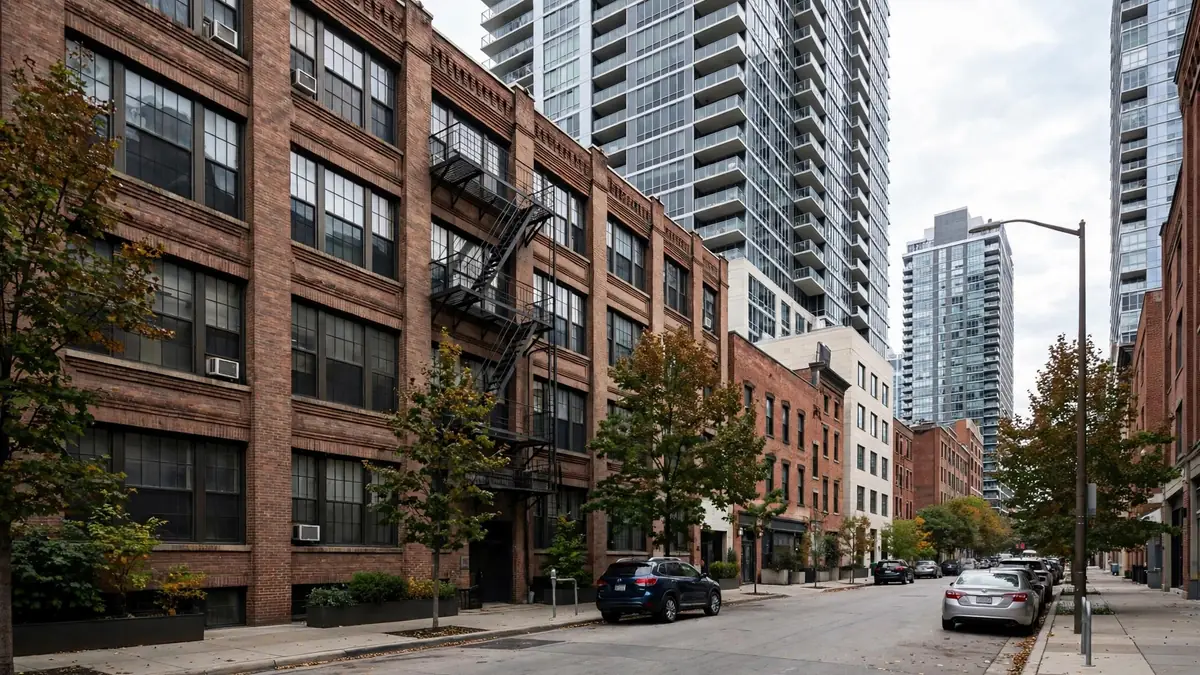
Key facts: Water Damage From Firefighting in Loop and South Loop
Sprinklers
How sprinkler water spreads
A sprinkler head releases water until the zone is shut off. That water runs under walls, through floor penetrations and down plumbing risers into the units below. Building engineers shut off the zone and restore it promptly, so restoration is coordinated with them.
Concrete
Water trapped on concrete slabs
Tower floors are concrete slabs. Water under engineered or wood flooring sits on the slab and dries very slowly. Flooring is often lifted so the slab can dry and accurate readings can be taken; leaving it traps moisture for weeks.
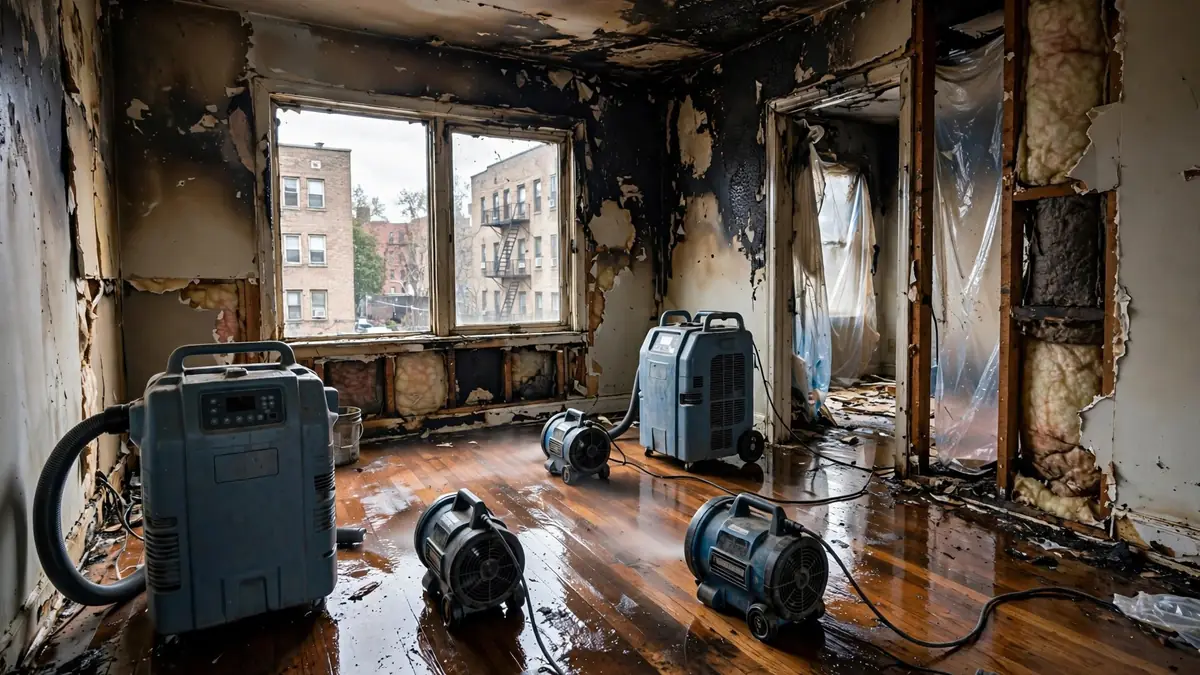
Drywall
Drywall and ceilings
Drywall wicks water quickly. Wet drywall is usually cut out above the wet line so the cavity can dry. Ceilings below are checked for sagging.
First steps
When water comes through your downtown ceiling
- Turn off power to wet areas if safe
- Call management
- Lift belongings off wet floors
- Photograph everything
- Notify your insurer
Absent owners
Units whose owners are away
Many downtown units belong to owners who are away or use them part-time. Management usually grants access so drying can start in every wet unit at once.
Lofts
Water in loft buildings
In Printers Row lofts, wood floors on old timber framing soak up water, and brick walls absorb it. Drying is slower than in new towers; daily readings guide it [2].
Townhomes
Water in South Loop townhomes
In townhomes, water from a fire next door can soak shared walls and basements. Neighbors coordinate drying and claims.
Electrical
In-unit panels and fan coils
Water in the unit's panel or fan coil needs inspection before use. Many buildings require their engineers to be involved.
Mold
Watching for mold
Check closets and under flooring a few weeks later. EPA advises professional help for larger mold areas [1].
Records
Records for several insurers
The daily moisture log and photos help the association's insurer and each owner's insurer [4].
Master policies
The association policy and your unit policy
Sprinkler and hose water often crosses unit lines, so the association’s master policy and several owners’ unit policies may all be involved. Typically the master policy covers common elements and original structure, and unit policies cover interior finishes and contents, but declarations differ. Share the drying log with everyone so each insurer sees the same evidence.
Tenants
Renters below a sprinkler leak
If you rent a unit below the fire, your wet belongings fall under your own renter’s insurance. Move what you can to a dry spot, photograph the rest and ask management when drying equipment will arrive.
Neighbors
When water reaches several units
Sprinkler and hose water rarely stays in one unit. The ceiling of one unit and the floor of the one above are the same assembly, so they must dry together. Share photos and contact details with neighbors early and tell your insurer other units were affected. A single drying contractor working for the building can dry several units at once, which is faster than separate crews.
Belongings
Rescuing belongings from water
Move belongings off wet floors and away from wet walls. Separate wet photographs and papers and air-dry them, or freeze them if they cannot be dried within a day or two. Keep damaged items for the adjuster rather than discarding them.
Lofts
Water in Printers Row lofts
Loft buildings in Printers Row have wood floors on heavy timber framing and brick walls. Water from a fire above soaks floors and timber and wicks into brick. These materials dry slowly; controlled drying with daily readings protects them from checking and cracking.
Timing
Why speed matters downtown
Every hour water sits, it spreads farther along slabs and into units below. Extraction should begin as soon as the area is released, which means arranging building access the same day.
Choosing a crew
What to ask a drying contractor
Ask whether they have dried high-rise units before, how they handle concrete slabs and drywall, whether they keep daily moisture logs and how they coordinate with management for every wet unit.
Electrical
Power and wet units
Do not turn power back on in wet areas yourself. In a tower, the unit's panel, fan coil and outlets are checked by a licensed electrician or the building's engineers before use. The Illinois Department of Insurance advises having electrical equipment checked by a professional after a loss.
Mold
Mold prevention after a sprinkler leak
Water hidden under flooring or inside walls can grow mold if it is not dried promptly. EPA advises drying wet materials within 24 to 48 hours [1]. Lifting flooring and opening wet drywall early is the best prevention.
Choosing equipment
Equipment sized to a high-rise job
Drying several tower units at once takes a lot of dehumidifiers and air movers, all brought up by freight elevator. A contractor who plans the load and power needs before arriving saves a day. Ask how many units they can equip on the first visit.
FAQ
Downtown water damage questions
A sprinkler went off upstairs and my ceiling is leaking. What now?
Turn off power to the wet area if safe, call management, photograph everything and start drying quickly.
Why lift my flooring?
Flooring keeps water on the concrete slab, where it dries very slowly.
Who dries units whose owners are away?
Management usually grants access so all wet units dry at once.
Is sprinkler water damage covered?
Often as part of the fire loss, but policies differ. Ask your insurer.
How long does drying take?
Often days to two weeks; concrete and old timber take longer.
Will mold grow?
Not if materials are dried promptly. Check again after a few weeks.
Do I need building approval before a contractor starts work downtown?
Usually, but wet units should not wait long. Call management at once to register the crew, book the elevator and get access to units below.
Can wet papers and photos be saved?
Often. Air-dry them or freeze them until a specialist can freeze-dry them.
Is sprinkler water dirty?
It can carry debris and residue from the fire area, so soaked porous materials are judged carefully.
Should I turn the power back on myself?
No. Have wet circuits checked first.
How much equipment will be in my unit?
Usually several air movers and one or two dehumidifiers per wet room, reduced as readings improve.
Can the building's sprinkler zone stay off during drying?
Engineers restore it as soon as possible; drying works around it.
Who pays for drying common areas?
The association or owner, under the building’s master policy.
Will the crew lift my rugs?
Yes, wet rugs are lifted and dried or cleaned separately.