

Key facts: Water Damage From Firefighting in Logan Square
Garden units
Why the garden unit floods after a fire upstairs
Most greystones and many two-flats in Logan Square have a garden unit set partly below grade. Firefighting water from the floors above drains through the floor assemblies and collects there, soaking carpet, finished walls and stored belongings. Garden-unit tenants often lose more to water than the household where the fire started.
Extraction starts in the garden unit as soon as the building is released, followed by removal of wet carpet pad, paneling and drywall so the masonry can dry.
Plaster
Heavy, wet plaster ceilings in vintage flats
Plaster on wood lath absorbs a great deal of water and becomes very heavy. If the plaster keys break, the ceiling can sag or fall, sometimes days later. Crews check ceilings by sight and by tapping, and may open a small controlled hole to let water drain safely.
Plaster that stays bonded can usually be dried in place, slowly, with dehumidifiers and air movers. It is worth keeping in buildings where original plaster and moldings are part of the character.
Hardwood
Oak floors that cupped from hose water
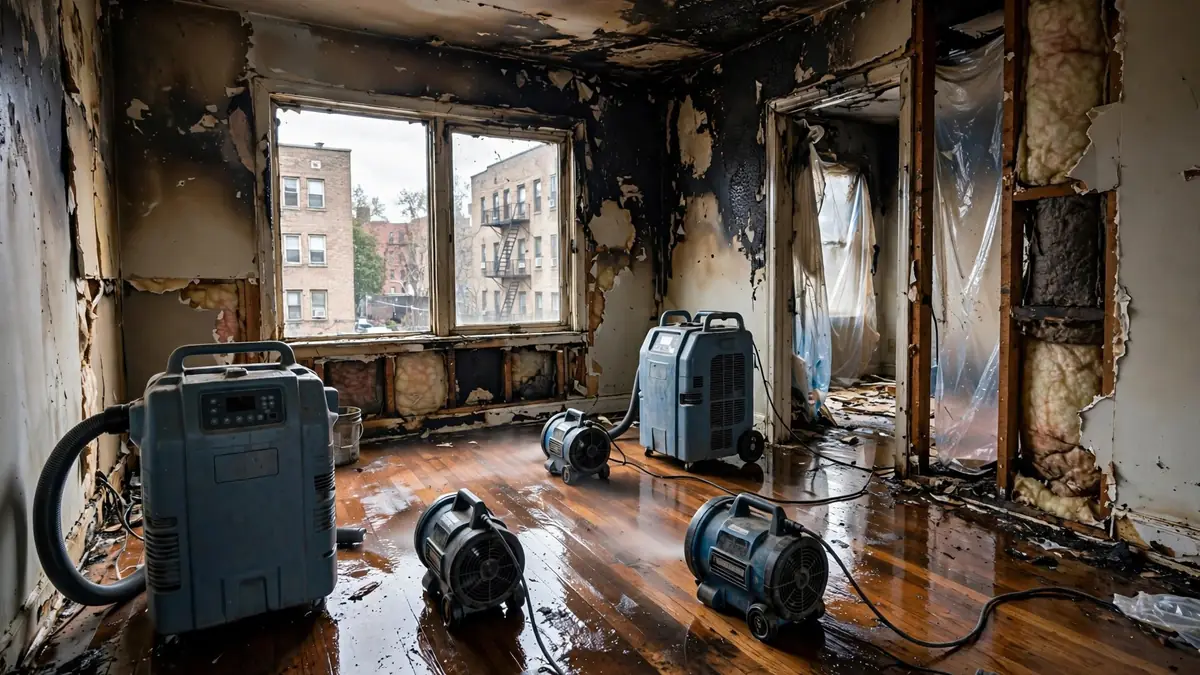
Logan Square's older flats usually have oak floors on plank subfloors. Water from above soaks the boards, which cup as they swell. Floor drying mats and patient, measured drying can often bring them back, followed by sanding and refinishing.
Floors that were already sanded thin over the decades may not survive another refinish. Moisture readings and the condition of the wood should guide the call.
First steps
First steps when fire water reaches your Logan Square unit
- Turn off power to wet rooms if safe
- Stay out from under sagging ceilings
- Lift belongings off the floor
- Photograph every wet surface
- Tell the owner and your insurer
Basements
Boilers, water heaters and electrical panels below
The basement under a greystone or two-flat usually holds the boiler, water heaters, laundry and electrical service for the whole building. Water around that equipment means none of it should run until it has been inspected [2].
If the boiler is out in winter, every flat loses heat, and the plumbing in all of them is at risk of freezing. Temporary heat or draining the system is part of the plan.
Cottages
Water in Bucktown cottages and frame houses
In older frame houses, water from firefighting can run down inside balloon-framed walls from upper floors to the basement [4]. Walls can look dry while their cavities hold water. Moisture meters and thermal imaging find those hidden wet areas.
Insulation that got wet is usually removed so the cavity can dry; leaving it invites mold and odor.
Belongings
Rescuing belongings in the lower flats
Move what you can off wet floors and away from wet walls. Separate wet photographs and papers and let them air dry, or freeze them if they cannot be dried within a day or two. Keep damaged items for the adjuster rather than discarding them [2].
Basement storage areas often hold the household's least-checked belongings: luggage, holiday decorations, old records. Include them in the inventory.
New condos
Sprinkler and hose water in newer buildings
Newer Logan Square condo buildings may have sprinklers. A single head can soak a unit and the one below. Drywall wicks water quickly and is usually cut out above the wet line; engineered floors may delaminate.
The association coordinates common areas; each owner's unit policy covers the interior. Drying all affected units at once avoids moisture trapped between floors.
Drying
Following the IICRC drying approach
Professional drying follows the ANSI/IICRC S500 standard: measure, extract, remove what cannot be dried, dry with controlled equipment and record readings every day [5]. The log shows when each floor is dry enough to rebuild.
Closing up walls before readings are normal is a common cause of mold later.
Records
Keeping the claim straight for every household
Each household documents its own losses. In an owner-occupied two-flat, the owner documents the structure and their own flat; the tenant documents their belongings under renter's insurance. Shared photos of the water path help every insurer understand what happened.
Timing
Why the first day matters in a Logan Square building
Plaster ceilings, oak floors and garden-unit finishes all get worse the longer they sit wet. Extraction on the first day, as soon as the building is released, limits how much water soaks into the layers below and how far it spreads into the masonry.
Arrange alley access and tell the crew how many flats are affected so they bring enough equipment for the whole stack.
Mixed-use
Water in storefronts below apartments
When a fire is fought in an apartment above a Milwaukee Avenue storefront, the business below often takes the water: through its ceiling, onto its stock and into its basement. The business's commercial policy covers its losses; residents above document their own.
Choosing a crew
What to ask a drying contractor in Logan Square
Ask how many flats they will dry at once, how they will handle plaster ceilings and oak floors, whether they keep daily moisture logs and how they will protect the boiler room. Ask how they will coordinate with the smoke cleanup so drying air does not spread soot.
FAQ
Logan Square fire water questions
Why did the fire upstairs flood my garden unit?
Firefighting water drains down through the floors of the building and collects at the lowest level.
Can my plaster ceilings be saved?
Often, if they stay attached and are dried slowly. Sagging plaster is a collapse risk and may have to come down.
Can cupped oak floors recover?
Many do with floor drying systems and refinishing. Floors already sanded thin may need replacement.
What if the boiler got wet?
Have it inspected before use, and protect the building's pipes from freezing while it is off.
Who pays for my belongings in the garden unit?
Your own renter's insurance, if you rent. The building's policy covers the structure.
How long does drying take in a greystone?
Often one to two weeks, longer for thick plaster and masonry or in cold weather. Daily readings show progress.
Is firefighting water dirty?
Yes. It carries soot and debris, so soaked porous materials are judged more strictly than after a clean pipe leak.
Who dries the units below the fire in a greystone?
Usually one drying plan arranged by the owner covers every wet flat and the basement. Each household documents its own belongings for its own insurer.