
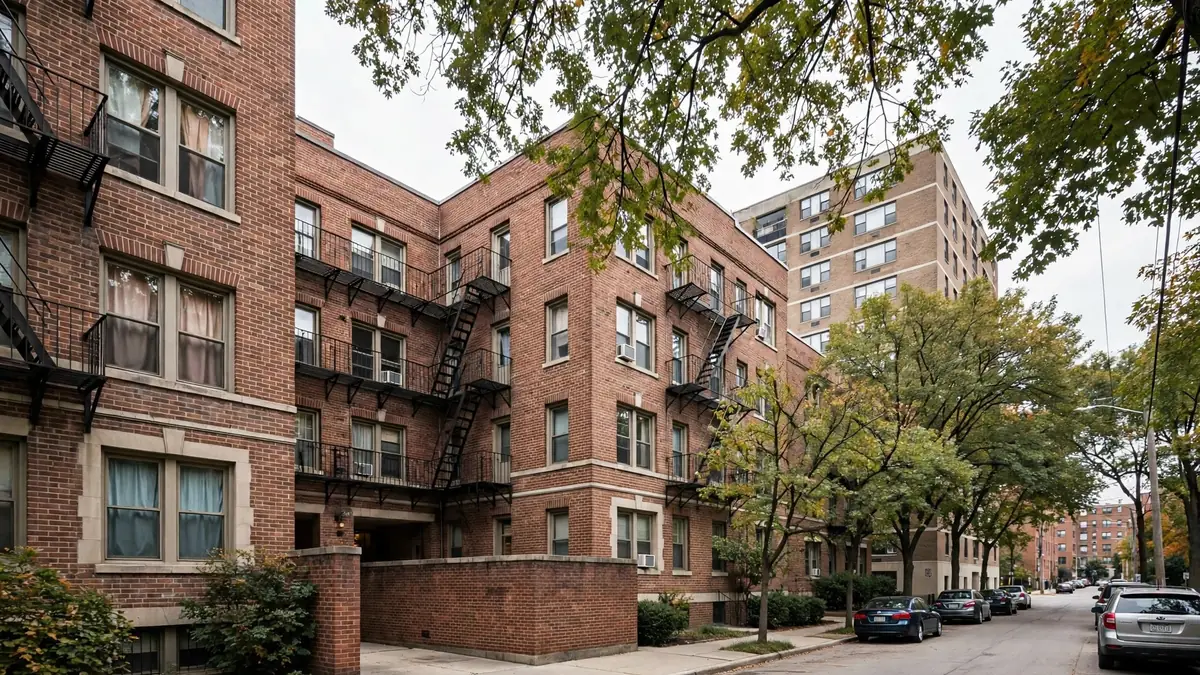
Key facts: Water Damage From Firefighting in Uptown and Edgewater
Six-flats
Water down the stack of a six-flat
In a six-flat, each side's three units sit one above the other. Water from a fire on the third floor soaks the floor assembly and comes through the ceilings of the second- and first-floor units on the same side, then reaches the basement where the boiler and laundry usually are. The garden level often has the most water.
Drying is planned for the whole side of the building, with equipment in each wet unit and readings taken daily [4].
Towers
Sprinkler and hose water in towers
In Sheridan Road towers, sprinkler or hose water runs down through several floors along plumbing risers. Units whose owners are away still need drying, so management usually grants access. Flooring over concrete is often lifted so the slab can dry.
Plaster
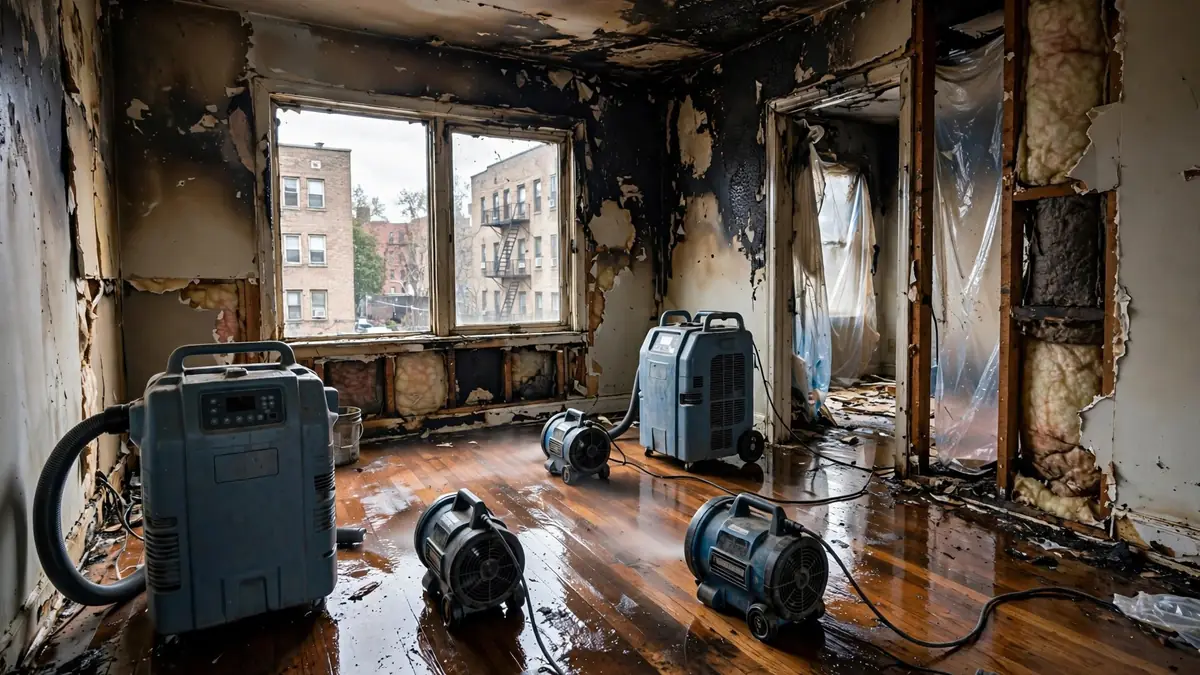
Wet plaster ceilings
Plaster ceilings on wood lath grow heavy when wet and can fall days later if the keys break. Crews check for sagging and may open a controlled hole to drain trapped water. Bonded plaster is dried in place slowly.
First steps
When fire water reaches your unit
- Turn off power to wet rooms if safe
- Keep out from under sagging ceilings
- Lift belongings off wet floors
- Photograph everything
- Tell management and your insurer
Boilers
Central boilers and winter risk
Many older buildings rely on one central boiler. If firefighting water reached the boiler room, heat for every unit may be off until it is inspected. In winter, temporary heat or draining the plumbing protects every unit from frozen pipes.
Renters
Tenants in the units below
Most residents rent. Tenants below a fire often lose more to water than to smoke. Their belongings are covered by their own renter's insurance [2]. Move belongings to a dry spot, photograph everything and keep damaged items for the adjuster.
Storefronts
Water in storefronts below apartments
Mixed-use buildings on Broadway, Argyle and Clark put businesses at street level. A fire fought in the apartments above can soak the business below. The business's commercial policy covers its losses.
Belongings
Rescuing papers and photographs
Separate wet photographs and papers and let them air dry, or freeze them if they cannot be dried within a day or two. Basement storage lockers often hold belongings that are easy to forget; include them in your list.
Mold
Watching for mold
Check closets, under sinks and basement areas a few weeks after drying. EPA advises fixing moisture sources and seeking professional help for larger areas [1].
Records
Drying records for several insurers
The daily moisture log and photos help the building's insurer and each household's insurer. Ask for copies.
Courtyard buildings
Water in courtyard building stacks
Courtyard buildings group units around separate entries. Water from a fire in one entry's stack runs down through that stack's units, usually without crossing into other entries. The basement, often shared, collects what gets through. Drying covers the affected stack and the basement, and the owner or association coordinates access to each unit.
Basement storage lockers in the affected area should be opened and checked; residents often forget belongings stored there.
Hardwood
Hardwood floors in older units
Older Uptown and Edgewater units usually have hardwood floors over plank subfloors. Hose water makes boards cup. Floor drying mats and patient drying often bring them back for refinishing. Floors already sanded thin may need replacement.
Timing
Why speed matters in stacked buildings
Every hour water sits in a stacked building, it spreads farther into floor assemblies and the units below. Extraction should begin as soon as the fire department releases the building. Ask the contractor to bring enough equipment for every wet unit, not just one.
Electrical
Power and wet units
Do not turn power back on in wet areas yourself. Have the building's electrician or a licensed electrician check circuits, outlets and fixtures that got wet before use [2].
Towers
Coordinating drying across tower floors
In a tower, management usually coordinates which units get equipment and when, because owners of wet units below may be away. Moisture maps follow the water down floor by floor, and readings are shared with the association. Concrete slabs dry slowly, so flooring is often lifted. Engineered flooring that delaminated is usually replaced once the slab is dry.
Choosing a crew
What to ask a drying contractor
Ask how many units they will dry at once, how they will handle plaster ceilings and hardwood floors, whether they keep daily moisture logs and how they will protect the boiler room. Ask how they will coordinate with the smoke cleanup so drying air does not spread soot.
FAQ
Uptown and Edgewater fire water questions
Why is my unit wetter than the one that burned?
Water runs down through stacked units, so units below a fire often take most of it.
Who dries the units below the fire?
Usually one plan arranged by the owner or association covers every wet unit.
Can my plaster ceiling be saved?
Often, if it is still bonded and dried slowly.
Does my landlord's insurance cover my wet belongings?
No. A renter's own policy, if there is one, is what covers belongings soaked by the water.
What if the boiler was flooded?
It is inspected before use, and the building's pipes are protected while it is off.
How long does drying take?
Often days to two weeks, longer for plaster and in cold weather.
Is Rogers Park covered as well as Uptown and Edgewater?
Rogers Park is outside the list. Firefighting water calls are covered in Uptown 60640 and Edgewater 60660, south of Devon Avenue.
Can my hardwood floors be saved?
Often, with floor drying and refinishing. Thin, worn floors may need replacement.
Should I turn the power back on myself?
No. Have an electrician check wet circuits first.
Who decides when drying is finished in a tower?
The drying contractor's readings, shared with management and owners. When materials read normal, equipment comes out.
Is fire hose water dirty?
Yes. It carries soot and debris, so porous materials it soaked are judged more strictly than after a clean pipe leak.
Will my landlord dry my unit?
The owner normally arranges drying of the structure. Your belongings are your own renter's insurance matter.
Can wet papers be saved?
Often. Separate them and air-dry them, or freeze them if they cannot be dried within a day or two, until a specialist can freeze-dry them.
Is fire hose water damage part of the fire claim?
Generally, as part of a covered fire, though policies differ. Document it alongside the fire damage.