
Key facts: Water Damage From Firefighting in Lakeview
- EPA advises drying wet materials and belongings within 24 to 48 hours to prevent mold [1].
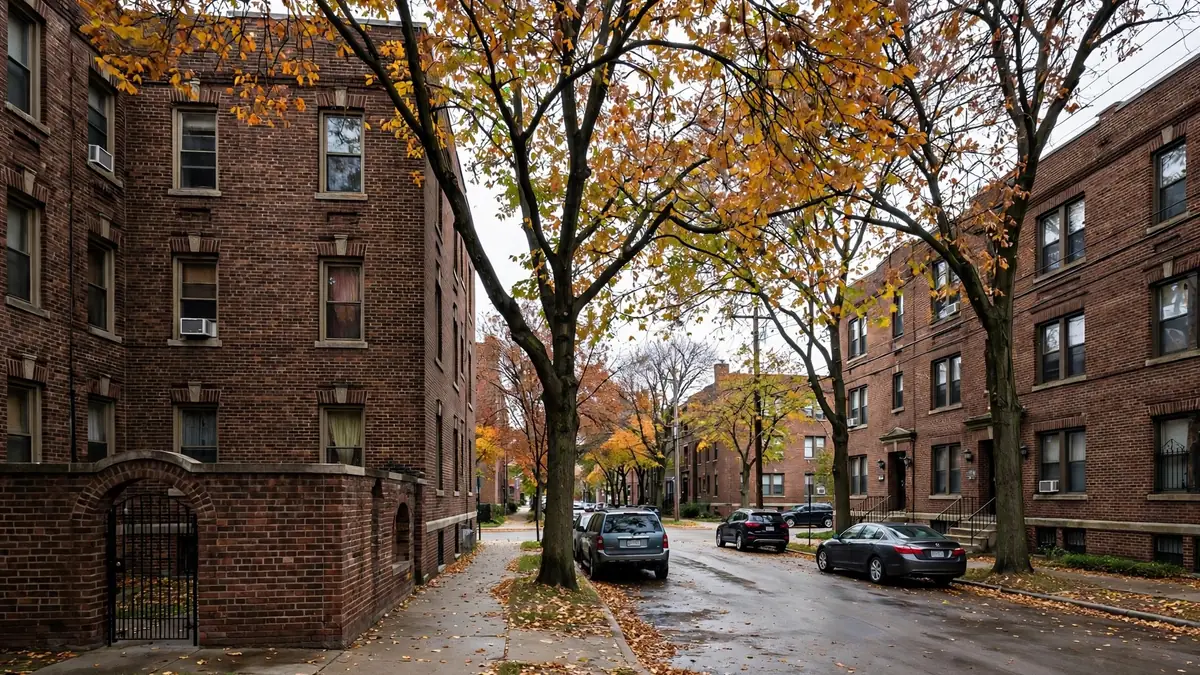
- Lakeview's courtyard buildings and walk-ups stack units vertically, so water follows the stack downward [2].
- Illinois insurance guidance says to remove water, ventilate and dry the property as soon as possible [3].
Stacked units
Why the flat below often has the worst damage
In Lakeview's three-story walk-ups and courtyard entries, each floor sits directly on the one below, with the stair and plumbing stacked in line [2]. Water from hose lines on the top floor soaks the floor assembly, runs along joists and pipes, and comes through the ceiling of the flat below, sometimes two floors down. The garden or basement unit collects whatever reaches the bottom.
That is why drying in a Lakeview building is planned for the whole stack. The moisture map follows the water from the fire unit down to the basement, and every wet unit gets equipment at the same time.
Plaster
Wet plaster ceilings in vintage Lakeview flats
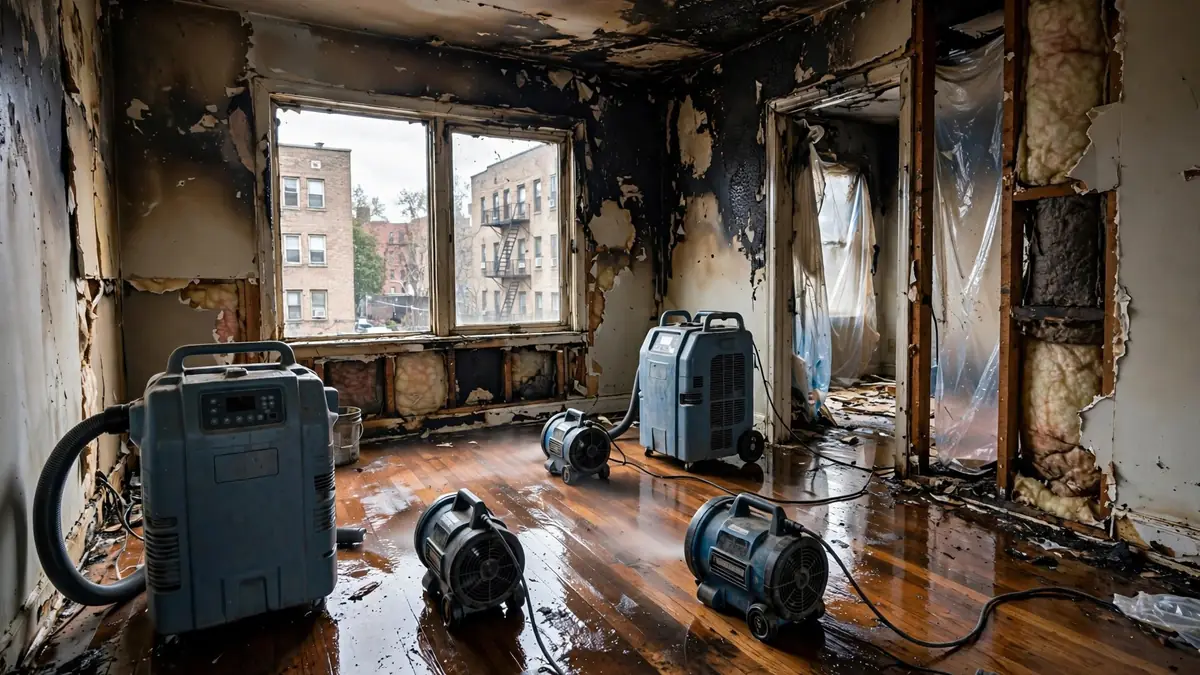
Most of the area's older buildings have plaster ceilings on wood lath. Plaster holds water and becomes very heavy; when it soaks long enough, the keys that grip the lath can break, and a ceiling that survived the fire may drop days later. Contractors check for sagging and hollow sounds, and may open a controlled hole to let trapped water drain.
Plaster that stays attached can usually be dried in place with dehumidifiers and air movers. It dries slowly, so expect daily moisture readings for a week or more.
Garden units
Basements and garden apartments at the bottom of the stack
Many Lakeview two-flats and walk-ups have a garden unit or a basement holding the boiler, water heaters and laundry. Firefighting water ends up there, soaking carpet, paneling and stored belongings. Finished walls usually come out so the masonry behind them can dry.
Equipment that sat in water, especially the boiler that heats the whole building, needs inspection before it runs again. In winter, losing that boiler means protecting every unit's pipes from freezing.
First steps
First steps when fire water reaches your Lakeview unit
- Shut off power to wet rooms if you can do so safely
- Keep out from under sagging ceilings
- Lift belongings off wet floors and away from walls
- Photograph every wet ceiling, wall and floor
- Tell your landlord or association and your insurer
Towers
Sprinkler and hose water in lakefront high-rises
In the condo towers along Lake Shore Drive, a sprinkler or hose line can send water down through several floors along plumbing risers. Units whose owners are away still need drying, so management usually grants access. The floor of one unit is the ceiling of the next, so drying is coordinated floor by floor.
Engineered flooring over concrete often has to be lifted so the slab can dry; leaving it traps moisture for weeks.
Winter
Freezing risk after a winter fire in Lakeview
Lake winds and January cold make an unheated, wet building a frozen-pipe risk within a day or two. If the fire knocked out the building's heat, the restoration plan includes temporary heat or draining the plumbing in unoccupied units.
Ask the drying contractor and a plumber to coordinate, especially if units below the fire are empty while tenants stay elsewhere.
Paperwork
Water damage, several households and several insurers
Each tenant's belongings fall under their own renter's insurance, and the building's policy covers the structure. The Illinois Department of Insurance notes that a landlord's policy does not cover a tenant's property [3]. Photographs from the first day in every wet unit make those separate claims easier.
Drying records, including the daily moisture log, follow the IICRC S500 approach and are worth sharing with each insurer involved [4].
Floors
Old hardwood floors between Lakeview flats
The hardwood floors in Lakeview's older flats often sit on plank subfloors over solid joists. Hose water soaks down through the boards and the planks, and the boards cup as they swell. Many of these floors can be saved with floor drying mats and slow, measured drying, then sanded and refinished once readings return to normal.
Floors that stayed wet too long, or were already worn thin from earlier sanding, may be better replaced. The decision should rest on moisture readings and the condition of the wood, documented with photos for the adjuster.
Belongings
Wet belongings in the flats below the fire
Tenants in the units below a fire often lose more to water than to smoke. Boxes on closet floors, rugs, books and electronics soak up water quickly. Move what you can to a dry room, separate wet papers and photographs, and keep wet items for the adjuster rather than throwing them away.
The Illinois Department of Insurance suggests listing items room by room if you have no inventory [3]. A contents crew can pack out wet belongings for drying and cleaning while your unit is dried.
Timing
How quickly drying starts after a Lakeview fire
Drying should begin as soon as the fire department releases the building. In a busy neighborhood, that means arranging equipment delivery and alley access the same day, because every day a plaster ceiling stays wet raises the risk of collapse and mold.
FAQ
Lakeview fire water damage questions
Why is my Lakeview garden unit flooded when the fire was upstairs?
Firefighting water runs down through the floors of stacked buildings and collects at the lowest level, usually the garden unit or basement.
Can my plaster ceiling be saved after hose water?
Often, if it is still attached to the lath and dried properly. A sagging or detached plaster ceiling is a collapse hazard and may need to come down.
Who dries the units below a fire in a courtyard building?
Usually one drying plan for the whole stack, arranged by the owner or association, works best. Each household documents its own belongings.
Does sprinkler water in a lakefront condo get dried by the building?
The association typically handles common elements; owners handle unit interiors. Management usually coordinates access so all wet units dry at once.
What if the boiler got wet in the fire?
Have a heating professional inspect it before use. In cold weather, protect the building's pipes while the heat is off.
Can water-soaked hardwood floors in my Lakeview flat be saved?
Often, with floor drying systems and patience, followed by sanding and refinishing. Badly cupped or thin, worn floors may need replacement.
Is fire hose water dirty?
Yes. It picks up soot, ash and debris as it moves through the building, so porous materials it soaked are judged more strictly than after a clean pipe leak.