
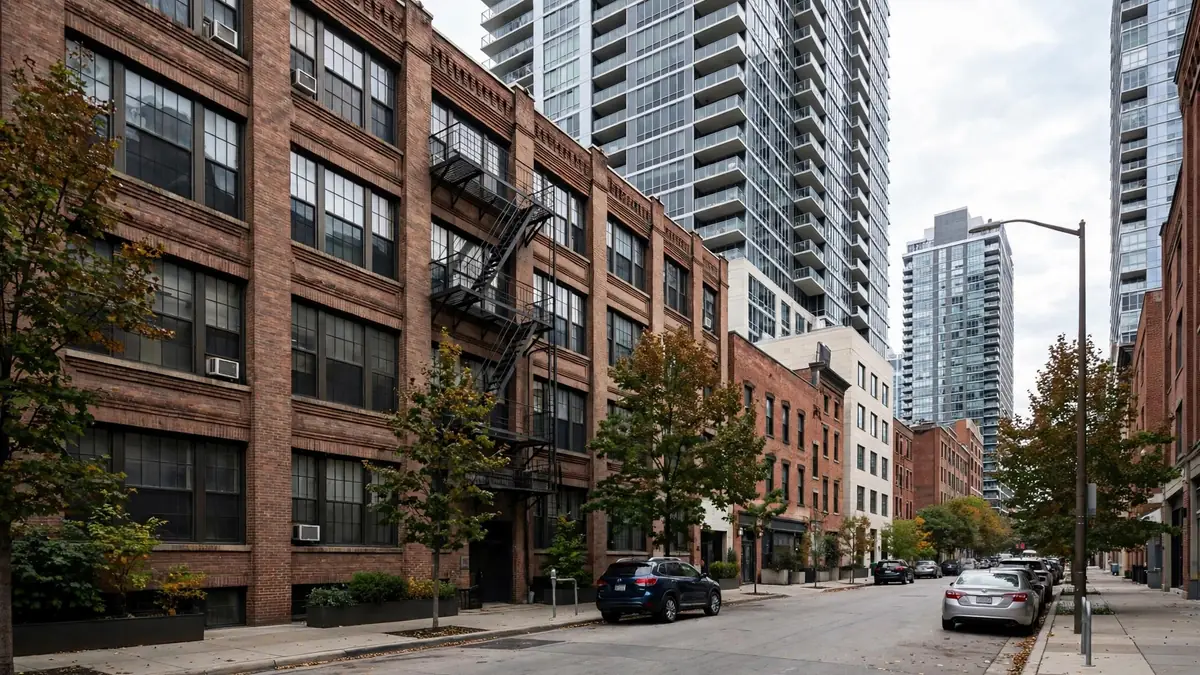
Key facts: Structural Drying in Loop and South Loop
Slabs
Drying concrete slabs
Water under flooring sits on the concrete slab and dries slowly. Flooring is often lifted so dehumidifiers and air movers can reach the slab, and readings are taken in the concrete.
Drywall
Drywall and cavities
Drywall wicks water and is usually cut out above the wet line. Cavities are dried with directed airflow.
Lofts
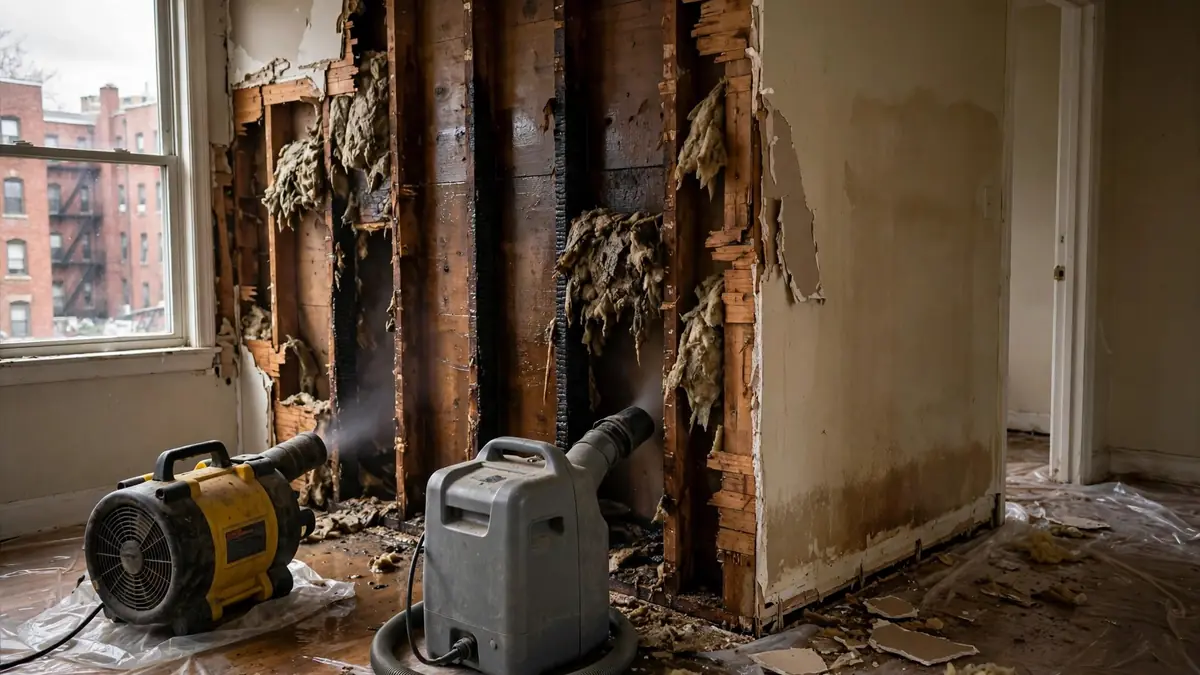
Timber and brick in lofts
Old timber and brick hold water and dry slowly. Controlled drying protects them from checking and cracking [1].
Checklist
Drying checklist downtown
- Dry standards for concrete, drywall and wood
- Flooring lifted where water reached the slab
- Every wet unit on one plan
- Daily readings shared
- Building engineer informed
Stacks
Drying several floors at once
Water moves down through several units. One plan covers every wet unit, with management granting access.
Power
Powering equipment
Equipment runs from circuits confirmed safe, coordinated with the building.
Mold
Checking afterward
Check closets and under reinstalled flooring a few weeks later [2].
Records
The drying log
Daily readings help every insurer involved [4].
Access
Getting into every wet unit
Drying several stacked units means getting into each of them, including ones whose owners are away or tenants have moved out temporarily. Management usually grants access and keeps keys, and the drying contractor logs every entry. Without that, one dry unit can sit next to a wet one and trap moisture in the shared floor.
Timeline
A typical downtown drying job
Day one is extraction, lifting flooring and cutting wet drywall, and setting up equipment in each wet unit. Following days are readings and adjustments, with equipment concentrated where readings stay high. Concrete slabs and old timber usually set the pace. When every material reads normal, equipment leaves and repairs begin.
Contents
Belongings during drying
Furniture against wet walls blocks airflow. Belongings are moved to the center of rooms, raised or packed out. Wet papers and photos are dried or frozen.
Choosing a crew
Questions for a drying contractor
Ask how they set dry standards for concrete, drywall and wood, how often readings are taken, whether every wet unit is on one plan and how equipment will be powered. Ask for the daily log in writing.
Electrical
In-unit panels and equipment
Water in a unit's electrical panel or fan coil means they are inspected before use, often by the building's engineers or a licensed electrician.
Slabs
How concrete slabs are measured
Concrete holds moisture deep inside, so surface readings can mislead. Contractors take readings at several points and depths and compare them with dry areas of the same slab. Flooring goes back only when the slab reads normal; otherwise trapped moisture can cause mold or adhesive failure.
Lofts
Drying timber floors and brick
In Printers Row lofts, plank floors on heavy timber and brick walls dry slowly. Dehumidifiers and air movers run with gentle warmth, and readings are taken in the timber itself. Rushing it with high heat can check timber and crack old brick.
Mold watch
Checking after drying
Check closets, under sinks and along reinstalled flooring a few weeks after equipment leaves. EPA advises fixing moisture problems quickly and seeking professional help for larger mold areas [2].
Proof
Keeping the drying record
Keep the moisture map, readings and photos. They show every insurer the unit was dried properly and answer future buyers' questions.
Drywall
Cutting and drying drywall
Drywall wicks water quickly, and wet drywall over a concrete or steel-stud wall dries poorly in place. Crews cut it out above the wet line, dry the cavity with directed airflow, and replace it after readings are normal. Insulation in exterior walls that got wet is removed too.
Power
Powering the equipment
Equipment runs only from circuits confirmed safe by an electrician or the building's engineers, or from temporary power. In a tower, several units' equipment may need coordinated power.
Townhomes
Drying South Loop townhomes
Townhomes in Dearborn Park and Central Station are drier projects than towers in some ways, with wood framing and drywall rather than concrete slabs, but water from a fire next door can soak the shared wall and the basement. Both homes may need equipment, and the owners coordinate access and claims.
Neighbors
Coordinating with neighbors below
When water reaches the unit below yours, the neighbor's ceiling and your floor dry together. Share contact details and photos early, and ask management to coordinate access so equipment runs in both units at once.
FAQ
Downtown drying questions
Why lift my flooring?
So the slab can dry and be measured.
How long does drying take?
Often days to two weeks; slabs and timber take longest.
Can lofts be dried without damaging timber?
Yes, with controlled drying.
Who coordinates drying across floors?
Management, with the contractor.
How do I know it is dry?
When readings match dry materials.
Will mold grow under my floor?
Not if the slab is dried before flooring goes back.
Do I need building approval before a contractor starts work downtown?
Generally. Dehumidifiers come up on the freight elevator and run for days, so get the crew registered and tell management how much power and noise to expect.
Can I stay in my unit during drying?
Sometimes, but equipment is loud and runs around the clock. Many residents stay elsewhere for the first days.
Why is drywall cut out?
Drywall wicks water quickly; cutting above the wet line lets the cavity dry.
How do you know a concrete slab is dry?
Readings at several points and depths match dry areas of the same slab.
Will drying damage my unit?
Controlled drying is designed to protect finishes and materials while removing water.
Who confirms the unit is dry?
The contractor's readings, compared with dry areas, shared with you and management.
Do townhomes dry faster than tower units?
Often, because there is no concrete slab, but shared walls and basements may need drying too.
Can drying start before the adjuster visits?
Yes. Drying prevents further damage and should start promptly; document everything first.
Why does drying take longer in old lofts?
Heavy timber and brick hold water deep inside and must dry slowly to avoid checking and cracking.
Does flooring always need to be lifted?
Only where water reached the slab underneath. Readings show where that is.
Can drying equipment trip the building’s circuits?
It can if too much runs on one circuit. Crews spread the load or bring temporary power.
Will mold grow under my reinstalled floor?
Not if the slab reads dry before flooring goes back. Check again after a few weeks.
Do I need to be home during drying?
No. Management can give the crew access to take daily readings.
Who powers the equipment overnight?
It runs continuously from approved circuits or temporary power.