
Key facts: Structural Drying in Logan Square
Materials
Why greystones dry slowly
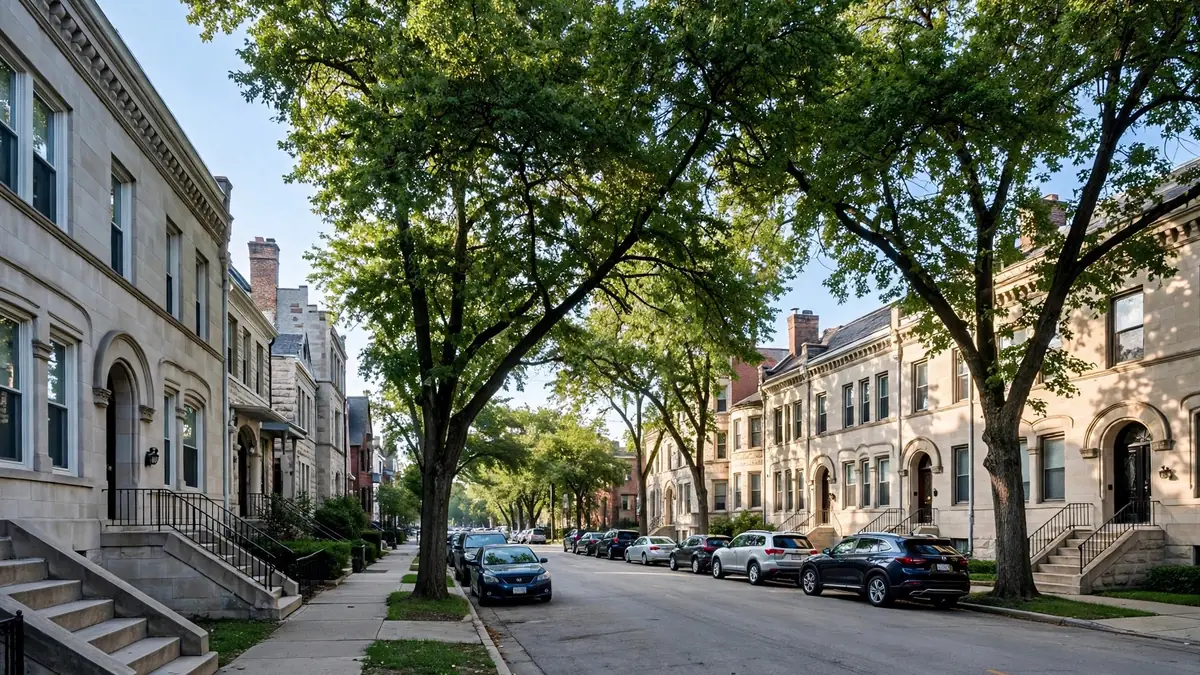
A greystone's limestone front, brick side walls, plaster interiors and oak floors on plank subfloors all hold water [3]. Hose water that soaked them leaves slowly, and drying too fast cracks plaster and splits boards. Controlled dehumidification and airflow with daily readings is the approach [1].
Expect drying to take longer than in newer construction, especially in the garden unit and basement.
The stack
Drying all the floors together
Water moves down through each floor, so the ceiling of one flat and the floor of the one above are one wet assembly. A single plan covering every affected flat, from the fire floor to the basement, avoids trapping moisture between them.
Garden units
Masonry and finishes in the garden unit
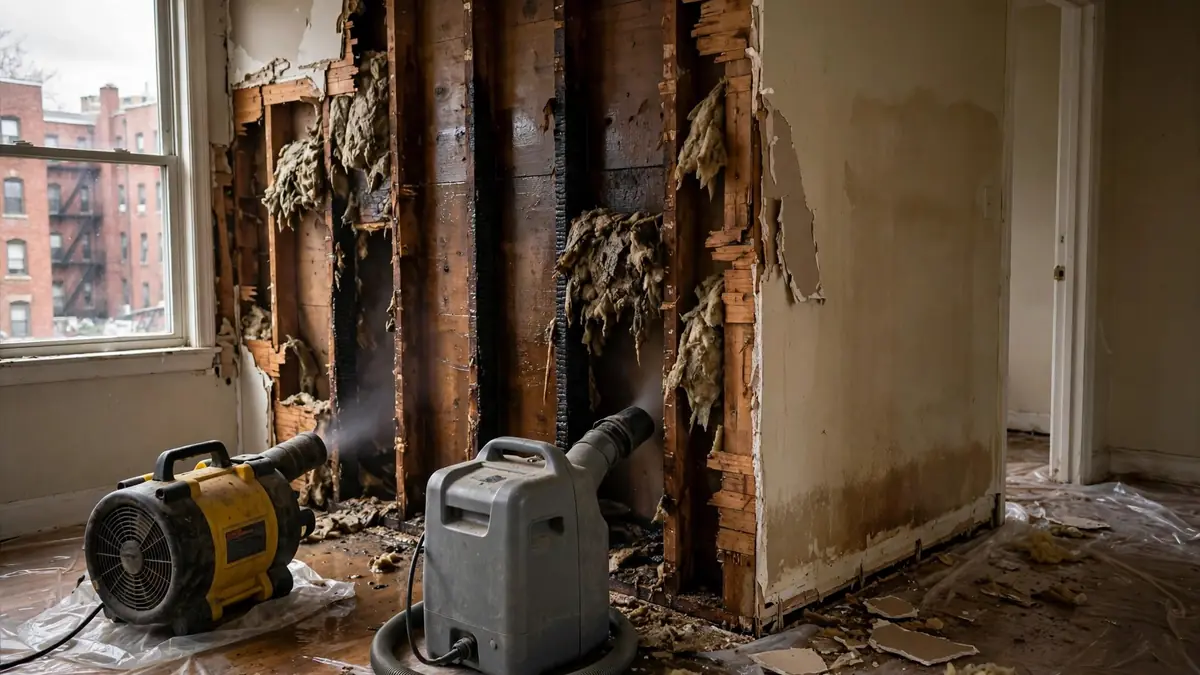
Garden units sit against foundation masonry. Paneling, drywall and carpet there usually come out so the walls and floor can dry. White efflorescence on brick shows water moving through it.
Checklist
Drying checklist for a Logan Square building
- Dry standards for plaster, wood and masonry
- Moisture map from the fire flat to the basement
- Wet finishes removed in the garden unit
- Heat or pipe protection in winter
- Daily readings shared with every household
Cottages
Wall cavities in frame houses
Balloon-framed cottages let water run inside the walls from upper floors to the basement [4]. Thermal imaging and meters find wet cavities, and small holes or cavity drying systems dry many walls without large openings.
Lead
Opening walls safely
When walls must be opened in pre-1978 buildings, lead-safe practices apply to painted surfaces [5]. Small openings preserve original plaster and limit dust.
Winter
Cold-weather drying
Winter fires often leave a greystone's single boiler off. Cold rooms slow drying, so crews use temporary heat or desiccant dehumidifiers, and the plumbing in every flat must be protected from freezing.
Power
Running the equipment safely
Drying equipment needs a lot of power. It should run only from circuits an electrician has confirmed safe, or from temporary power. Do not reset breakers in wet areas yourself.
Mold
Checking for mold afterward
Look again a few weeks after drying in closets on exterior walls and the basement. EPA advises fixing moisture sources and seeking professional help for larger mold areas [2].
Records
The drying log and your claim
Daily readings, the moisture map and photos show insurers the building was dried properly. The Illinois Department of Insurance advises documenting mitigation and keeping receipts [6].
Floors
Drying oak floors over plank subfloors
Most Logan Square greystones and two-flats have oak strip flooring nailed over a plank subfloor, which sits on old-growth joists. Hose water soaks down through all three layers. The boards cup as their undersides swell, and the planks below can hold water long after the surface feels dry.
Floor drying mats pull moisture up through the boards while dehumidifiers dry the room air and air movers work under the floor from the flat below where the ceiling has been opened. Readings are taken in the boards, the subfloor and the joists. Refinishing waits until all three are back to normal, or the boards will move again after sanding.
Ceilings
Plaster ceilings between flats
The plaster ceiling of the lower flat is the underside of the floor above it. When water sits on top of that plaster, the safest move is often a small controlled opening to drain it and to let air into the joist space. That opening is far easier to patch than a whole ceiling that drops.
Joist bays between flats are dried with air directed into the openings and dehumidifiers in both units. The crew records readings in the plaster, the lath where it can be reached and the joists themselves.
The 606 and alleys
Getting drying equipment into Logan Square buildings
Drying a whole greystone can take a truckload of dehumidifiers, air movers and air scrubbers. Most buildings are reached best from the alley; homes along The 606 trail or on the boulevards may have limited rear access. Equipment is carried up narrow front stairs, so crews plan the load carefully.
Tell the crew about access quirks when you call. A wasted first trip is a lost drying day.
Neighbors
When the water crossed the gangway
On Logan Square's narrow lots, firefighters sometimes work from the neighboring property, and hose water can soak the side wall, basement window wells or yard of the house next door. Basements on both sides of the gangway may take water.
The neighbor documents and claims their own damage through their own insurer. If the same drying crew can work both basements at once, the work usually goes faster for everyone.
Timeline
What a typical Logan Square drying job looks like
Day one is extraction, removal of wet finishes in the garden unit and setting up equipment through the stack. The following days are readings and adjustments: equipment comes out of areas that have reached their dry standard and is concentrated where readings are still high. Plaster, masonry and oak floors usually set the pace.
When every material in every affected flat reads normal, the equipment leaves and repairs can begin. Ask for the final readings in writing before drywall or flooring goes back.
Choosing a crew
Questions for a Logan Square drying contractor
Ask how they set dry standards for plaster, oak and masonry, how often readings are taken, whether every affected flat is on one plan and how they will power equipment safely. Ask for the daily log in writing.
FAQ
Logan Square drying questions
How long does drying take in a greystone?
Often one to two weeks, longer for thick plaster, masonry and cold weather.
Can original plaster be dried in place?
Usually, if it is still bonded to the lath and dried slowly.
Do garden-unit walls have to come out?
Finished walls usually do, so the masonry behind them can dry.
Will drying crack my plaster?
Controlled drying is designed to prevent that by avoiding high heat.
How do I know the building is dry?
When readings in wet materials match dry materials of the same type.
What if the boiler is off in winter?
Temporary heat or draining the plumbing protects the pipes while drying continues.
Can my oak floors be refinished right after drying?
Floors should rest at normal moisture for a while before sanding, so they do not move again afterward.
Does drying equipment have to run in every flat?
In every flat that took water, yes. The ceiling of one flat and floor of the next are one assembly, so drying only one side traps moisture between them.
Can I stay in my Logan Square flat during drying?
Sometimes, but equipment runs day and night and is loud. Many households stay elsewhere for the first several days.
Sources and citations
- [1]IICRC — ANSI/IICRC S500 Standard for Professional Water Damage Restoration
- [2]U.S. EPA — A brief guide to mold, moisture and your home
- [3]Wikipedia — Greystone (architecture)
- [4]Wikipedia — Balloon framing
- [5]U.S. EPA — Lead Renovation, Repair and Painting Program
- [6]Illinois Department of Insurance — What to do after an insured homeowners loss