
Key facts: Structural Drying in Lakeview
Old materials
Plaster, lath and old joists hold water longer
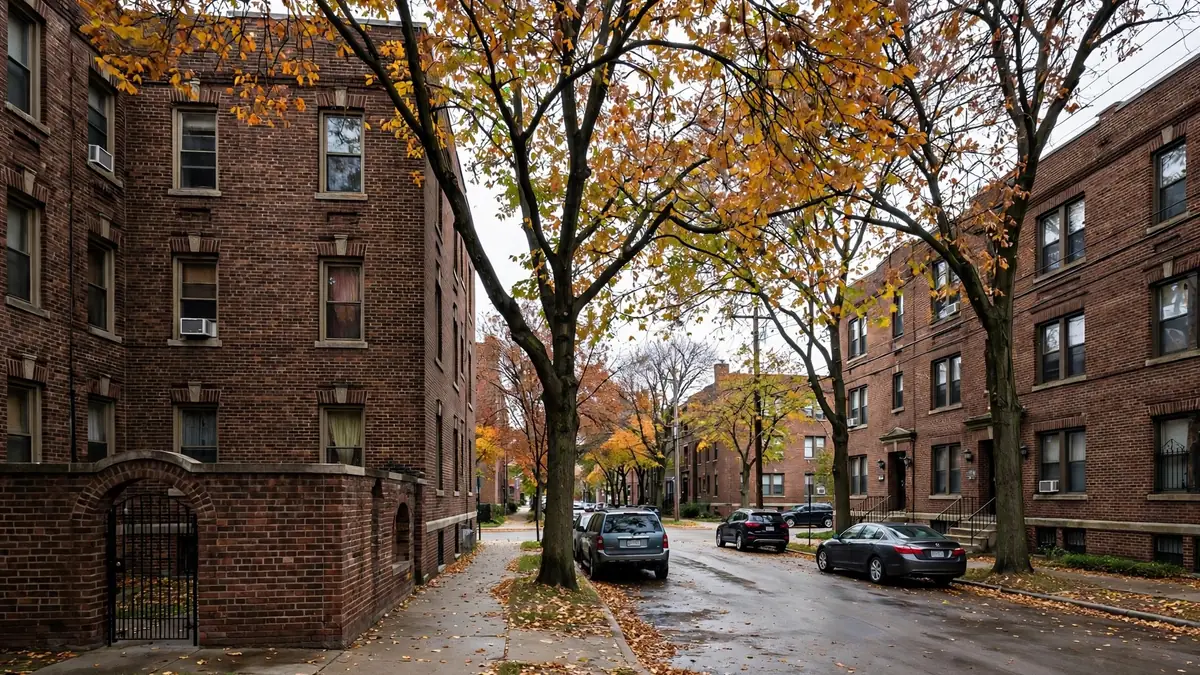
In Lakeview's walk-ups and courtyard buildings, the floor between units is often old-growth joists with plank subfloor, topped by hardwood and plastered below. Water from a fire soaks into every layer. Dense old lumber and thick plaster release moisture slowly, so drying takes longer than in newer construction.
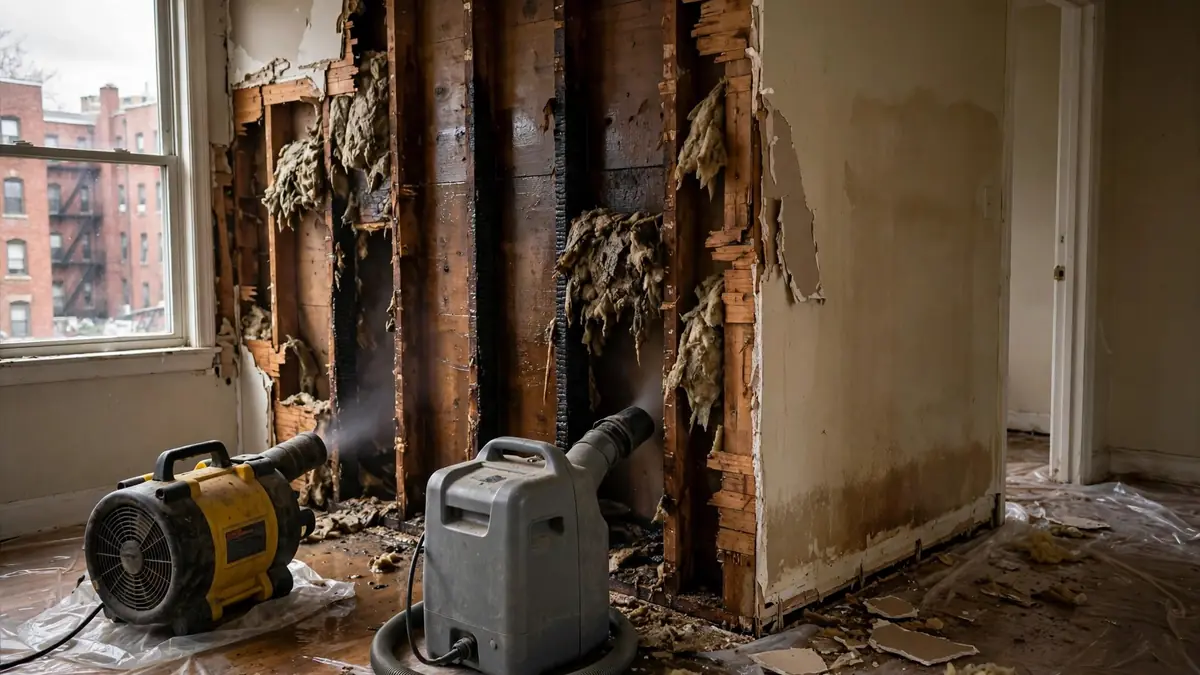
Rushing it with high heat can crack plaster and split boards. Contractors use dehumidifiers, air movers and gentle warmth, with readings each day to guide them [1].
The stack
Drying the whole stack, not one unit
Water moves down through the floor assemblies of stacked units, so the ceiling of one flat and the floor of the one above are a single wet assembly. Drying one side leaves moisture trapped. The moisture map in a Lakeview building runs from the fire unit to the basement.
That works best under one plan arranged by the owner or association, with access to every affected unit, including ones whose tenants are staying elsewhere.
Basements
Garden units and basement masonry
Garden units and basements collect the water that gets through. Their masonry walls and concrete floors dry well but slowly, and finished drywall, paneling and carpet usually come out so they can. Efflorescence, a white powder on brick, shows water moving through the wall.
The building's boiler, water heaters and electrical service are often down there; they need inspection before use.
Checklist
Drying checklist for a Lakeview building
- Dry readings taken in unaffected units for each material
- Moisture map from the fire unit to the basement
- Containment so drying air does not spread soot
- Daily readings shared with the owner and each household
- Heat or pipe protection arranged in cold weather
Winter
Cold-weather drying near the lake
A winter fire in Lakeview means cold, dry outside air and, often, a building without heat. Refrigerant dehumidifiers lose efficiency in cold rooms, so crews may bring temporary heat or desiccant units. The plumbing must be protected from freezing throughout.
Summer drying has the opposite problem: humid lake air means windows stay shut and dehumidifiers do the work.
Lead
Opening walls safely in pre-1978 flats
Drying sometimes means opening walls or ceilings to reach wet cavities. In Lakeview's older buildings, painted plaster may contain lead, and EPA's renovation rule requires certified firms and lead-safe practices for that work [4].
Small drilled holes and cavity drying systems can often dry walls without large openings, which also preserves original plaster.
Proof
The drying log your insurer will want
Daily readings, a moisture map and photos show the adjuster that the building was dried properly. The Illinois Department of Insurance advises keeping receipts and documenting mitigation [5].
Keep the log with your property records; future buyers and inspectors may ask about past water damage.
Electrical
Powering drying equipment in a damaged Lakeview building
Dehumidifiers and air movers draw a lot of power, and after a fire the building's electrical system may be shut off or unsafe in wet areas. Equipment should run only from circuits an electrician has confirmed safe, or from temporary power.
In a walk-up with several units, the crew may need power from an undamaged unit or the common-area circuits; that needs the owner's permission and coordination with the tenants.
Mold watch
Checking for mold after the drying is done
Even well-dried buildings deserve a look a few weeks later, particularly in closets on exterior walls, under sinks and in the basement. A musty smell or spots on the back of a closet wall suggest moisture stayed somewhere.
EPA's guidance is to fix the moisture source and dry quickly; for larger areas or contaminated water, professional cleanup is advised [2]. Mention any concern to the drying contractor while the job is still fresh.
Belongings
Belongings and drying in the same Lakeview unit
Drying equipment needs room to work, and furniture pushed against wet walls blocks airflow. Before equipment arrives, belongings near wet areas are moved to the center of the room, raised on blocks or packed out if they are wet themselves. Rugs and boxes left on damp floors trap moisture and can grow mold.
Wet papers and photographs should be separated and dried, or frozen if they cannot be dried within a day or two. Keep wet items for the adjuster to see rather than discarding them.
Drying equipment is loud and runs around the clock. Many households stay elsewhere for the first several days, which is worth discussing with your insurer under additional living expenses.
Choosing a contractor
Questions for a Lakeview drying contractor
Ask how they set the dry standard for plaster, wood and masonry, how often they will take readings, and whether every affected unit in the building will be on the same plan. Ask how they will handle old plaster and hardwood without cracking them, and how equipment will be powered safely.
Ask for the daily log in writing. It is the evidence your insurer, your building's insurer and any future buyer can rely on.
FAQ
Lakeview structural drying questions
Why does drying take so long in my Lakeview walk-up?
Old plaster, dense joists and masonry hold water and release it slowly. Controlled drying protects them from cracking.
Do walls have to be torn out to dry them?
Not always. Small holes and cavity drying systems dry many walls in place. Walls are opened when insulation is soaked or water was sooty.
Who arranges drying for all the units in my building?
Usually the owner or association, with one plan covering every wet unit in the stack.
Can drying happen in winter if the building has no heat?
Yes, with temporary heat or desiccant dehumidifiers, while the plumbing is protected from freezing.
How do I know my unit is dry?
When readings in wet materials match readings from dry materials of the same kind. Ask for the log.
Can drying equipment run on my Lakeview building's power after a fire?
Only from circuits an electrician has confirmed are safe, or from temporary power. Do not plug equipment into outlets in wet rooms.
Will drying damage my Lakeview plaster or hardwood?
Controlled drying is designed to protect them. Crews avoid high heat on plaster and dry hardwood gradually with readings each day, because drying too fast cracks plaster and splits boards.
Do I need to stay out of my unit during drying?
Not always, but equipment runs day and night and is loud. Many households stay elsewhere for the first several days and return as equipment is reduced.
Sources and citations
- [1]IICRC — ANSI/IICRC S500 Standard for Professional Water Damage Restoration
- [2]U.S. EPA — A brief guide to mold, moisture and your home
- [3]Wikipedia — Lake View, Chicago
- [4]U.S. EPA — Lead Renovation, Repair and Painting Program
- [5]Illinois Department of Insurance — What to do after an insured homeowners loss