
Key facts: Duct Cleaning After a Fire in Loop and South Loop
Fan coils
Cleaning an in-unit fan coil
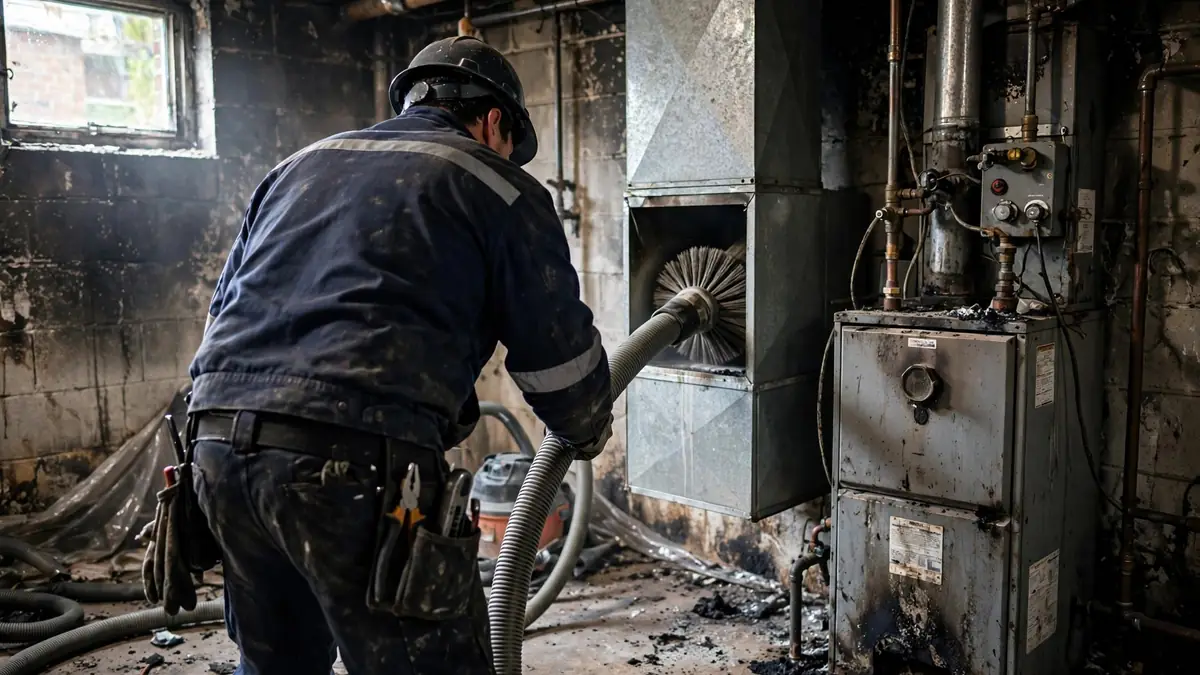
A fan coil has a fan, a coil, a drain pan and short ducts to nearby grilles. After a fire, all of them hold residue. Cleaning means removing panels, cleaning the fan, coil and pan, cleaning the short runs and fitting a new filter. Many buildings require their engineers to be involved.
Lofts
Exposed loft ductwork
Exposed ducts in lofts are cleaned inside under negative pressure and wiped outside. Long runs may need access points opened.
Shared systems
Corridor air and exhaust risers
Corridor ventilation and exhaust risers belong to the building. If odor appears when a neighbor's fan runs, report it to management.
Signs
Signs your system holds smoke
- Smell when the fan coil starts
- Dark streaks at grilles
- A gray filter
- Odor when a neighbor's fan runs
- Film returning on cleaned walls
Townhomes
Forced air in townhomes
South Loop townhomes usually have their own furnaces and ducts. Cleaning covers returns, supply runs, blower and coil.
Method
What the cleaning includes
Timing
When to clean
After the heavy room cleaning, so returns do not pull new residue in.
Claims
Including HVAC in the scope
Include the system in the scope your adjuster reviews [4].
After
Checking afterward
Check the new filter after two weeks.
Owners
Unit equipment versus building systems
In most downtown condos, the fan coil or heat pump serving one unit belongs to that owner, while risers, corridor air handlers and water loops belong to the association. After a fire, each side cleans and repairs its own equipment, and the building engineer usually needs to be present when unit equipment that connects to building loops is opened.
Older buildings
Converted buildings and older ductwork
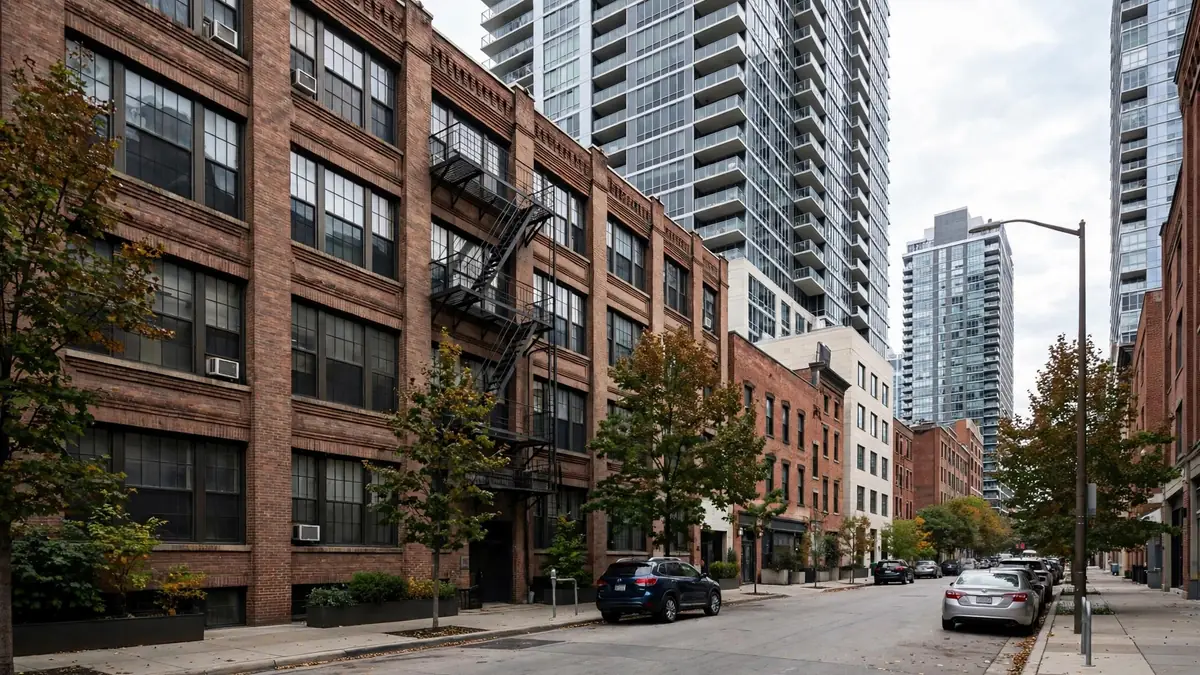
Converted office and industrial buildings may have ductwork adapted from commercial systems, sometimes serving several units. Smoke in a shared duct affects everyone on it. Ask management how ventilation is arranged; shared ducts are the building's to clean.
Results
Knowing the system is clean
Ask for before-and-after photos from inside the fan coil or ducts. Run the system with a new filter, and check it after two weeks. If odor returns, call the contractor back promptly.
Heat pumps
Heat pumps and water-source units
Some newer towers use water-source heat pumps in each unit, connected to a building water loop. Cleaning the unit's fan, coil and filter is like cleaning a fan coil, but the building's engineers usually need to isolate the unit from the water loop first. Arrange that through management before the contractor arrives.
Puff-backs
When a townhome furnace causes soot
In South Loop townhomes, a furnace burner that misfires can push soot through every duct. The furnace is repaired first, then the ducts and rooms are cleaned.
Choosing a crew
Picking an HVAC cleaner for a fire job
Ask whether the company has cleaned systems after fires, whether they clean the fan and coil as well as the ducts, whether they keep negative pressure throughout and whether they carry the insurance the building requires. Ask for before-and-after photos.
Safety
Restarting equipment safely
Have a qualified technician check equipment before it runs again. In townhomes with gas furnaces, if you smell gas, leave and call 911 and Peoples Gas from outside.
Timing
When in the job to clean the system
The fan coil or ducts are cleaned after heavy cleaning of the unit and corridor, so returns do not pull in new residue. Grilles are then sealed until finish work is done. Ask the contractor to schedule this with the building engineer's availability.
Claims
Including HVAC in the scope
Photograph a blackened filter and stained grilles, and make sure your adjuster's scope includes the unit's heating and cooling equipment. Illinois guidance advises the adjuster's agreement before contracting for repairs [4].
Filters
Filters in fan coils and heat pumps
Fan coil and heat pump filters are small and load quickly after a fire. Replace the filter after cleaning, check it again after two weeks and change it more often than usual for the first season. A filter that grays quickly suggests residue remains somewhere in the system.
Results
Photos as proof
Ask for before-and-after photos of the fan wheel, coil and drain pan. They show your insurer the work was done and help you judge it.
FAQ
Downtown HVAC questions
Who cleans my fan coil?
Your contractor, often with the building engineer's involvement.
Who cleans the exhaust riser?
The building.
Can exposed loft ducts be cleaned?
Yes, inside under negative pressure and outside by wiping.
Can I run my heat pump after the fire?
Not until it is inspected and cleaned.
Should ducts be sprayed with sealant?
EPA does not routinely recommend it.
How long does it take?
Often a day.
Do I need building approval before a contractor starts work downtown?
Usually. Duct work may touch shared risers, so management and the building engineer should approve the plan and the crew's insurance beforehand.
Who cleans ducts shared between units?
The building, since shared systems are common elements.
What if the smell returns after cleaning?
Call the contractor back promptly; a shared system or missed run may be the source.
Does my water-source heat pump need the building engineer?
Usually, to isolate it from the building water loop before cleaning.
Is HVAC cleaning part of my claim?
Often, when smoke reached the system. Include it in the scope.
Does the AC coil need cleaning?
Yes, if smoke reached the system; it releases odor whenever the air conditioning runs.
How often should I change the filter after a fire?
More often than usual for the first season, and check it two weeks after cleaning.
Can I see what was cleaned?
Ask for before-and-after photos of the fan, coil and ducts.
How long does fan coil cleaning take?
Usually a few hours per unit once the building engineer has isolated it, longer if parts need replacing.
Will cleaning my fan coil fix corridor odor?
No. Corridor odor comes from building systems, which the association or owner must clean.
Do loft ducts need access panels?
Long exposed runs sometimes do. The contractor can add small access points to reach residue at bends.
Can I run my heat pump after the fire?
Not until it has been inspected and cleaned, since running it spreads residue.
Does the crew need building approval?
Usually, with proof of insurance and an engineer present.