
Key facts: Duct Cleaning After a Fire in Lakeview
- EPA says duct cleaning is warranted when ducts hold excessive debris or particles blow from registers, and that the cause should be fixed first [1].
- EPA does not routinely recommend duct sealants or biocides [1].
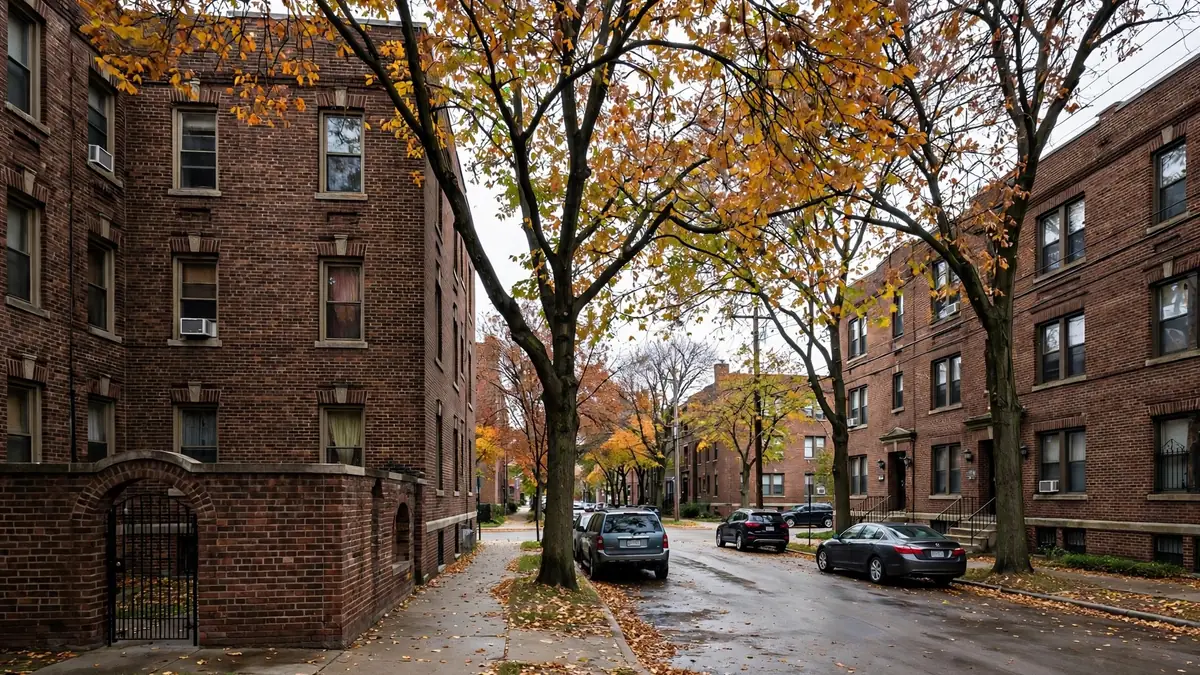
- Contents of Lake View's housing range from houses and two-flats to courtyard buildings and high-rises [2].
Forced air
Basement furnaces in West Lakeview and Wrigleyville houses
The houses and two-flats west of Clark Street often have gas forced-air furnaces in the basement. A furnace that ran during or after a fire pulled smoke through its returns and pushed it into every room it serves. Afterward, odor and gray film around registers keep reappearing until the ducts, blower and coil are cleaned.
In a two-flat with a separate furnace for each unit, both systems may need inspection: smoke from one unit can reach the other's returns through the shared stair or basement.
Added AC
Walk-ups with radiators and retrofitted central air
Many Lakeview walk-ups and courtyard units heat with radiators but had central air added later, with ducts run through closets, soffits or the attic. Those ducts may never have been designed to be cleaned, and some use flexible duct, which usually has to be replaced after smoke exposure rather than cleaned.
The radiators themselves need cleaning separately; they have no ducts, but residue on their fins bakes and smells every time they heat.
Signs
Signs your Lakeview system holds smoke
- Smoke smell when the blower starts
- Dark rings around ceiling or floor registers
- A filter that turned gray after the fire
- Film returning on walls that were cleaned
- Odor from closets where retrofitted ducts run
Method
What a proper fire duct cleaning includes
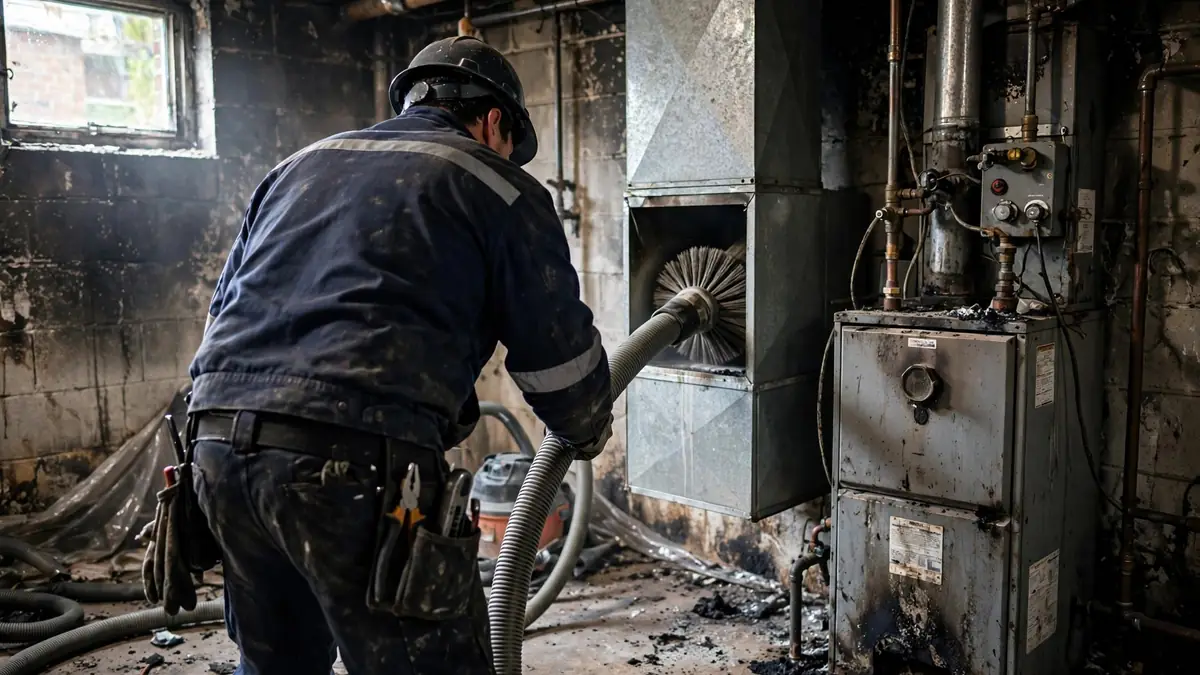
The system is put under negative pressure with a HEPA collection unit, then brushes and air tools loosen residue run by run. The blower wheel, coil and plenums are cleaned along with the ducts, since they release residue every cycle. EPA suggests choosing providers who follow NADCA standards and avoiding unneeded chemical treatments [1][3].
A new filter goes in at the end, and a heating professional confirms the furnace is safe to run.
Timing
Fitting duct cleaning into a multi-unit restoration
In a Lakeview building, sequence matters. Ducts are cleaned after the heavy room cleaning, then registers stay sealed until finish work is done. In a two-flat or walk-up, cleaning one unit's system while the stair still holds residue can let the returns pull it back in.
Ask the contractor to schedule the HVAC work after the stair and common areas are cleaned.
Claims
Including the HVAC system in the scope
Duct cleaning is easy to leave out of an early scope. Photograph blackened filters and stained registers, and make sure the scope your adjuster reviews includes the heating and cooling system. The Illinois Department of Insurance advises getting the adjuster's agreement before contracting for repairs [4].
If the system was replaced or repaired, keep the technician's report with your claim records.
Older ductwork
Panned joists and old returns in Lakeview houses
Some older Lakeview houses use the space between floor joists as a return air path, with sheet metal fastened across the bottom of the joists. Smoke residue settles on the wood and drywall inside those cavities, which are harder to clean than round metal ducts and sometimes have to be opened.
The inspection should identify any panned returns before cleaning starts, so the scope covers them. Residue left there keeps feeding odor into the house every time the blower runs.
Filters
Filters and follow-up checks after cleaning
After the system is cleaned, a new filter goes in. Check it after a couple of weeks: a filter that turns gray quickly suggests residue is still being released somewhere in the system, perhaps a missed run or the coil.
Change filters more often than usual for the first season after a fire, and tell the contractor promptly if the smell returns when the heat first comes on in the fall.
Choosing a provider
Picking a duct cleaner for a Lakeview fire job
Routine duct cleaners remove dust; fire work removes soot and residue that can be oily and acidic. Ask whether the company has cleaned systems after fires or puff-backs, whether they clean the blower and coil, and whether they keep the system under negative pressure throughout. Ask for before-and-after photos from inside the ducts.
FAQ
Lakeview duct cleaning questions
Does my Lakeview walk-up need duct cleaning if it has radiators?
Radiators have no ducts, but if central air was added with ductwork, those ducts may hold smoke. The radiators need cleaning too.
Can flexible duct in my attic be cleaned after smoke?
Usually not well. Smoke-contaminated flex duct is normally replaced.
Who cleans the exhaust riser in my Lake Shore Drive condo?
The building, since risers are shared systems. Report persistent odor to management.
Can I run my furnace after the fire?
Not until it has been checked. Running it spreads residue and may be unsafe if the equipment was exposed to heat or water.
Should ducts be sprayed with sealant after a fire?
EPA does not routinely recommend sealants. Removing the residue is what fixes the problem.
What are panned joist returns and do they need cleaning after a fire?
They are return air paths formed by covering the space between floor joists with sheet metal. They collect smoke residue and should be included in the cleaning.
How long does duct cleaning take in a Lakeview house?
A single forced-air system in a house or one unit of a two-flat is often cleaned in a day. Oily residue, panned returns or flex duct that has to be replaced can stretch it to two days.