
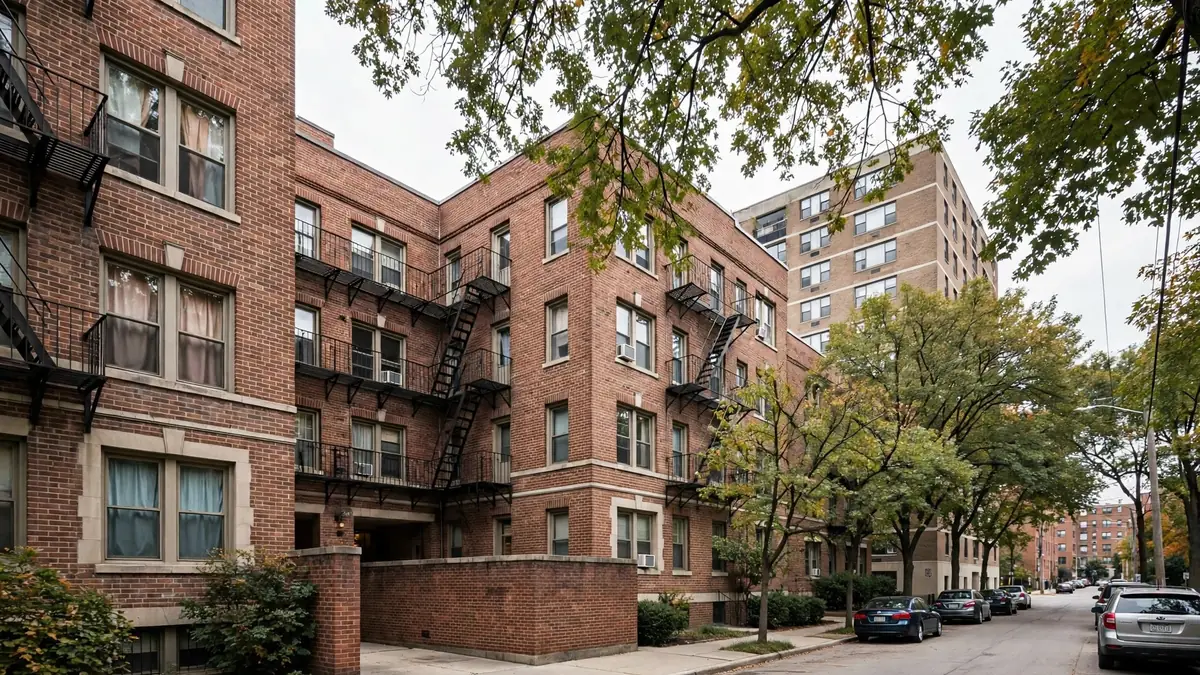
Key facts: Soot Removal in Uptown and Edgewater
Radiators
Steam radiators in older buildings
Most six-flats, courtyard buildings and apartment hotels in Uptown and Edgewater heat with central boilers and cast-iron radiators. Soot settles between the fins and bakes there when the heat comes on, releasing a burned smell all season. Radiators are cleaned along with the walls: vacuumed, brushed between the fins and wiped with cleaners suited to the residue.
If the boiler room itself had a fire, the boiler is serviced before heat is restored. In winter, the building's pipes need protection while it is off.
Terracotta and stone
Soot on historic facades
When flames vent through windows, terracotta and stone above them darken. Glazed terracotta can usually be cleaned gently; harsh cleaners and pressure washing can damage the glaze or the mortar around it. On designated buildings, any replacement of facade pieces may need landmark review [4].
Restorers test cleaners on a hidden area and document the facade before and after.
Plaster
Plaster walls and ceilings
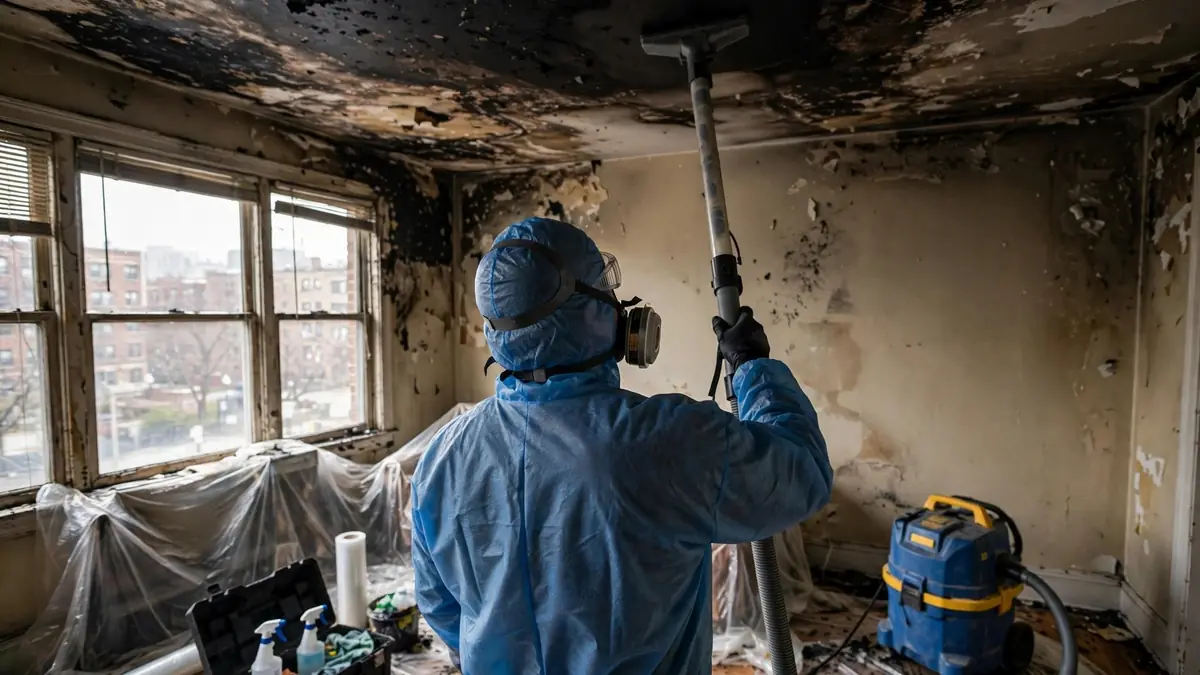
Plaster usually takes dry sponging well and tolerates careful wet cleaning. Cracks hold soot and can wick water, so crews avoid soaking. When soot has bonded to flat paint, sealing with a stain-blocking primer and repainting often looks better than repeated scrubbing. Sanding old paint requires lead-safe practices [5].
Hidden soot
Where soot hides in older lakefront buildings
- Between radiator fins and behind covers
- Tops of tall door frames and picture rails
- Window channels and storm sashes
- Corridor light fixtures
- Attic insulation in houses and walk-ups
Houses
Soot in Edgewater and Buena Park houses
Single-family houses in western Edgewater and the larger homes of Buena Park can have open stairs, many rooms and big attics. Soot from a smoldering fire spreads widely and settles in attic insulation. Older frame houses may let soot rise inside balloon-framed walls into the attic [6].
Soot-soaked insulation is removed; rafters are cleaned and sealed.
Containment
Protecting neighbors during soot work
Disturbed soot becomes airborne. In a shared building, crews seal stair doors with plastic, run HEPA air scrubbers and keep the work area under slight negative pressure. Tell the crew about neighbors with breathing problems, who EPA notes are more sensitive to fine particles [2].
Corridors
Soot in apartment hotel and tower corridors
Long corridors in Margate Park apartment hotels and Sheridan Road towers can carry soot far from the fire. Corridor carpet, walls, ceilings and light fixtures are cleaned by the building's contractor, coordinated with management.
Order
Top-down, unit by unit
Soot rises, so the heaviest deposits are usually on upper floors and stair ceilings. Crews work from the top of the building down so falling residue does not land on finished areas.
Records
Photograph before cleaning
Photograph the soot pattern in every affected unit and the stair. The Illinois Department of Insurance recommends photos before cleaning and keeping receipts [7].
Prevention
Maintaining older heating plants
Annual boiler service catches burner problems that can cause soot. Keep the boiler room clear of stored items.
Apartment hotels
Soot in Margate Park apartment hotels
The terracotta apartment hotels of Margate Park have long interior corridors, many small units and older central mechanical systems. Soot from a fire in one unit can travel the length of the corridor on hot smoke, settling on ceilings, light fixtures and the doors of units far from the fire. Corridor carpet holds soot and is usually cleaned or replaced by the building.
In a co-op, the board decides how common areas are restored and arranges the work; unit owners handle their own interiors. Ask the board for the plan before your own contractor starts, so the corridor and your unit are done in a sensible order.
Andersonville
Soot in western Edgewater flats and houses
West of the lakefront, Edgewater's housing turns to two- to four-story flats and single-family houses. Many are brick with plaster interiors, some are frame. A basement fire or a furnace puff-back in one of these buildings sends soot up the stair and through any forced-air ducts into every room.
Cleanup follows the same order as anywhere: HEPA vacuum, dry sponge, then wet clean with tested products, top to bottom. If the house has forced air, the ducts are cleaned after the rooms.
Choosing a crew
Questions for a soot contractor
Ask how they contain soot in a shared building, how they test cleaners on plaster, terracotta and old finishes, and whether their crew is certified for lead-safe work in pre-1978 homes. Ask to see test patches before they scale up.
Order of work
Working top-down in a stacked building
Soot rises with hot smoke, so the heaviest deposits are usually on the top floor and the stair ceiling. Crews clean from the top of the building down so falling residue never lands on finished work, and within each unit from ceilings to floors.
FAQ
Uptown and Edgewater soot questions
Why does my apartment smell burned when the radiators come on?
Soot on the fins bakes when they heat. Radiators need cleaning along with the walls.
Can soot be cleaned off terracotta?
Usually, with gentle methods tested first. Avoid pressure washing and harsh cleaners.
Is soot cleanup a risk to my neighbors?
It can be without containment. Crews seal off the area and run HEPA air scrubbers.
Who cleans soot in the corridor of my building?
The owner, association or co-op board, since corridors are shared.
Does soot removal need landmark approval?
Cleaning generally does not. Replacing facade pieces on designated buildings may.
Should I vacuum soot with my household vacuum?
No. It blows fine soot back into the air. HEPA equipment is needed.
Is Rogers Park covered as well as Uptown and Edgewater?
No. Soot removal requests from 60640 and 60660 are covered, while addresses in Rogers Park above Devon Avenue are not listed.
Can soot travel down a long corridor to my unit?
Yes. In apartment hotels and towers, hot smoke carries soot along corridors and it settles on doors and ceilings far from the fire.
How long does soot removal take?
A lightly affected unit may take a few days; a whole stack with heavy soot can take a week or more before repairs begin.
Is soot on my walls dangerous?
Soot is fine particulate that can irritate the lungs and aggravate asthma and heart conditions. Clean it with a respirator and gloves, or leave it to a crew that uses containment.
Should soot be vacuumed with a household vacuum?
No. Household vacuums blow fine soot back into the air; HEPA equipment is needed.
Sources and citations
- [1]Wikipedia — Uptown, Chicago
- [2]U.S. EPA — Particulate matter basics
- [3]Wikipedia — Edgewater, Chicago
- [4]City of Chicago — Commission on Chicago Landmarks
- [5]U.S. EPA — Lead Renovation, Repair and Painting Program
- [6]Wikipedia — Balloon framing
- [7]Illinois Department of Insurance — What to do after an insured homeowners loss