
Key facts: Soot Removal in Loop and South Loop
Lofts
Soot on exposed brick and timber
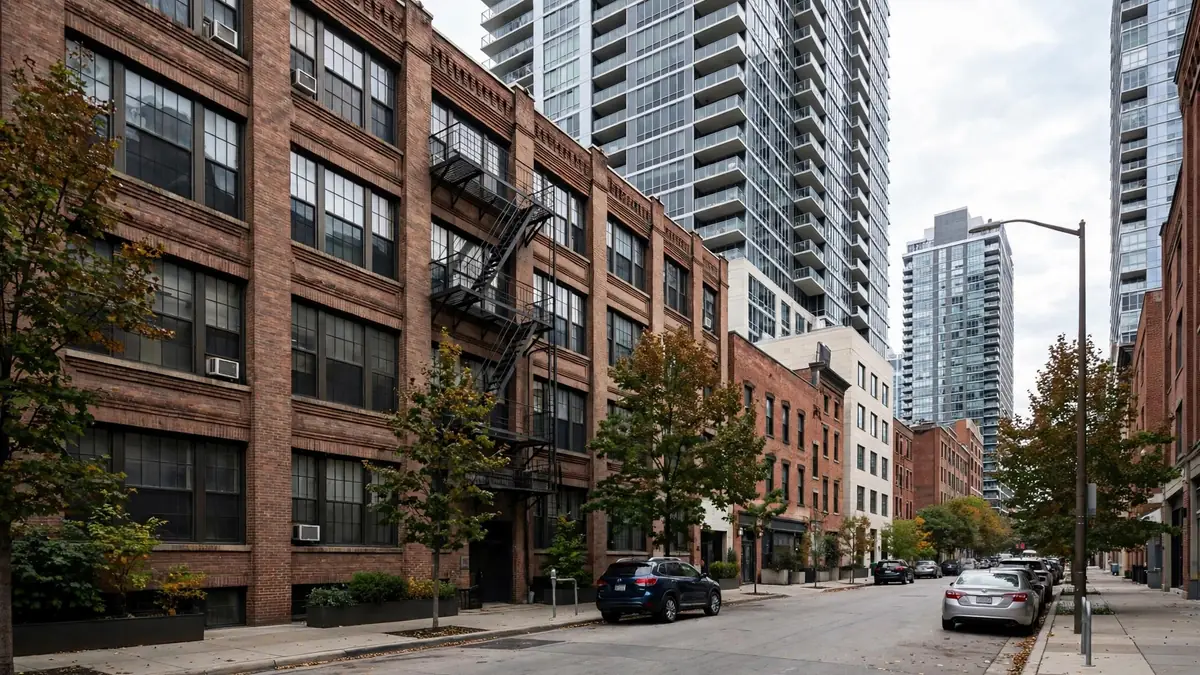
Loft units have exposed brick walls and heavy timber beams or columns. Their rough surfaces trap soot deeply. Brick is HEPA vacuumed with a soft brush, dry sponged where possible and cleaned with masonry-safe products tested in a corner. Timber is vacuumed and cleaned gently; dry-ice blasting under containment is sometimes used on heavily sooted structural wood.
Pressure washing old brick erodes it and floods the floor, so it is avoided. Sealing brick afterward with a breathable sealer makes future cleaning easier.
Exposed ducts
Exposed ductwork in loft ceilings
Many lofts have spiral or rectangular ductwork running exposed along the ceiling. Soot coats the outside of the ducts as well as getting inside. Outside surfaces are vacuumed and wiped; inside, the system is cleaned under negative pressure [3].
Towers
Soot on smooth finishes in towers
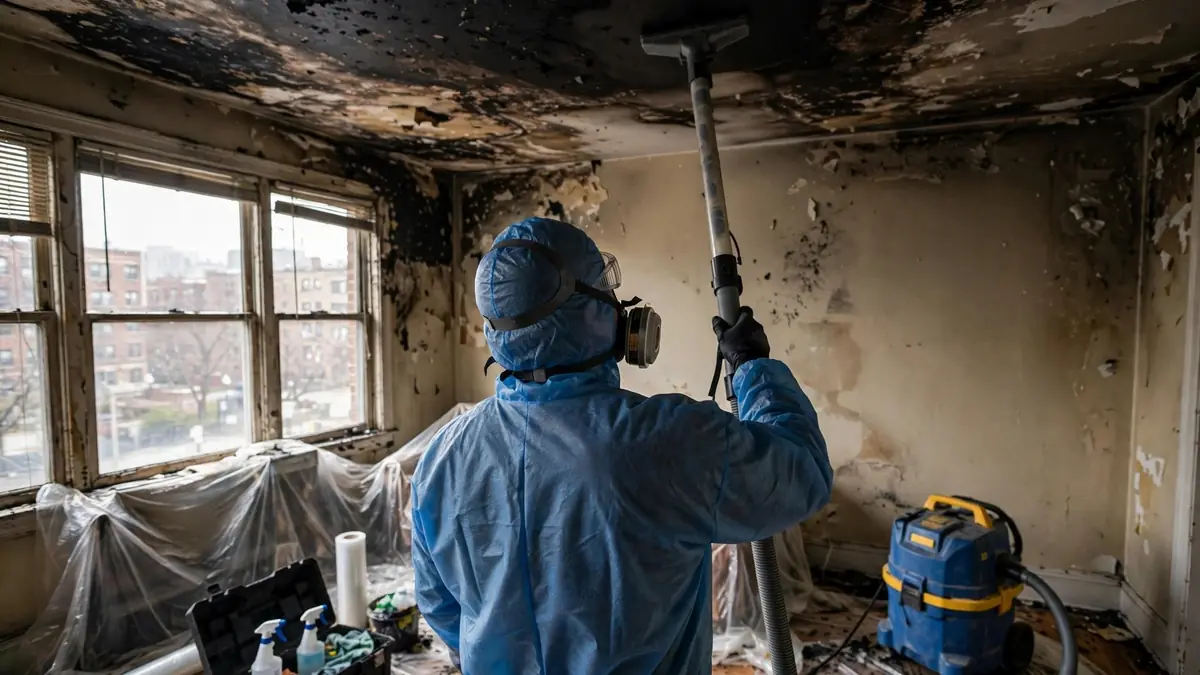
Tower units have painted drywall, glass and modern cabinets. Soot on these surfaces is usually lighter and cleans well: HEPA vacuuming, dry sponging, then wet cleaning with tested products. Window glass is cleaned early so acidic residue does not etch it.
Hidden soot
Where soot hides downtown
- Timber beam tops and column capitals
- Mortar joints in exposed brick
- Outside of exposed ductwork
- Window tracks and sills
- Light fixtures in the corridor
Containment
Protecting neighbors and the building
Soot disturbed during cleaning goes airborne. Crews seal the unit door to the corridor with plastic, run HEPA air scrubbers and keep the unit under slight negative pressure. Many buildings require this before allowing the work [2].
Electronics
Soot on electronics and appliances
Acidic soot can corrode electronics over time. Keep devices unplugged until a specialist inspects them. Appliances near the fire may need replacement.
Townhomes
Soot in South Loop townhomes
In attached townhomes, soot from a fire next door can enter through the shared attic or party wall. Attic insulation is checked and removed if sooty.
Records
Photographing soot first
Photograph soot before cleaning and keep receipts, as the Illinois Department of Insurance advises [4].
Logistics
Scheduling around building rules
Crews book the freight elevator and dock with management and work within permitted hours.
Condos
Soot in condo common areas
When soot escapes into the corridor of a downtown condo building, the association arranges cleaning of the corridor ceiling, walls, carpet and light fixtures under its master policy. Owners arrange cleaning inside their units under their own policies. Coordinate the two so a cleaned unit is not re-soiled when its door opens onto a sooty corridor.
Tenants
Soot and renters downtown
If you rent, the building owner cleans the unit structure and common areas, but soot-damaged belongings are a matter for your own renter’s insurance. Photograph sooty clothing, furniture and electronics before anything is moved.
Puff-backs
Soot from heating equipment in townhomes
South Loop townhomes have their own furnaces. A burner misfire can push soot through every duct into each room. The equipment is repaired first, then the ducts and rooms are cleaned, dry methods before wet.
Timeline
How long downtown soot removal takes
Light soot on smooth tower finishes may take a few days. Heavy soot in a loft, with brick, timber and exposed ducts, can take a week or more. Building access rules set the pace as much as the work does.
Glass
Soot on floor-to-ceiling windows
Downtown towers and newer lofts have large windows, sometimes floor to ceiling. Soot on glass is acidic and can etch it if left for long. Window glass is cleaned early in the job with products suited to the residue, and window frames and tracks are vacuumed so soot does not keep falling onto the sills. Exterior glass on high floors is cleaned by the building's window contractor, not the restoration crew.
Choosing a crew
Questions for a downtown soot contractor
Ask whether they have worked in high-rises and lofts, how they contain soot so it does not reach the corridor, whether they carry the insurance the building requires, and how they test cleaners on brick, timber and finishes. Ask to see test patches before they scale up.
Order of work
Working from ceiling to floor
Soot falls as it is disturbed, so crews clean ceilings and exposed ducts first, then walls and columns, then cabinets, floors and finally belongings. In a loft with very high ceilings, lifts or scaffolding may be needed, which the building may need to approve.
FAQ
Downtown soot removal questions
Can soot be removed from exposed brick in my loft?
Usually, with HEPA vacuuming and masonry-safe cleaning, not pressure washing.
Is dry-ice blasting used in lofts?
Sometimes, on heavily sooted structural wood, under containment.
Does soot get inside exposed ductwork?
Yes. The inside is cleaned under negative pressure, the outside wiped.
Who cleans soot in the corridor?
The building, as a common area.
Is soot cleanup safe for my neighbors?
With containment and HEPA air scrubbers, yes.
Should I vacuum soot myself?
Not with a household vacuum. HEPA equipment is needed.
Do I need building approval before a contractor starts work downtown?
Typically. Sooty debris should leave by the service route, so book the elevator and dock, and register the crew with management first.
How long does soot removal take in a loft?
Often a week or more for heavy soot on brick, timber and ducts, plus time for building access.
Can soot etch my windows?
Acidic soot can etch glass if left for long, so windows are cleaned early in the job.
Is soot removal part of my fire claim?
Usually, as part of the covered fire, but policies differ. Photograph the soot before cleaning.
Does my building need to approve scaffolding?
Often, especially for high loft ceilings. Ask management early.
Can soot damage my electronics?
Yes. Acidic soot can corrode circuit boards over time. Keep devices unplugged until a specialist inspects them.
Who cleans soot off the outside of my building?
The association or owner, usually through the building's facade or window contractor.
Should soot be vacuumed with a household vacuum?
No. HEPA equipment is needed so fine soot is captured.
Can soot be cleaned from my cabinets?
Usually, inside and out, with dry methods first and tested cleaners afterward.
Can exposed timber be sealed after cleaning?
Yes, a clear sealer can lock in remaining residue and odor.