
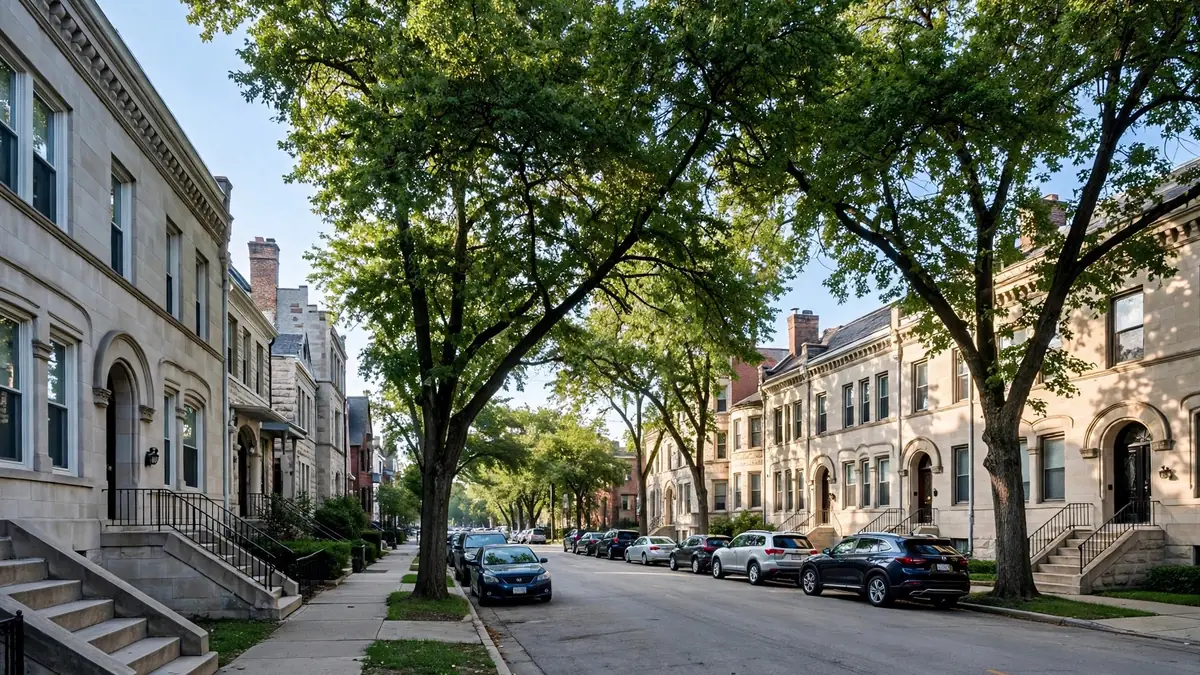
Key facts: Soot Removal in Logan Square
Limestone
Soot on greystone fronts
When flames or hot smoke vent through front windows, the limestone above them darkens. Limestone is a soft, calcium-based stone, and it reacts to acids, so the household and masonry cleaners many people reach for can etch it or leave pale blotches. Restorers test mild, stone-appropriate cleaners on a hidden spot and work gently.
On the boulevards, a stained facade is also a landmark-district issue. Cleaning that is gentle and well documented avoids the need for replacement stone, which would bring its own review by the Commission on Chicago Landmarks [4].
Brick
Exposed common brick inside renovated flats
Many Logan Square flats and lofts have had plaster stripped back to the old common brick. That brick is softer than modern brick, and its rough face and sandy mortar hold soot deeply. Pressure washing or wire brushing removes soot and brick together.
The safer approach is HEPA vacuuming with a soft brush, dry sponging where possible and a masonry cleaner tested in a corner. A breathable sealer applied afterward makes the next cleaning easier.
Plaster and oak
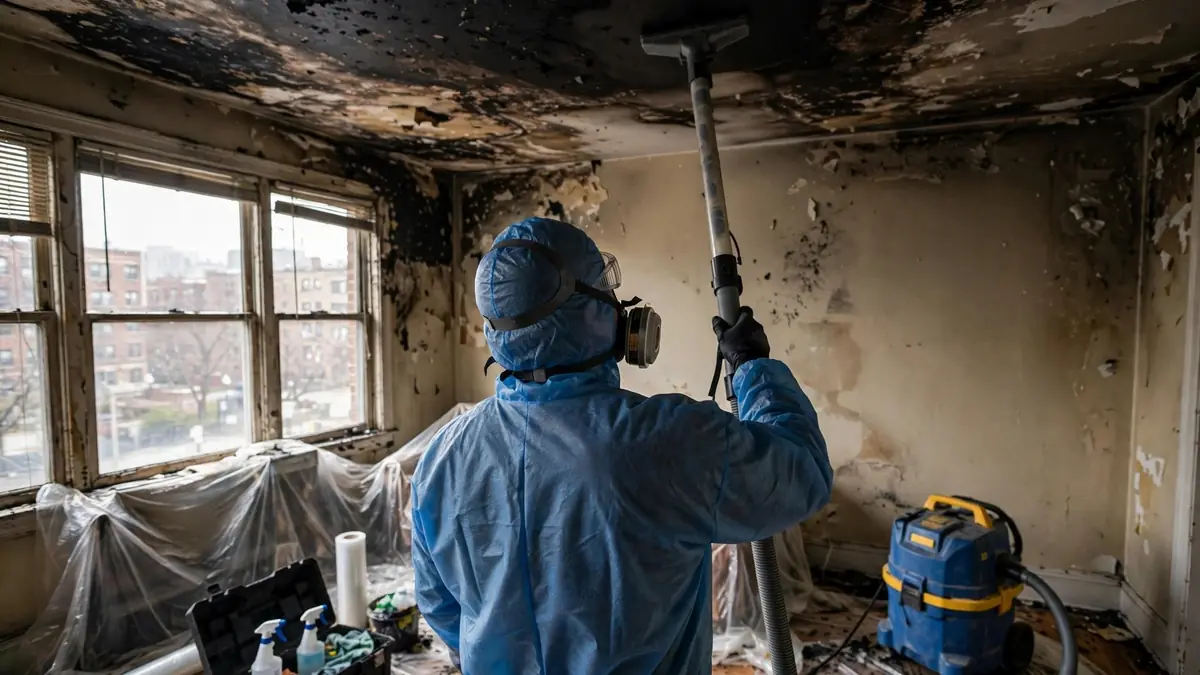
Lifting soot from vintage plaster and woodwork
Plaster takes dry sponging well and tolerates careful wet cleaning, but cracks hold soot and can wick water. Original oak trim and built-ins have finishes that may soften under solvents. Each surface is tested before the crew scales up.
When soot has bonded to flat paint on plaster, sealing with a stain-blocking primer and repainting often looks better than repeated scrubbing. Sanding old paint in these buildings requires lead-safe practices [5].
Hidden soot
Places soot hides in Logan Square buildings
- Between radiator fins and behind radiator covers
- Leaded glass cames and window channels
- Tops of tall door frames and plate rails
- Mortar joints in exposed brick
- Attic rafters above balloon-framed walls
Cottages
Soot in the attics and cavities of Bucktown cottages
In balloon-framed cottages, soot from a lower-floor fire can rise through open wall cavities into the attic [6]. Attic rafters and insulation darken even when the rooms below look manageable.
Soot-soaked insulation is removed. Rafters and framing are HEPA vacuumed and, where needed, cleaned with soda or dry-ice blasting under containment, then sealed. Testing for asbestos in old insulation comes first [7].
Radiators
Boilers, radiators and soot in older flats
Many greystones and two-flats in Logan Square still have central boilers and cast-iron radiators. Soot settles between the fins and bakes when the heat comes on, so radiators are cleaned with the walls rather than after them.
If the boiler room itself had a fire or puff-back, the boiler is serviced before the building's heat is restored. In winter, the other flats' pipes need protection while it is off.
Containment
Protecting the other flats during soot work
Soot disturbed during cleaning goes airborne again. In a stacked building, the other households share the stair and sometimes the basement. Crews seal stair doors with plastic, run HEPA air scrubbers and keep the work area under slight negative pressure.
Tell the crew about neighbors with asthma or heart conditions, who EPA notes are more sensitive to fine particles [2].
Garages
Soot from alley garage fires
Logan Square lots usually back onto an alley with a detached garage. A garage fire can blacken the rear wall of the house, the back porch and the windows of the rear rooms, even when nothing inside the house burned.
Exterior soot on siding, brick and porch wood is cleaned with methods suited to each material. Inside, soot that came through rear windows is treated like any other room.
Records
Photographing soot before it is removed
The soot pattern is evidence. Photograph it before cleaning, room by room and on the facade. The Illinois Department of Insurance recommends photos before cleanup and keeping damaged items for the adjuster [8].
Note which flats share the stair with the fire flat; those are where soot is most likely to be found.
After
Keeping historic surfaces clean afterward
Once soot is removed, sealing exposed brick and repainting plaster with a stain-blocking primer make future maintenance easier. Have the chimney inspected if the house has a fireplace, and service the boiler before the next heating season.
Order of work
Top-down soot cleaning in a greystone
Soot follows hot smoke upward, so the heaviest deposits in a greystone are usually on the top floor, the stair ceiling and the underside of the roof. Crews clean from the top of the building down, so falling residue never lands on finished work.
In the flats themselves, ceilings come first, then walls, then woodwork and floors.
Choosing a crew
Questions for a Logan Square soot contractor
Ask how they test cleaners on limestone, brick, plaster and old finishes, how they contain dust in a shared building, and whether their crew is certified for lead-safe work in pre-1978 homes. Ask for photos of test patches before they scale up.
Puff-backs
Soot from older heating equipment
Not all soot in Logan Square comes from a fire. A furnace or boiler burner that misfires can push soot through the heat exchanger and, in forced-air homes, out of every register. The equipment is repaired first, then every room and duct is cleaned, dry methods before wet.
FAQ
Logan Square soot questions
Can soot be cleaned off my greystone's limestone front?
Usually, with gentle, stone-appropriate cleaners tested first. Avoid acids and pressure washing, which damage limestone.
Will cleaning soot on Logan Boulevard need landmark approval?
Cleaning generally does not need a permit. Replacing stone, windows or other exterior features may need landmark review.
Can exposed brick in my flat be cleaned after a fire?
Yes, with HEPA vacuuming and masonry-safe cleaning. Old common brick is soft, so avoid wire brushes and pressure washing.
Why is there soot in my cottage attic?
Balloon-framed walls let soot rise from lower floors into the attic inside the wall cavities.
Should radiators be cleaned after a fire?
Yes. Soot between the fins bakes and smells when the heat comes on.
Is soot dangerous to my neighbors during cleanup?
It can be if it escapes the work area. Crews use containment and HEPA air scrubbers to prevent that.
Should I scrub soot off my walls myself?
Not with water first. Soot is HEPA-vacuumed and dry-sponged before any wet cleaning, or it smears into the paint and plaster.
How long does soot removal take in a Logan Square greystone?
A single lightly affected flat can take a few days. A building with heavy soot in several flats, the stair and the attic can take a couple of weeks before repairs begin.
Sources and citations
- [1]Wikipedia — Greystone (architecture)
- [2]U.S. EPA — Particulate matter basics
- [3]Wikipedia — Logan Square, Chicago
- [4]City of Chicago — Commission on Chicago Landmarks
- [5]U.S. EPA — Lead Renovation, Repair and Painting Program
- [6]Wikipedia — Balloon framing
- [7]U.S. EPA — Protect your family from exposures to asbestos
- [8]Illinois Department of Insurance — What to do after an insured homeowners loss